WayFriend.A sample trip WayFriend wrote. Yours is written for your dates, your pace and your company.Plan your Japan trip
Tokyo, Hakone, Kyoto, Nara and Osaka in cherry blossom · two friends
Japan in 10 days
日本 · April · ten days
Thu · landHND 7:00
10 days · 9 nights
Sat · departKIX 14:00
Party
TwoFirst time in Japan: cherry blossom, food, temples, modern Tokyo, an onsen, Fuji
Nights
9 nightsTokyo 3, Hakone 1, Kyoto 3, Osaka 2
Where you sleep
Four stopsShinjuku, a ryokan in Hakone, central Kyoto, Namba in Osaka
Getting around
TrainsSuica in the phone, the Romancecar to Hakone, the Shinkansen to Kyoto; suitcases sent ahead
Book nowCherry blossom fortnight is Japan's busiest: book the hotels, the Hakone ryokan and teamLab now, and reserve Shinkansen seats the day they open.
Hours, prices, timetables and coordinates are from general knowledge; the cherry blossom dates move each year, so follow the forecast.
While you are here
Cherry blossom season (hanami) every year from late March in Tokyo to early April in Kyoto and Osaka; the forecast is published from January
For about ten days a year the cherry trees flower; parks fill with picnics, and riverbanks and moats are lit at night.
Dates from general knowledge — check the official site
Timeline
Ten days: three of Tokyo, Hakone and an onsen, three of Kyoto's temples in blossom, Nara's deer on the way to Osaka, two nights of street food before the flight.
Day 1 · Thu
Meiji Shrine, Harajuku, Shibuya Crossing and Omoide Yokocho
Tokyoland 07:00👟 ≈ 13,000 steps
Land at 7:00, bags to the Shinjuku hotel. Meiji Shrine's forest, Harajuku, Shibuya Crossing from above at sunset, yakitori in Omoide Yokocho.
Add Suica to the phone's wallet on the plane with a foreign card, or buy a Welcome Suica at the airport. Keikyu line to Shinagawa, then the JR Yamanote line to Shinjuku; or the limousine bus straight to the hotel, about ¥1,400.
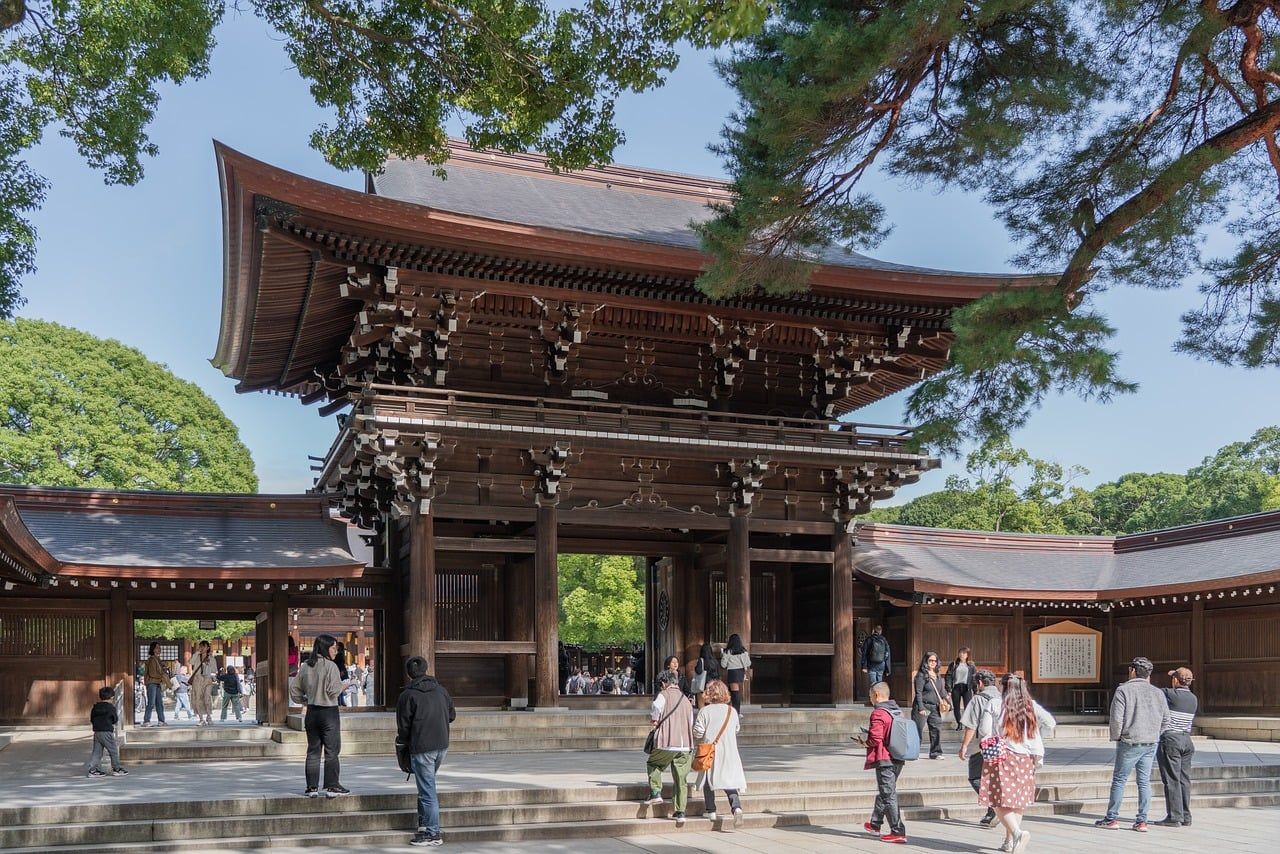
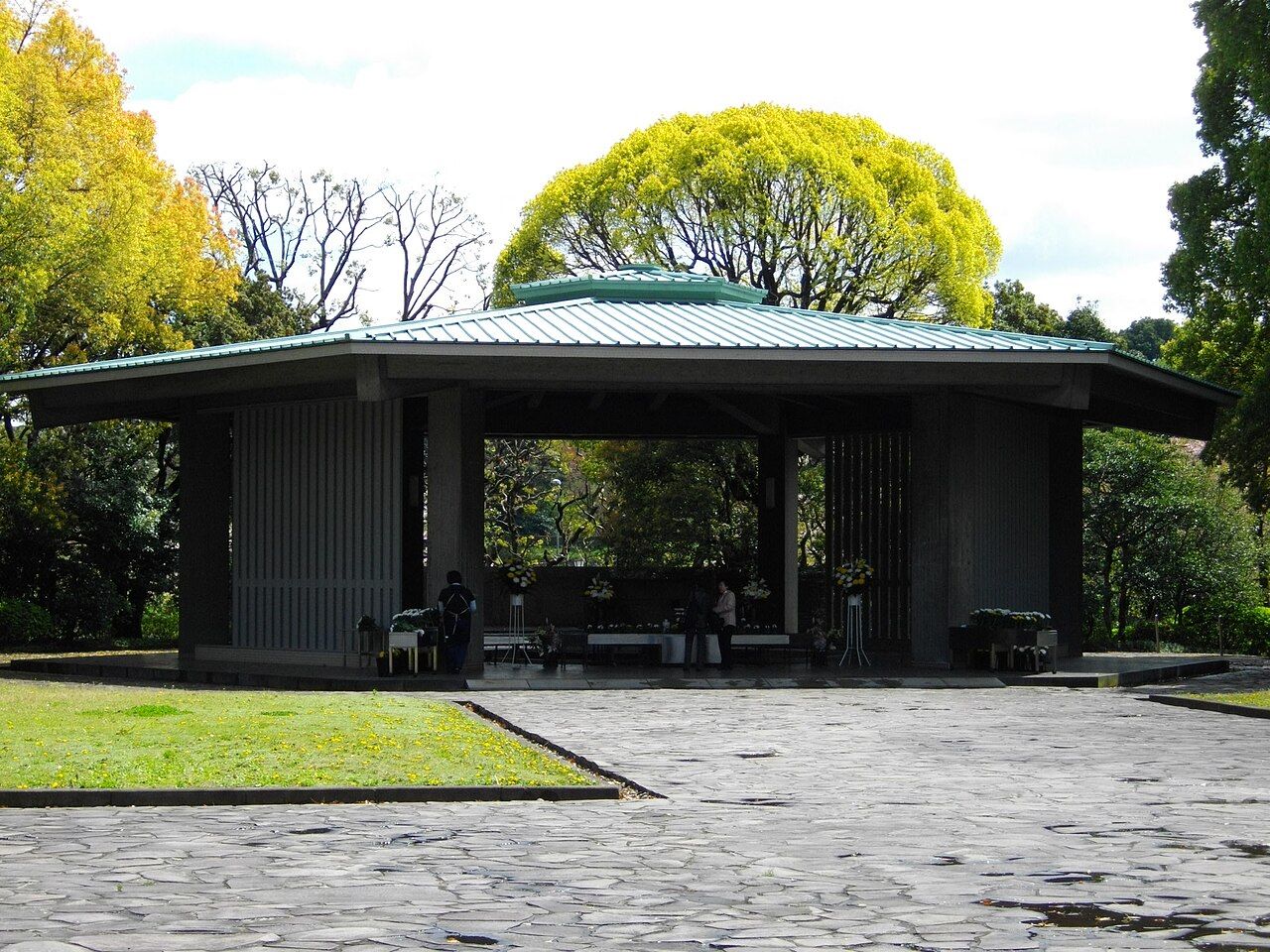
The Shinto shrine of the Emperor Meiji, who opened Japan to the world, set in a forest of 100,000 trees planted in 1920.
free
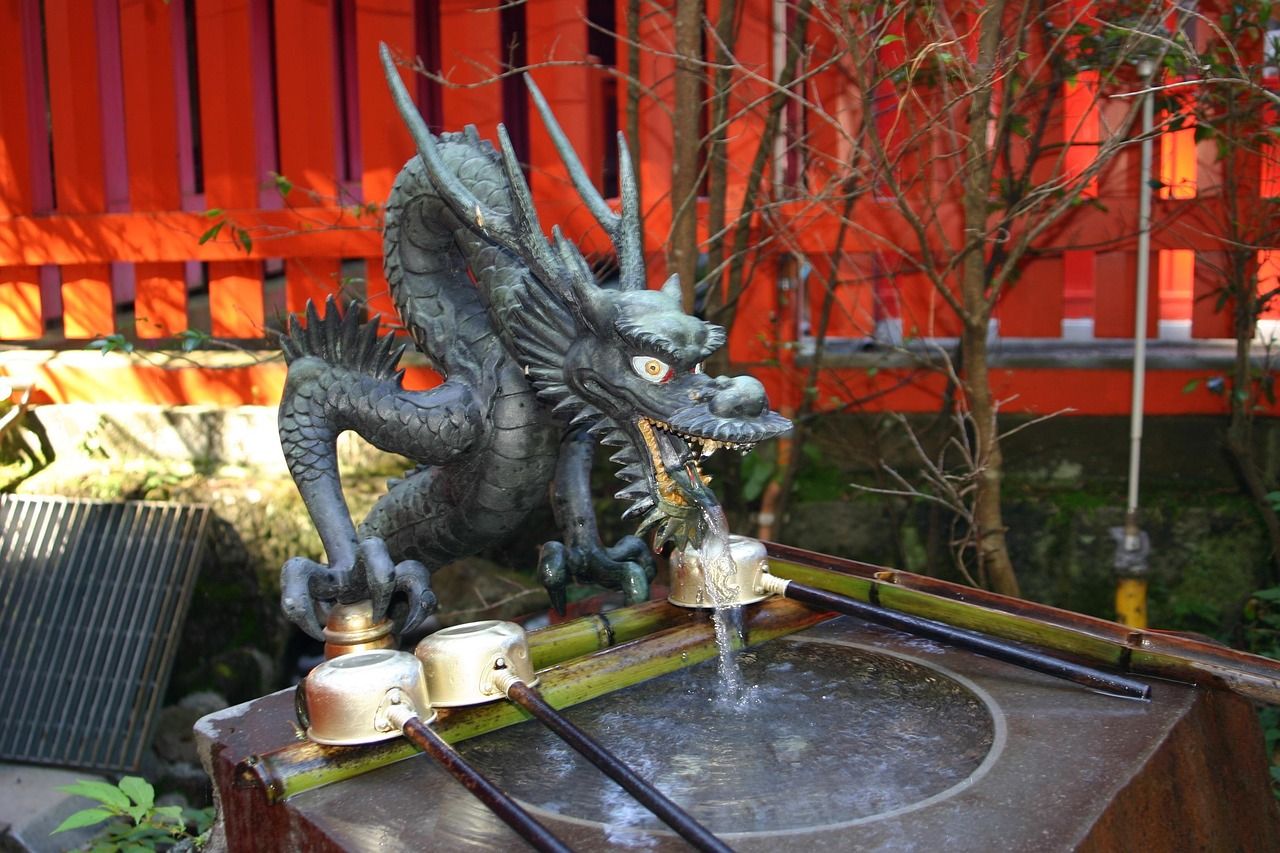
JR one stop to Harajuku. The gravel path runs 15 minutes through the forest under giant wooden torii gates to the shrine. Bow at the gate, wash hands at the basin; on weekends you may see a wedding procession.
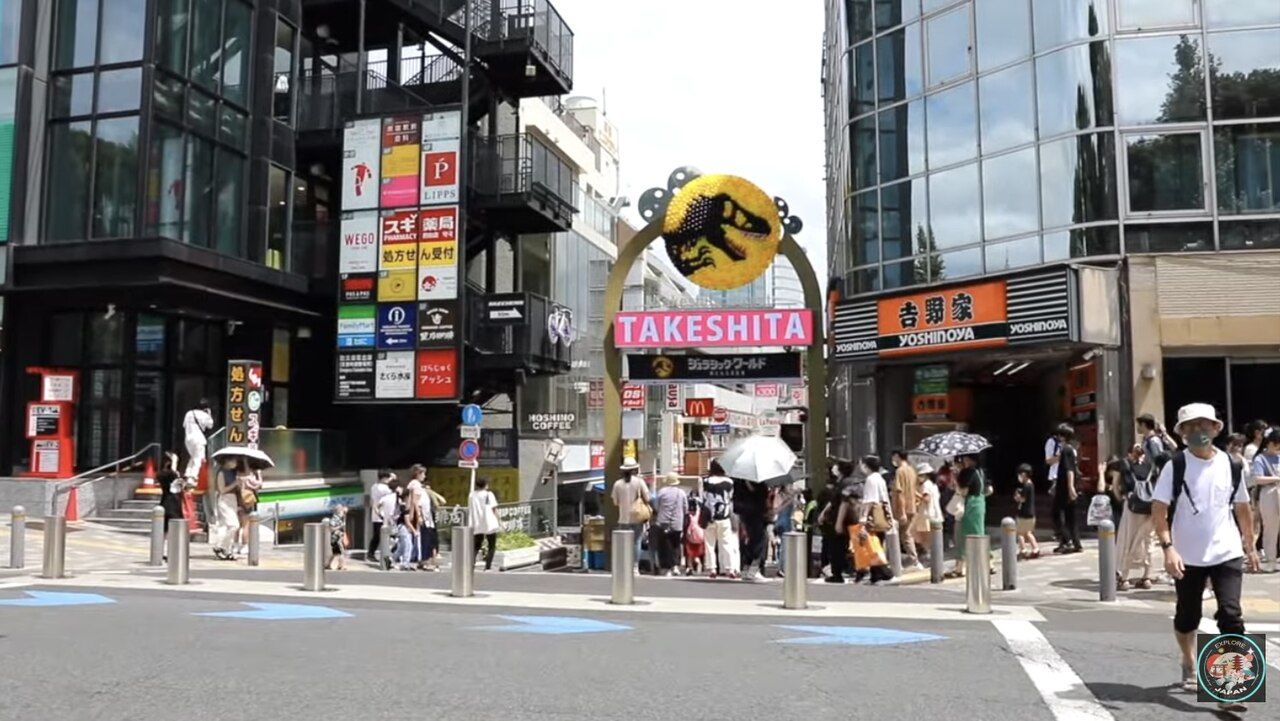
A narrow pedestrian street of youth fashion and sweet shops, the centre of Tokyo's teenage street style since the 1980s.
freecrowds
Opposite the station exit. A rolled crepe with cream is the snack. Then the side streets of Ura-Harajuku and Omotesando's avenue of designer buildings.
Walk down Omotesando and Cat Street to Shibuya, 25 minutes. Ramen shops order by ticket machine at the door: pick the button, pay, hand the ticket over. Slurping is normal.
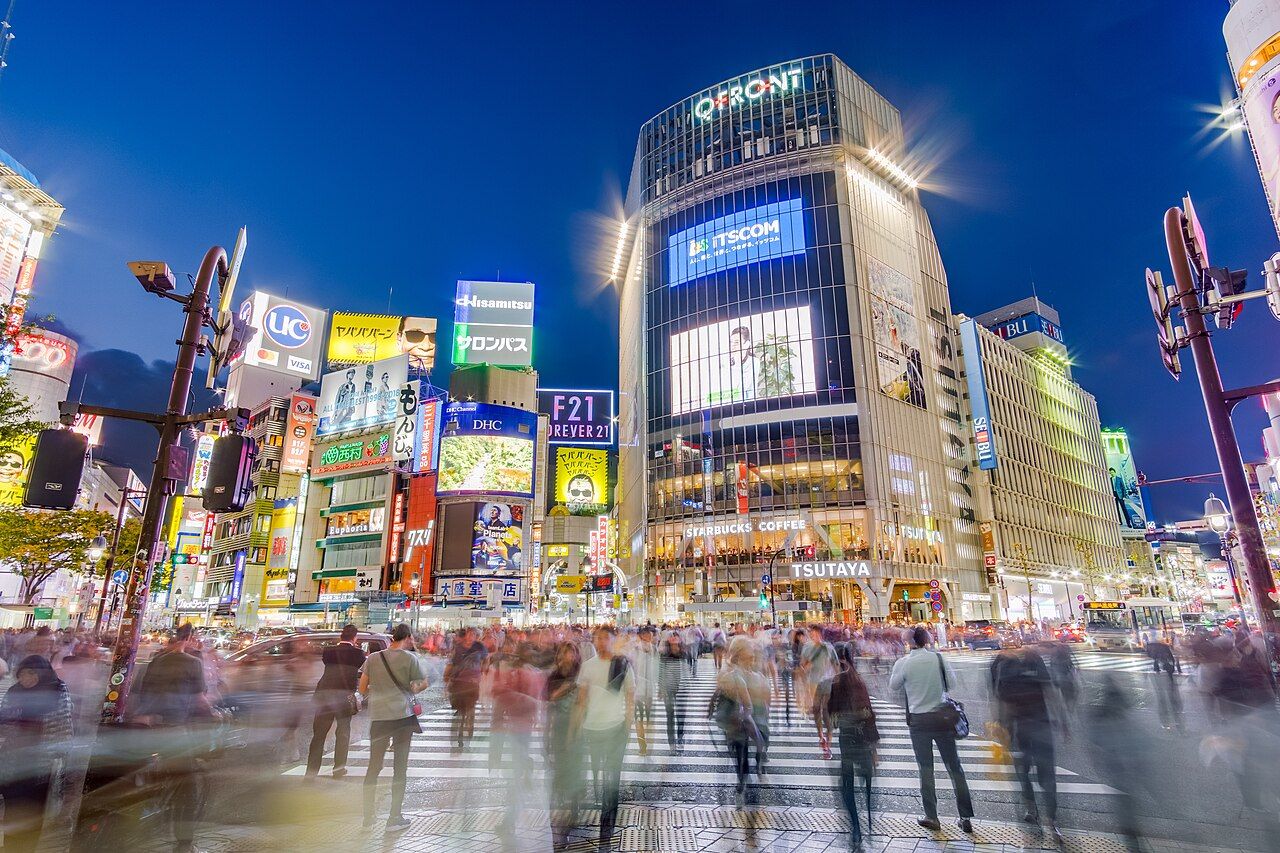
The world's busiest pedestrian crossing, where up to 3,000 people cross at once from every side, and Shibuya Sky, an open roof 230 metres up beside it.
about ¥2,500 eachday's highlightbook the sunset slot
After check-in and a rest. Cross the scramble first at street level, then up to Shibuya Sky; sunset slots sell out a few weeks ahead. Mount Fuji shows on clear evenings to the west.
Sunset is about 18:00. Bags and hats go in lockers before the open roof.
Tokyo's oldest temple, founded in 645, entered through the Thunder Gate with its giant red lantern and up a street of stalls.
free
Forty minutes by Marunouchi and Ginza lines. At 8:00 the Kaminarimon gate and Nakamise street are quiet; the stalls open from 9:30. Shake an omikuji fortune for ¥100; tie a bad one to the rack.
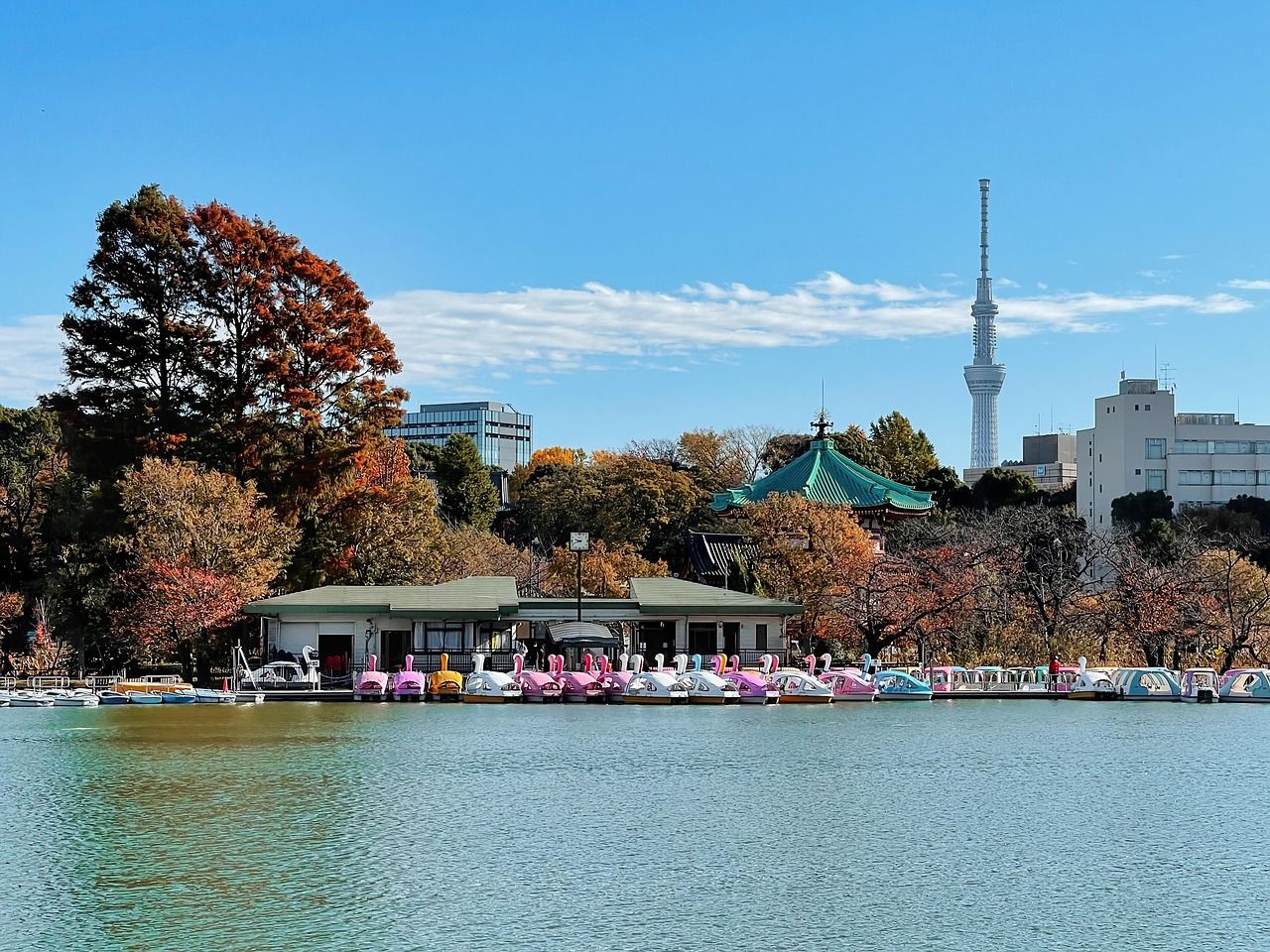
Tokyo's oldest park, with about 800 cherry trees lining its main avenue, the city's most famous hanami spot.
freeday's highlightpacked at weekends
Ginza line three stops to Ueno. Buy a picnic at the konbini or the station's food hall: onigiri, karaage, strawberry sandos. Office groups claim blue tarps under the trees from dawn; find a gap along the Shinobazu pond.
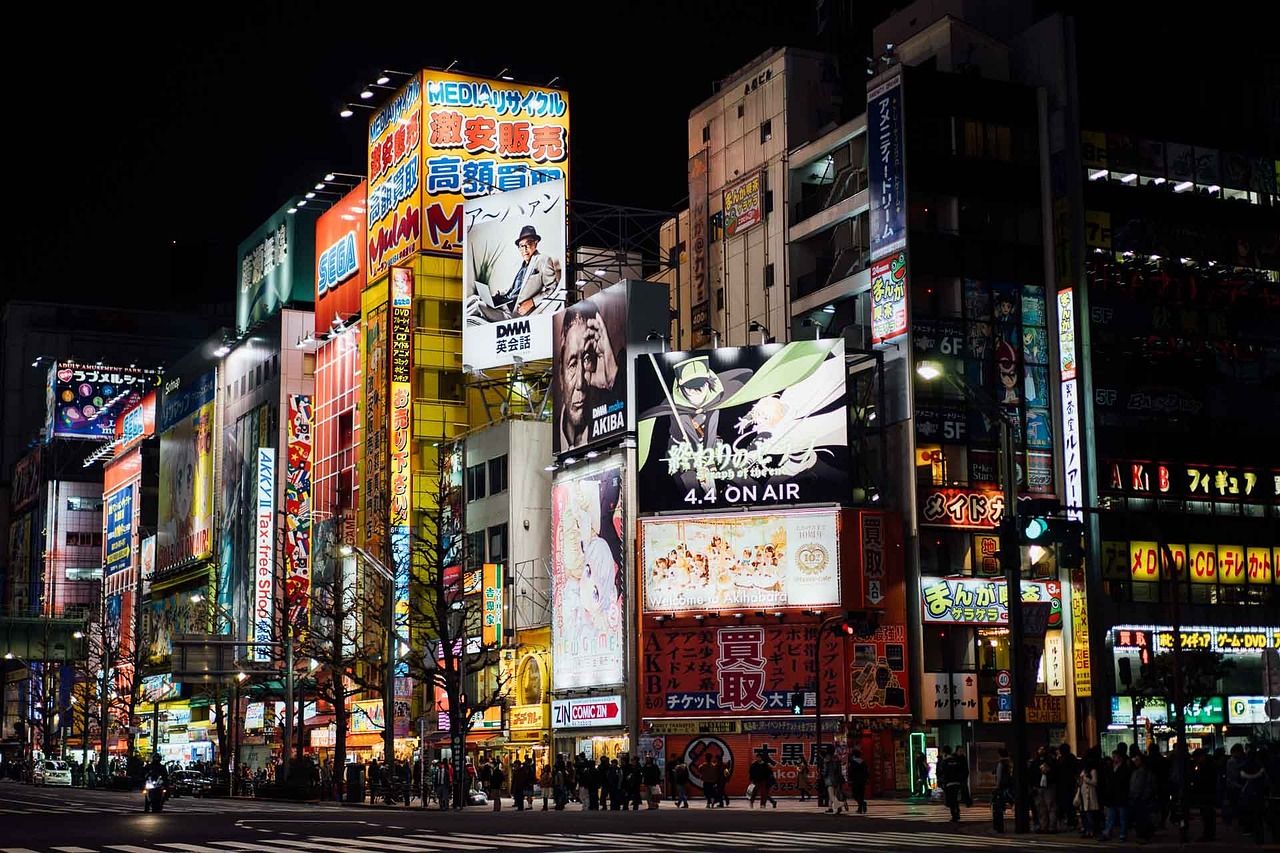
Tokyo's district of electronics, anime, manga and multi-storey game arcades.
¥100 a game
Two JR stops. The arcades on Chuo-dori have rhythm games on one floor and crane games on another; retro game shops sell old cartridges. Lunch at a curry or tonkatsu counter.
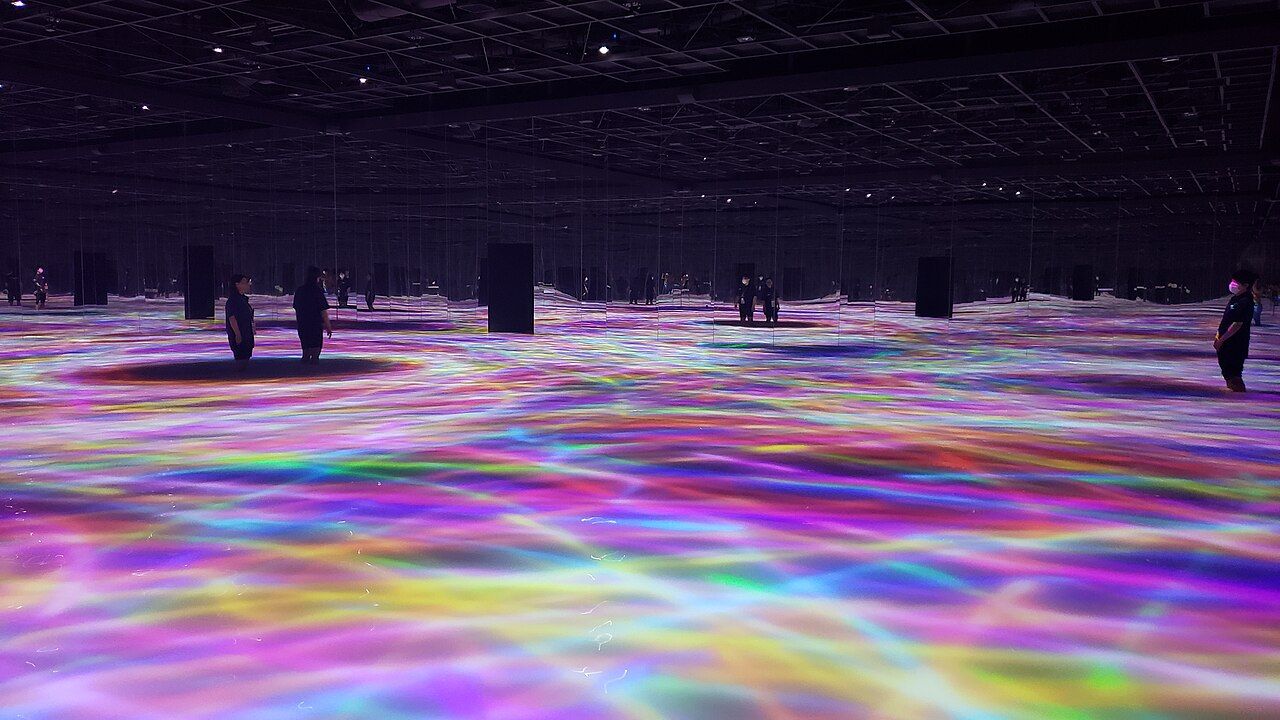
A museum of immersive digital art by the collective teamLab, where you walk barefoot through water and rooms of light.
about ¥4,000 eachtimed tickets
After a rest at the hotel, 40 minutes to Shin-Toyosu. Tickets are timed and sell out weeks ahead in spring. Wear trousers that roll above the knee: one room is knee-deep water. Ninety minutes.
Fifteen minutes by the Yurikamome and Ginza lines. Ginza's basement food streets and side lanes have counter sushi shops at fixed set prices; conveyor-belt shops are cheaper and fun.
If you fall behind
Skip Akihabara and rest before teamLab.
If rain spoils the picnic, the Tokyo National Museum is in Ueno Park.
Day 3 · Sat
Tsukiji's market, boats on the Chidorigafuchi moat, Nakameguro's lit canal and Golden Gai
Tokyoout 08:00👟 ≈ 14,500 steps
Breakfast at Tsukiji's outer market, a rowing boat on the cherry-lined moat at Chidorigafuchi. Nakameguro's lit canal at dusk, the tiny bars of Golden Gai.
The streets of food stalls and knife shops that stayed when Tokyo's wholesale fish market moved to Toyosu in 2018.
¥2,000–4,000 each
Thirty minutes by subway. Graze: tamagoyaki on a stick, grilled scallops, a bowl of tuna over rice. Many stalls close by 14:00; some on Wednesdays and Sundays.
A moat of the Imperial Palace lined with cherry trees leaning over the water, one of Tokyo's best-known blossom views.
boats about ¥800 for 30 minday's highlightqueues
Subway to Kudanshita. Walk the path along the moat's edge, 700 metres under the trees. The rowing-boat pier at the far end has a queue of an hour or more in blossom week; join it at opening if you can.
The Imperial Palace East Gardens are 15 minutes south, free, closed Mondays and Fridays.
Jimbocho, the booksellers' district next door, has old soba shops; zaru soba, cold buckwheat noodles with a dipping sauce. Then back to the hotel to rest.
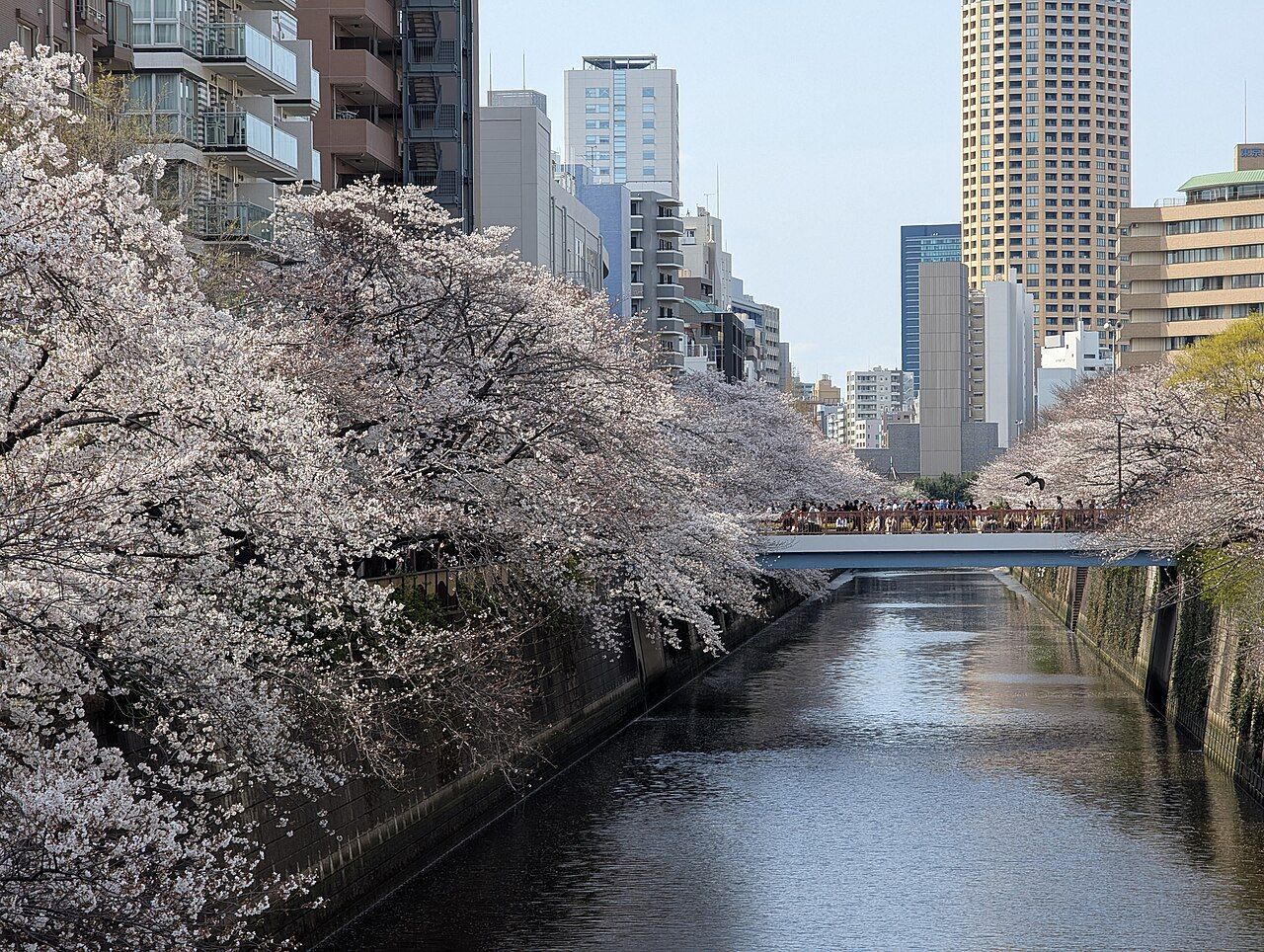
The Meguro river canal in Nakameguro, lined for four kilometres with cherry trees that are hung with lanterns in blossom season.
freecrowds
Twenty-five minutes by train. Stalls sell strawberry sparkling wine along the banks; walk downstream as the lanterns come on at dusk. Police keep the crowd moving on the bridges.
Six alleys of about 200 bars in two-storey wooden shacks in Shinjuku, most with five to ten seats.
cover ¥500–1,500 + drinks
Dinner first at an izakaya in Shinjuku. In Golden Gai, bars that welcome visitors post their cover charge in English at the door; some are members only. Every bar has its theme: punk, film, jazz.
If you fall behind
Skip the boat queue and walk the moat path.
Go to the Shinjuku Gyoen garden, ¥500, if the canal is too crowded.
Day 4 · Sun
The Romancecar to Hakone, Owakudani, Lake Ashi and a ryokan night
Tokyo to Hakoneout 08:30👟 ≈ 9,000 steps
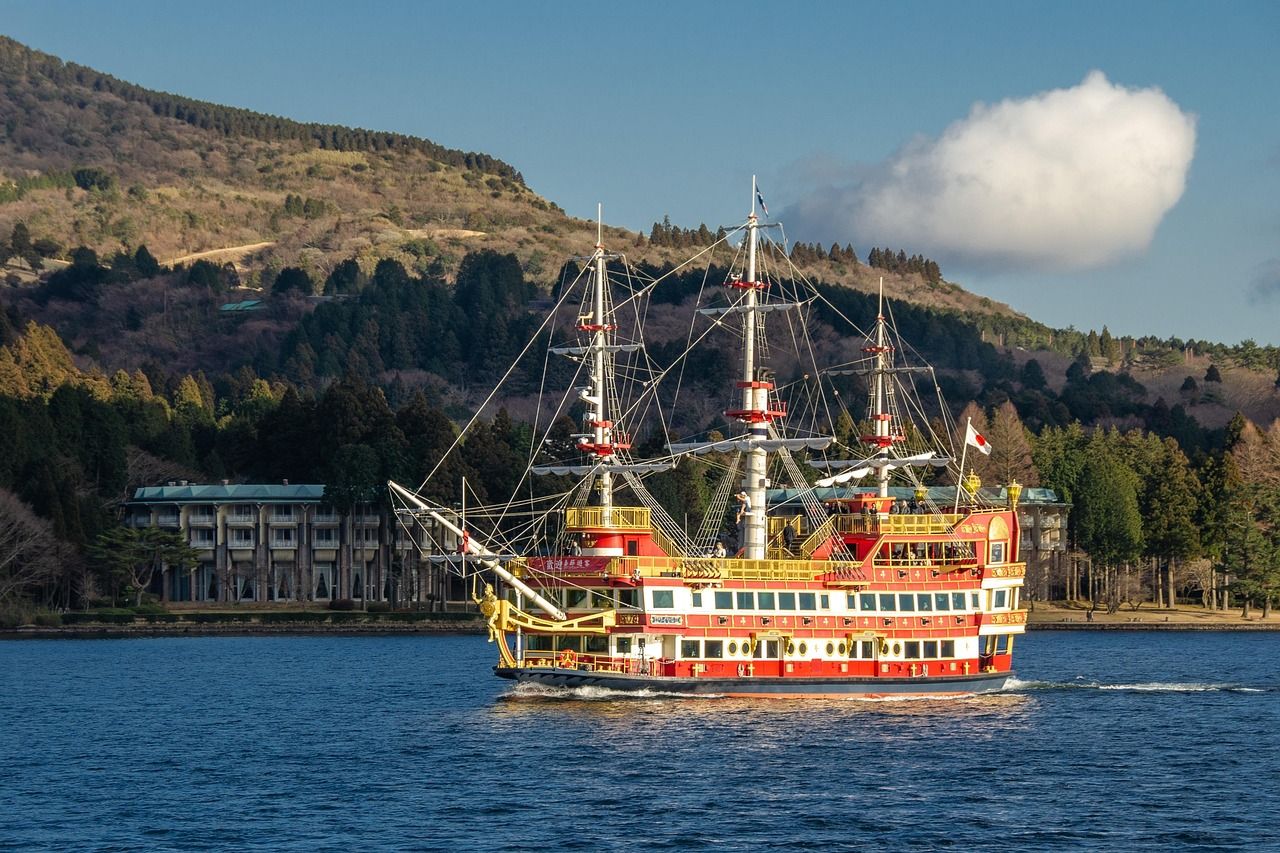
Suitcases sent ahead to Kyoto, the Romancecar from Shinjuku. The Hakone loop by mountain train, ropeway and boat, Fuji over Lake Ashi, then a ryokan's baths and dinner.
The Odakyu Hakone Freepass covers the return trip and every train, cable car, ropeway, boat and bus on the loop; the Romancecar needs a seat supplement, about ¥1,200, booked online.
The Tozan train, the cable car and the ropeway to Owakudani📍 in Google Maps
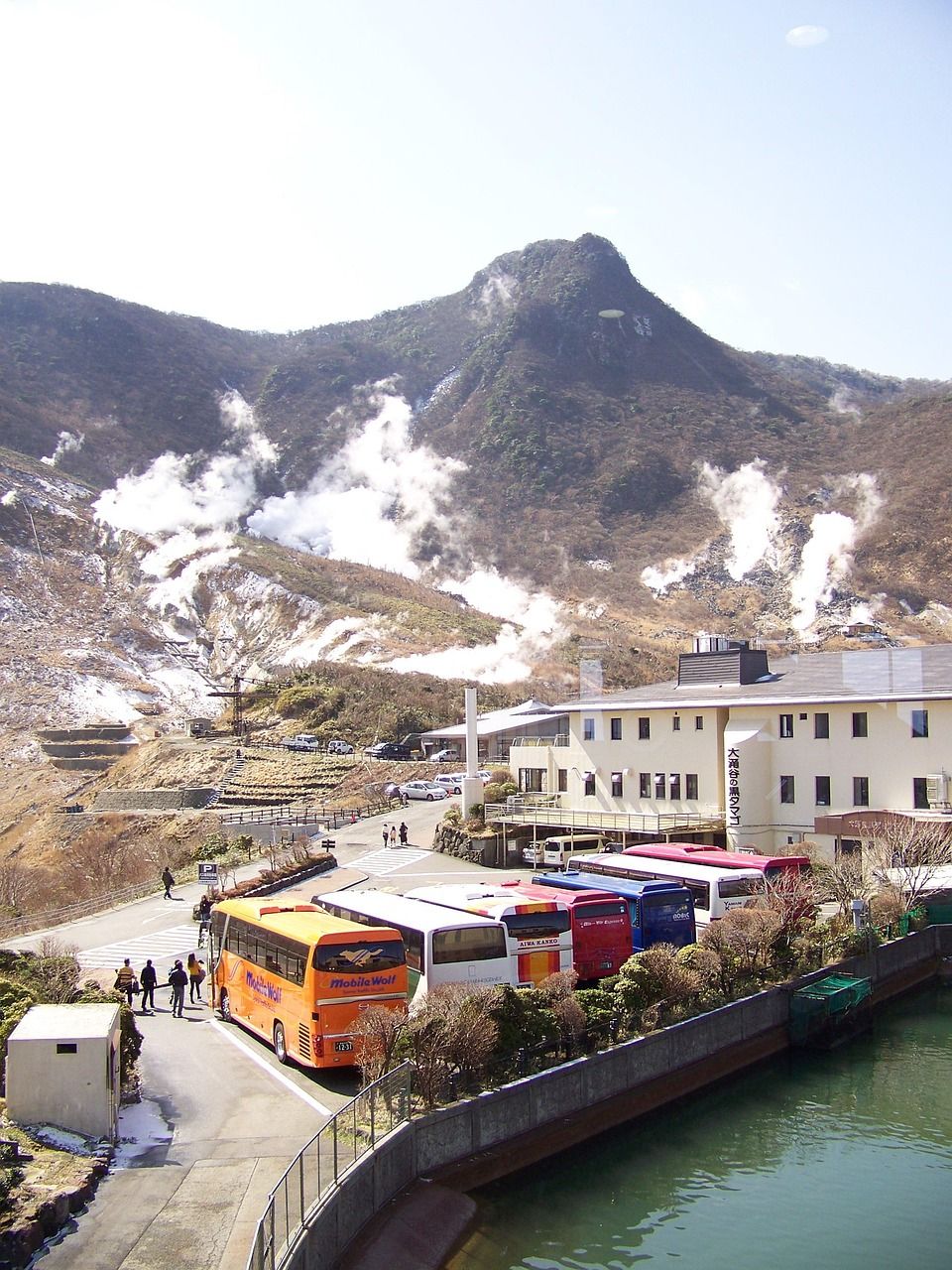
A volcanic valley of sulphur vents formed 3,000 years ago, where eggs boiled in the hot springs turn black and are said to add seven years to your life.
on the Freepass
The Hakone Tozan train switchbacks up to Gora, then the cable car to Sounzan and the ropeway over the steaming valley; Fuji appears ahead on a clear day. Eat a black egg at the top and have lunch there. The ropeway closes when the gas level rises.
A shrine in the cedar forest on Lake Ashi's shore, whose red Peace Torii stands in the water.
freephoto queue
Ten minutes from the pier. People queue for a photo under the torii; the shrine up the stone steps is quieter. Then the bus back to Gora, about an hour.
A ryokan is a Japanese inn: tatami rooms, futons laid out at night, a hot-spring bath, and a multi-course kaiseki dinner served in the room or a dining room.
with dinner and breakfast
Change into the yukata robe, then the onsen: wash fully at the seated showers first, then soak; no swimwear, men and women separate. Tattoos may be refused in shared baths; ask for a private one. Dinner at 18:00 or 19:00.
If you fall behind
Skip Hakone Shrine and take the bus back from Moto-Hakone straight away.
If the ropeway is shut for volcanic gas, a replacement bus runs.
Day 5 · Mon
The Shinkansen to Kyoto, Fushimi Inari, and Gion's cherry trees at night
Hakone to Kyotoout 08:30👟 ≈ 13,000 steps
The ryokan breakfast, then down to Odawara and the Shinkansen to Kyoto, two hours. Fushimi Inari's gates in the afternoon, Gion's lit cherry trees at night.
The Tozan train or bus down to Odawara, 40 minutes, on the Freepass. Then a Hikari Shinkansen to Kyoto, about two hours; reserve seats E (the window on the right going west) for Fuji, which appears about 15 minutes out of Odawara.
Taxi or bus 205 from the station. The suitcases sent from Tokyo wait at the reception. Lunch along Nishiki Market, five minutes away; eat at the stall where you buy.
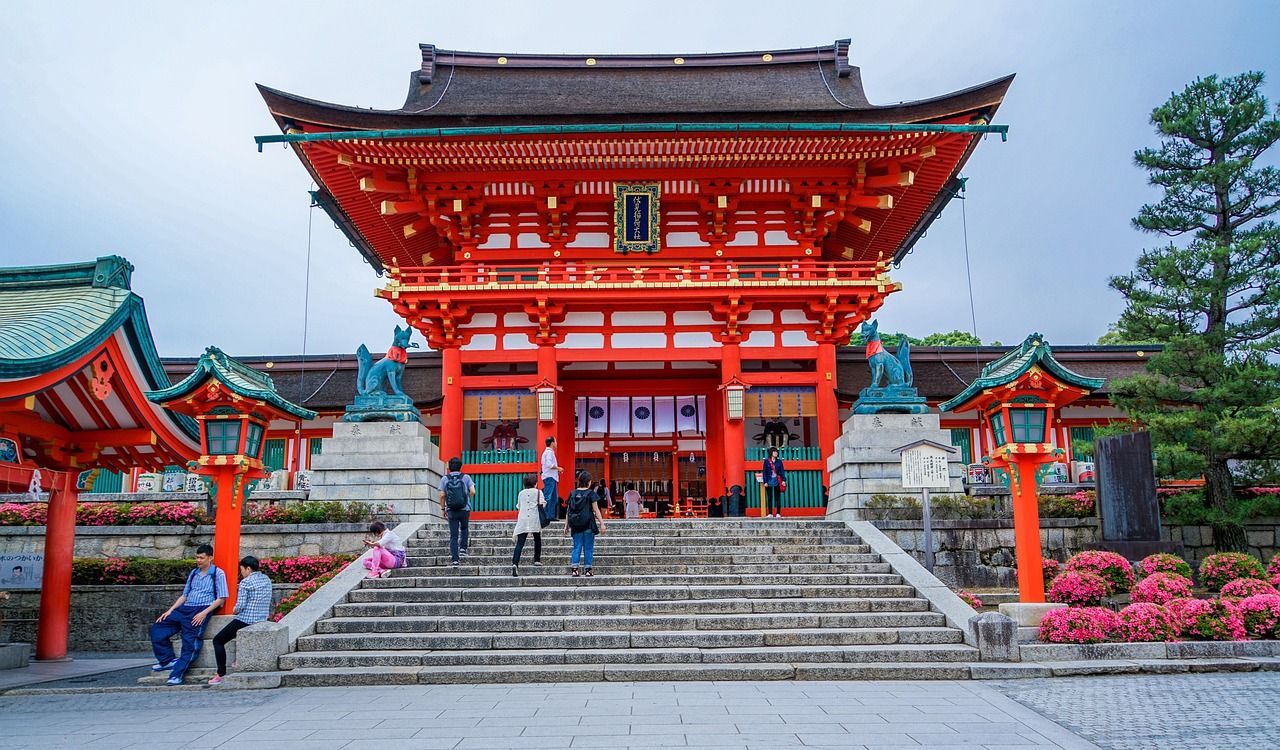
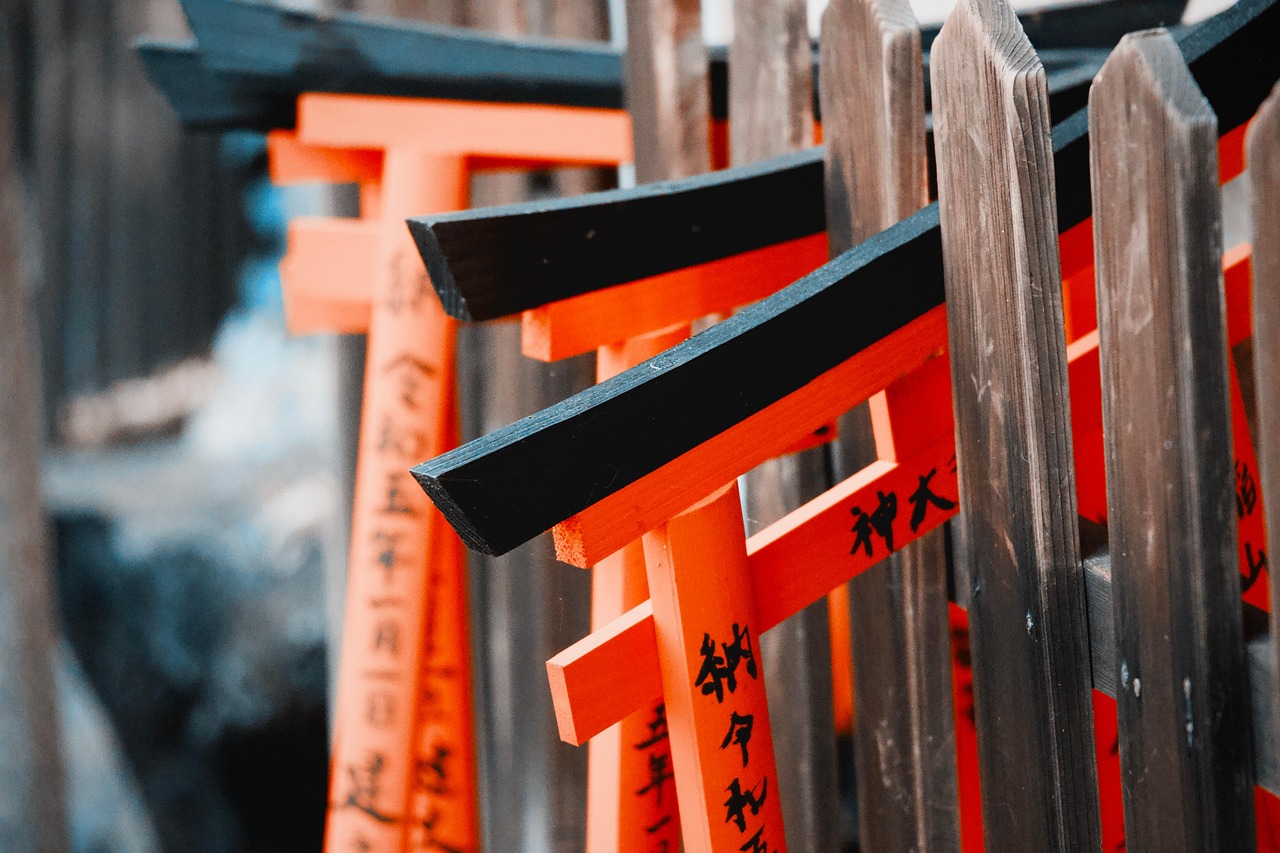
The head shrine of Inari, god of rice and business, with about 10,000 vermilion torii gates over the paths up Mount Inari.
freeday's highlightsteps
Keihan line from Gion-Shijo to Fushimi-Inari, 10 minutes. The double row of gates, Senbon Torii, is busiest at the bottom; keep climbing.
By the Yotsutsuji crossing, 45 minutes up, the crowds thin and the city lies below; the full loop over the summit adds an hour. Allow two and a half hours.
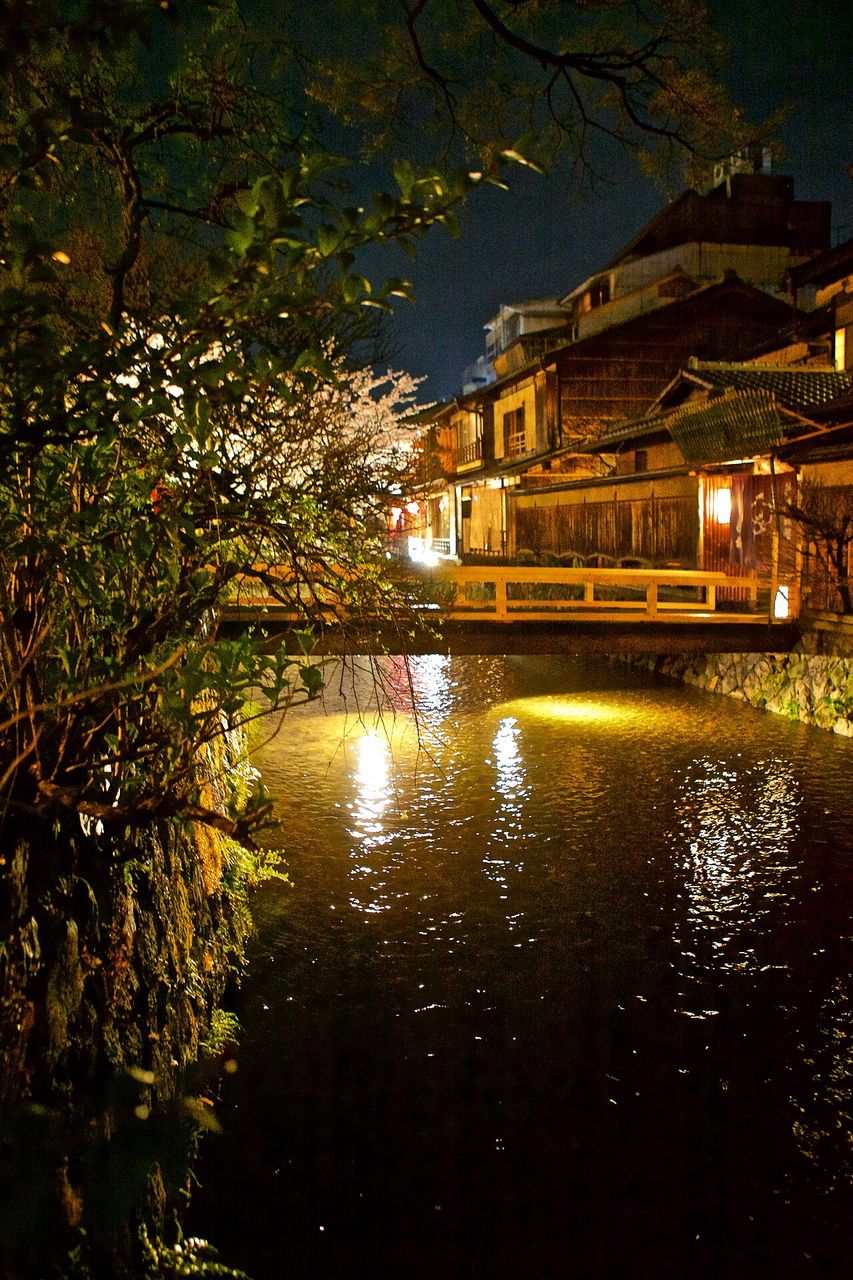
The Shirakawa canal in Gion, lined with willows and cherry trees lit at night in blossom season, and Hanamikoji, the lane of wooden teahouses.
freeno photos in private lanes
Five minutes from the hotel. Walk the canal under the lit trees, then Hanamikoji south. The side lanes are private, with fines for photos; never photograph a geiko or maiko up close.
Pontocho is one lane of restaurants a shoulder wide; book a few days ahead in blossom week. Yakitori and tempura counters, or obanzai, Kyoto home cooking.
If you fall behind
Turn back at the first viewpoint on Mount Inari.
Eat in the Kiyamachi lanes if Pontocho is full.
Day 6 · Tue
Arashiyama's bamboo grove at dawn, Tenryu-ji, Kinkaku-ji and Ryoan-ji
Kyotoout 07:00👟 ≈ 14,500 steps
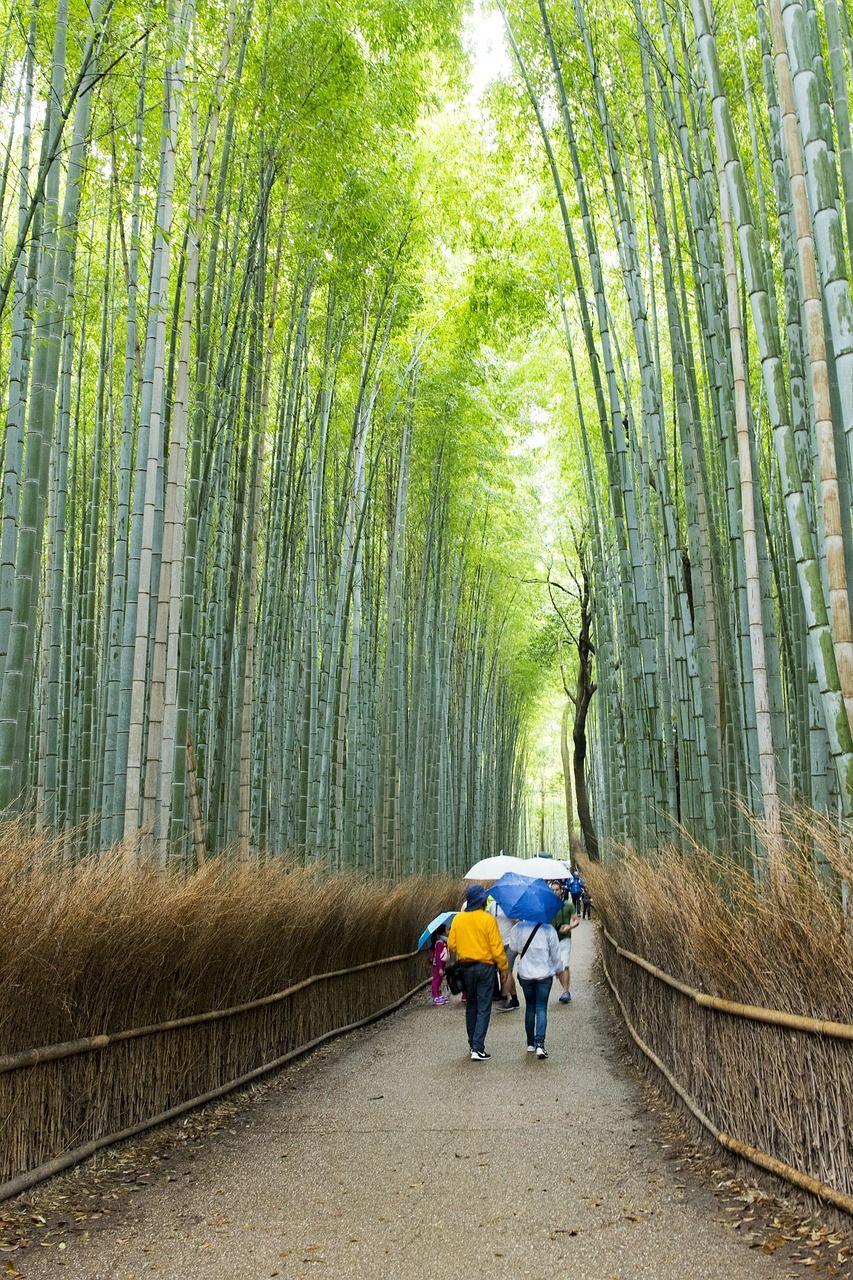
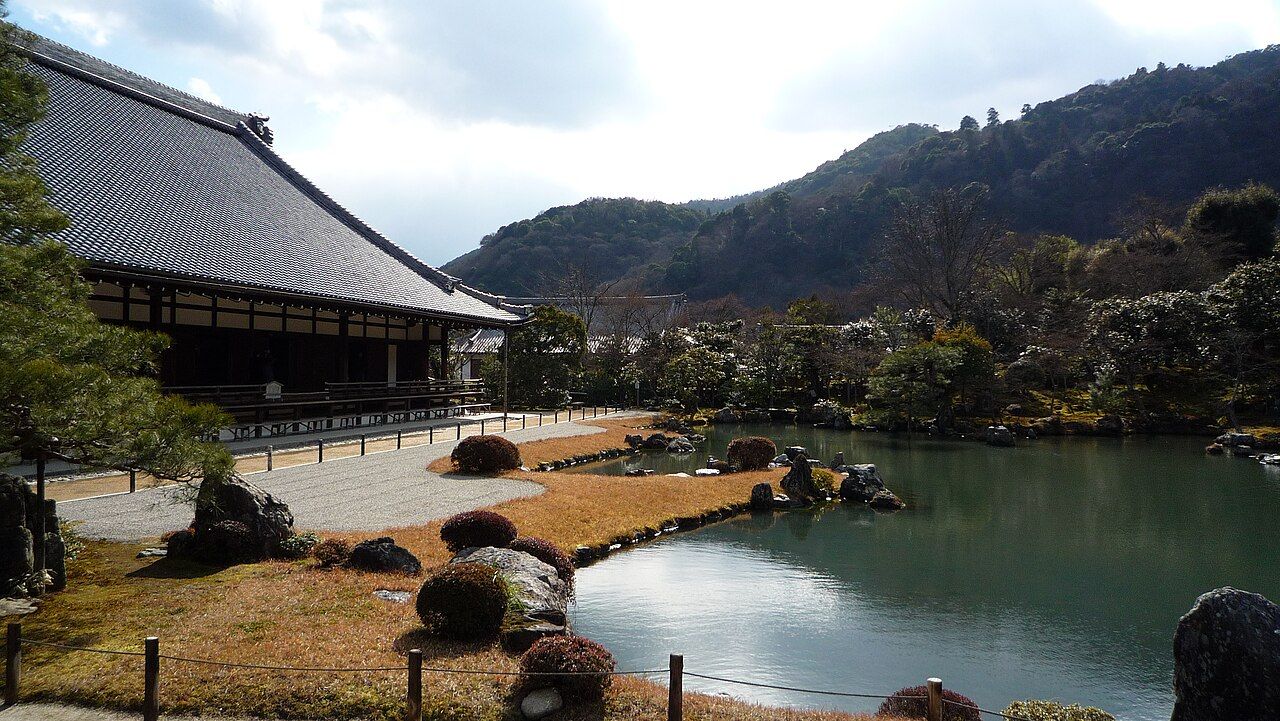
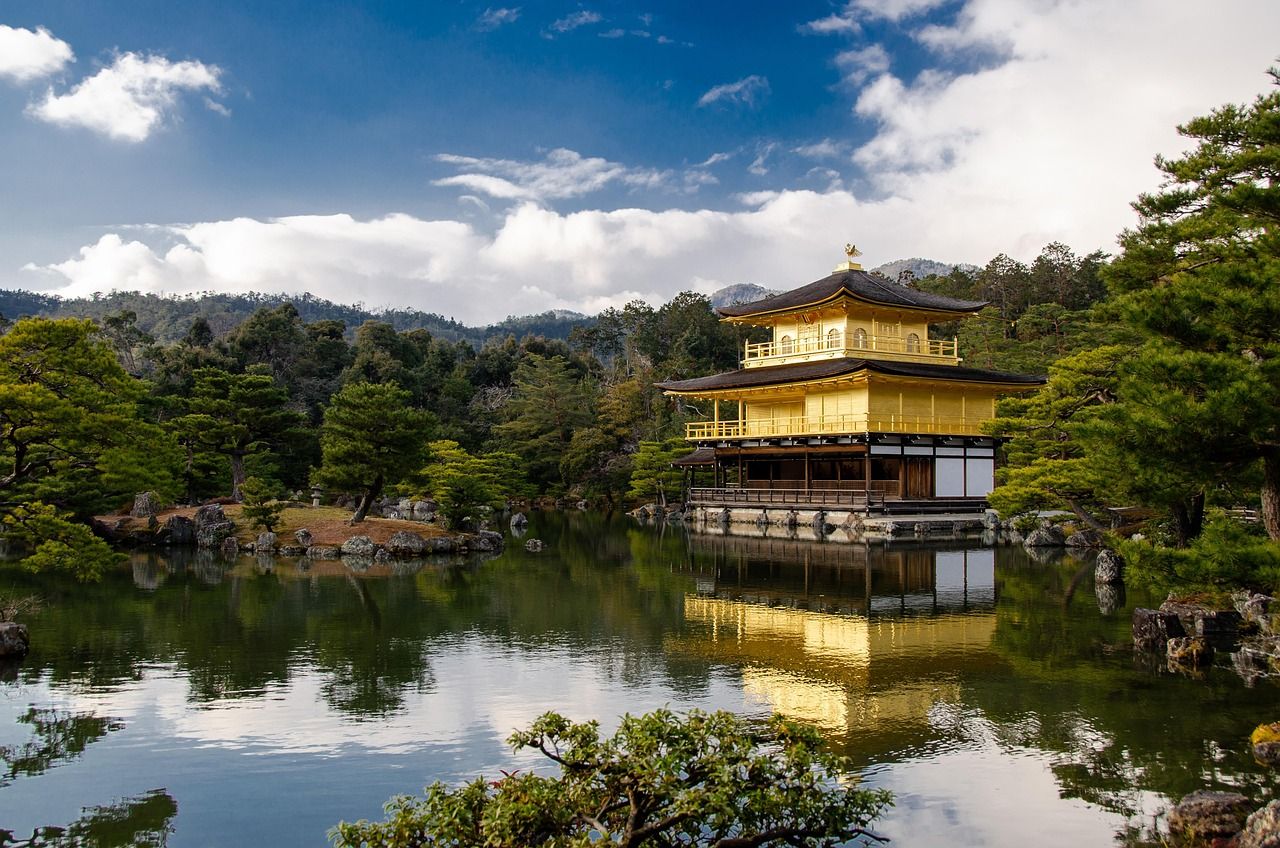
Out at 7:00 for the bamboo grove before the tour groups, Tenryu-ji's garden at 8:30. The Golden Pavilion and Ryoan-ji's stone garden after lunch.
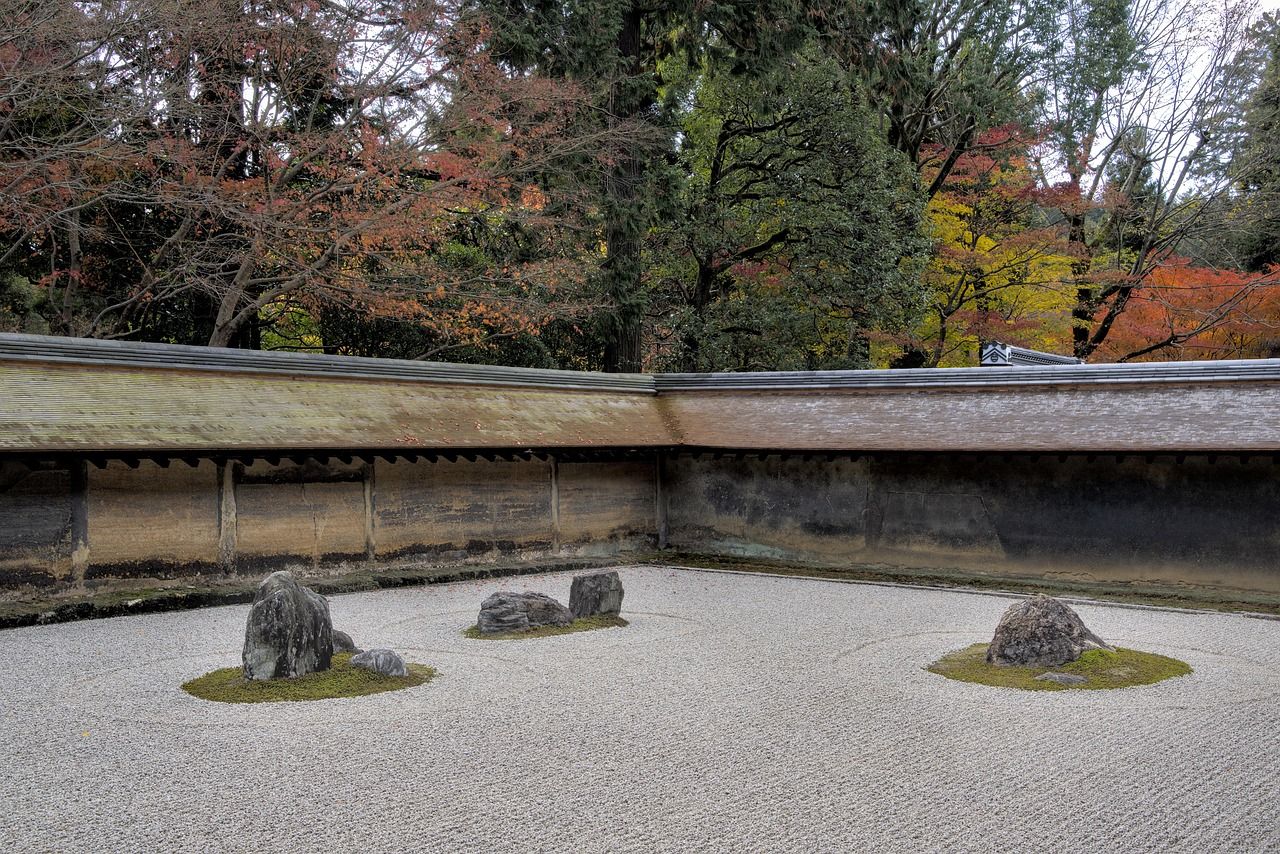
The Zen temple with Japan's best-known dry garden: fifteen stones on raked gravel, of which never more than fourteen can be seen at once.
¥600 each
Twenty minutes' walk along Kinukake-no-michi. Sit on the veranda and count the stones; the cherry tree over the wall flowers in early April. Then a taxi back, about ¥3,000.
The canal street by the hotel, its cherry trees over the water. Izakaya with counters; order a few plates at a time.
If you fall behind
Skip Ryoan-ji.
Rest at the hotel after Arashiyama and see Kinkaku-ji at 15:00.
Day 7 · Wed
Kiyomizu-dera, the old lanes, and the Philosopher's Path in blossom
Kyotoout 07:45👟 ≈ 15,500 steps
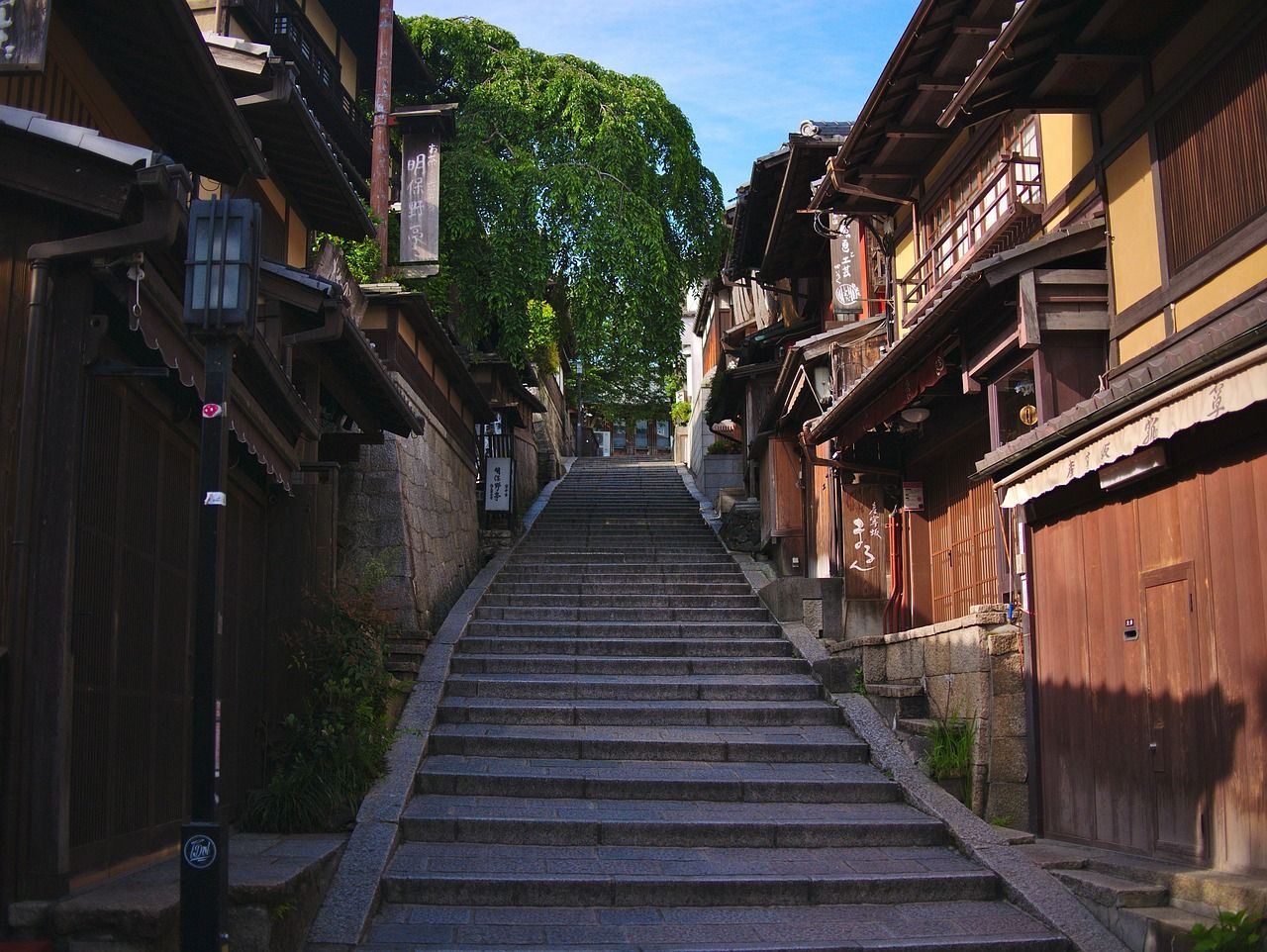
Kiyomizu-dera at 8:00, before the crowds, down the stepped lanes. The Philosopher's Path under its arch of cherry trees, from the Silver Pavilion to Nanzen-ji.
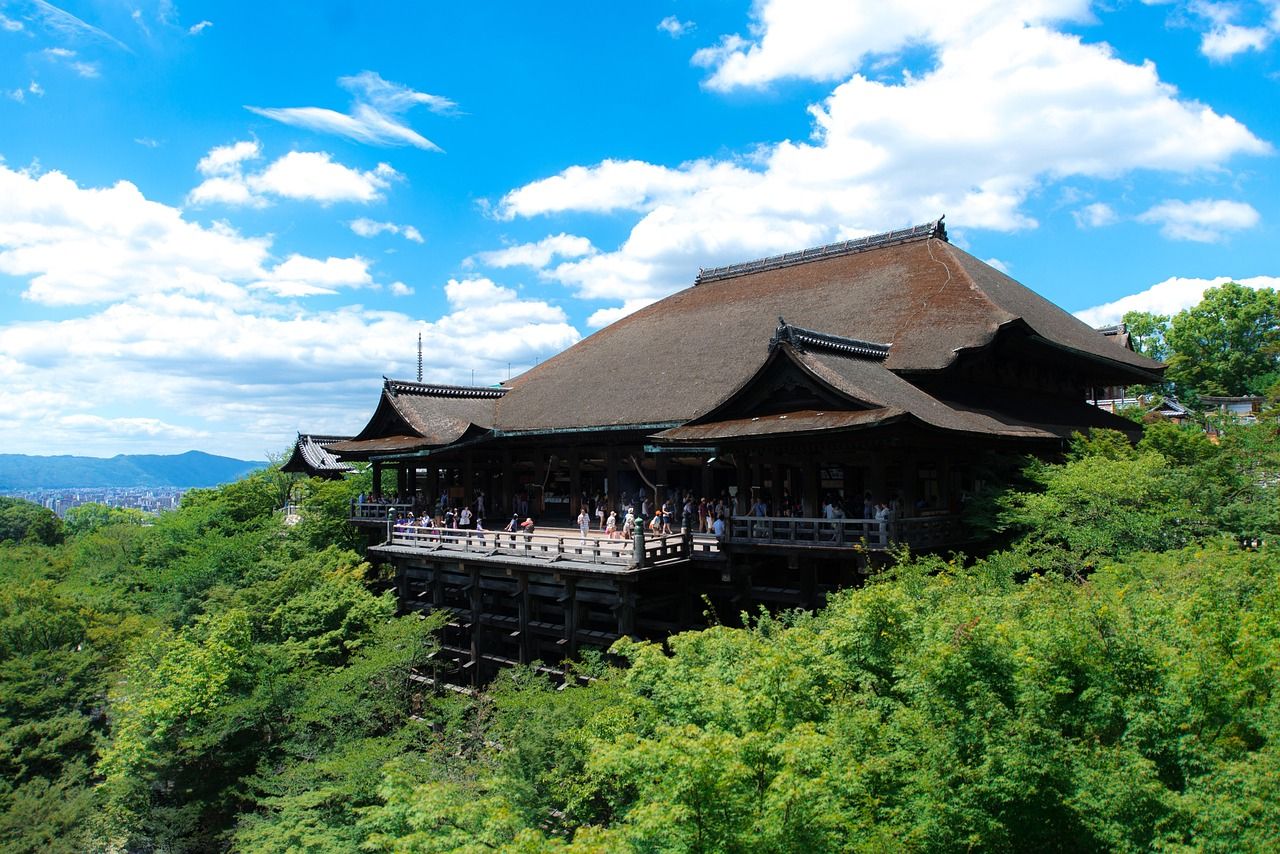
The 8th-century temple on the hillside whose main hall stands on a wooden stage built without nails, over a valley of cherry trees.
¥500 each
A taxi up, ¥1,200, or 25 minutes on foot. In blossom week the stage looks over a sea of pink; at 8:00 it is nearly empty. Below, the Otowa waterfall's three streams. An hour.
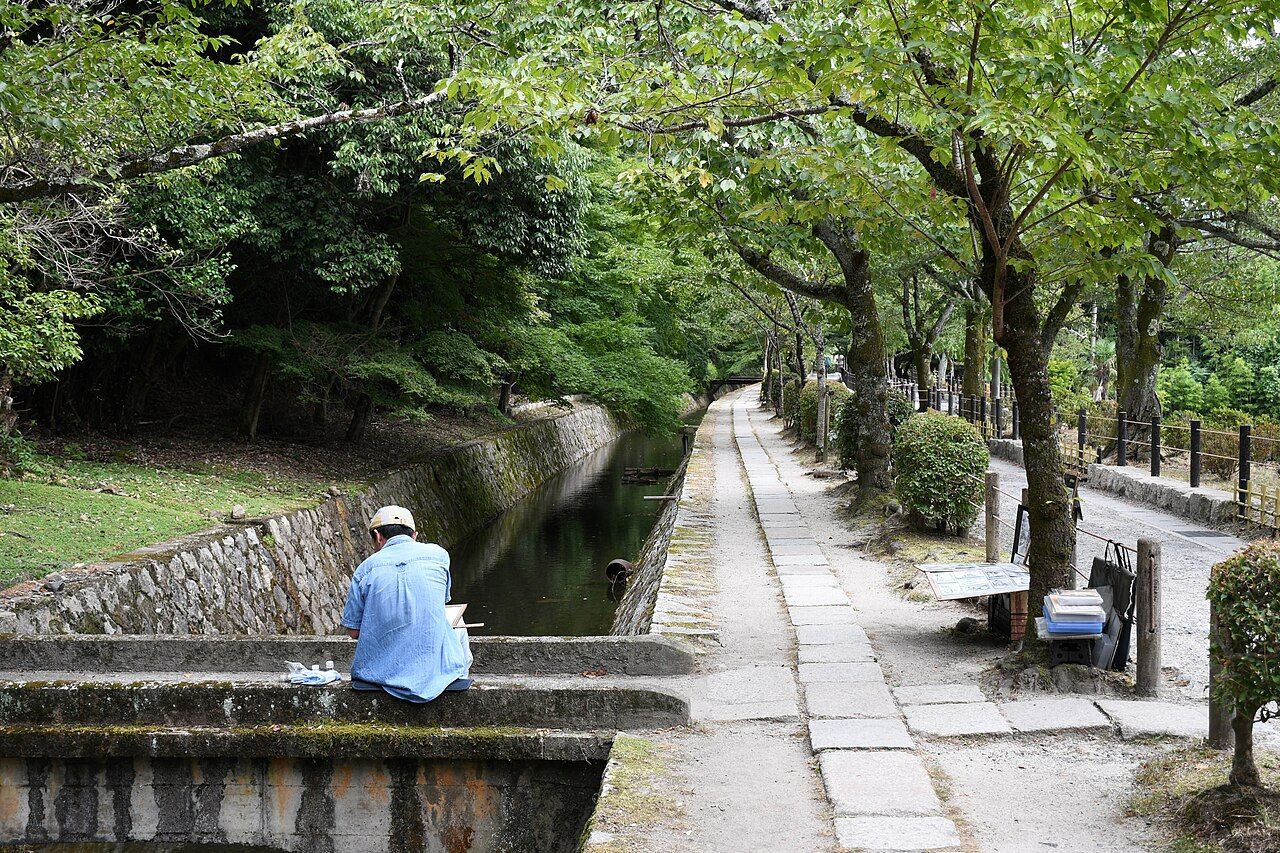
A stone path along a canal in north-east Kyoto, named after the philosopher Nishida Kitaro, lined with about 400 cherry trees.
freeday's highlightcrowds
First Ginkaku-ji, the Silver Pavilion, ¥500, with its raked-sand garden. Then the path south, two kilometres, 40 minutes, under branches meeting over the water; petals float down the canal when they fall.
Small cafés and Honen-in, a quiet moss temple, sit just off it.
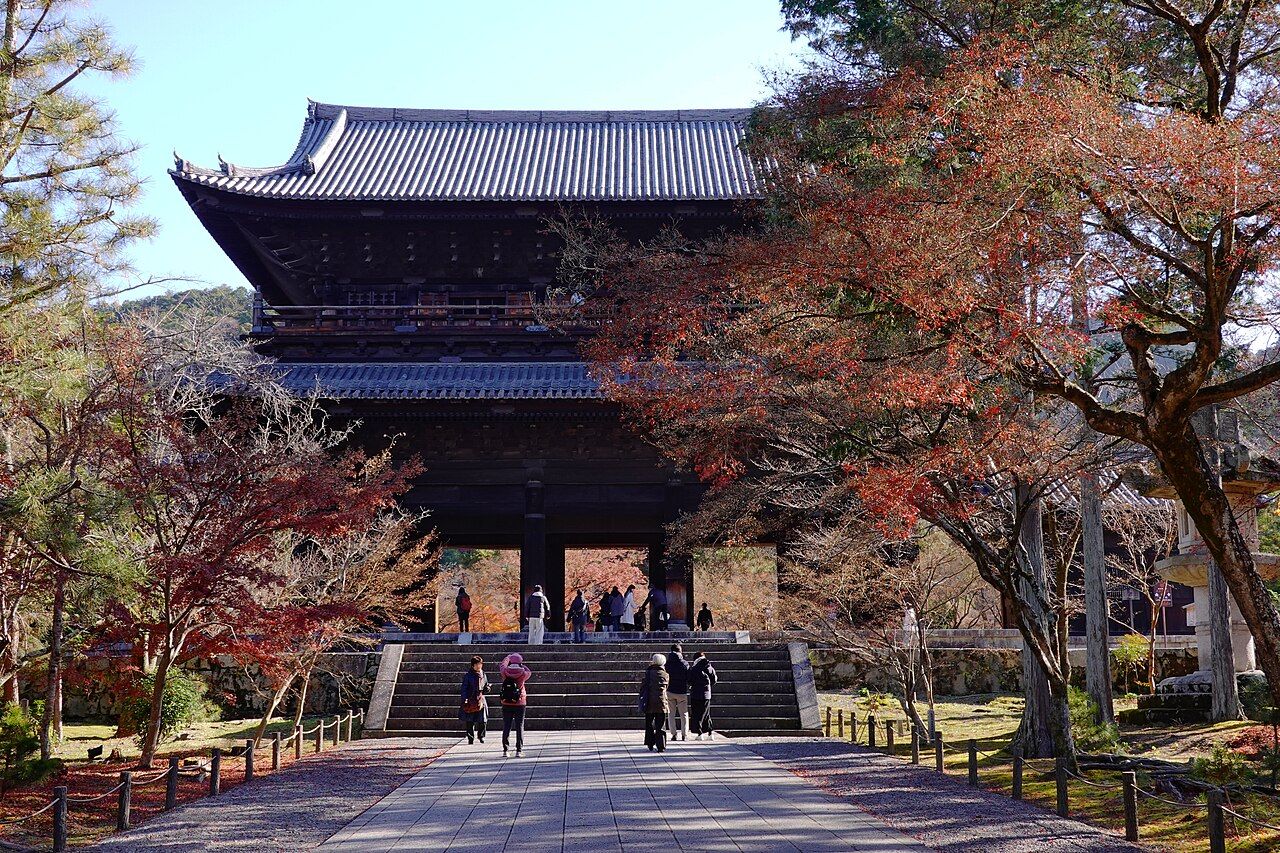
One of Japan's most important Zen temples, with a 22-metre wooden gate and an 1890 brick aqueduct running through its grounds.
grounds free; gate ¥600
Ten minutes from the end of the path. Climb the Sanmon gate for the view; walk under the aqueduct's arches. Then the Keage incline, an old boat railway lined with cherry trees, five minutes away.
Kyoto's oldest public park, whose giant weeping cherry is lit at night in blossom season, with food stalls round it.
¥2,000–4,000 each
Street-food stalls set up round the tree: takoyaki, yakisoba, grilled corn. Families sit under the trees on tarps late into the evening.
If you fall behind
Walk only half the Philosopher's Path.
Skip Nanzen-ji's gate and walk the Keage incline only.
Day 8 · Thu
Nara's deer and Todai-ji, then Osaka's Dotonbori
Kyoto to Osaka via Naraout 08:00👟 ≈ 14,500 steps
Suitcases sent to Osaka, the train to Nara: the deer park, the giant Buddha of Todai-ji, Kasuga Taisha's lanterns. On to Osaka for Dotonbori's neon at night.
Takkyubin from the Kyoto hotel to the Osaka hotel, arriving tomorrow; carry an overnight bag. The Kintetsu limited express from Kyoto Station to Kintetsu Nara, IC card plus a small seat fee.
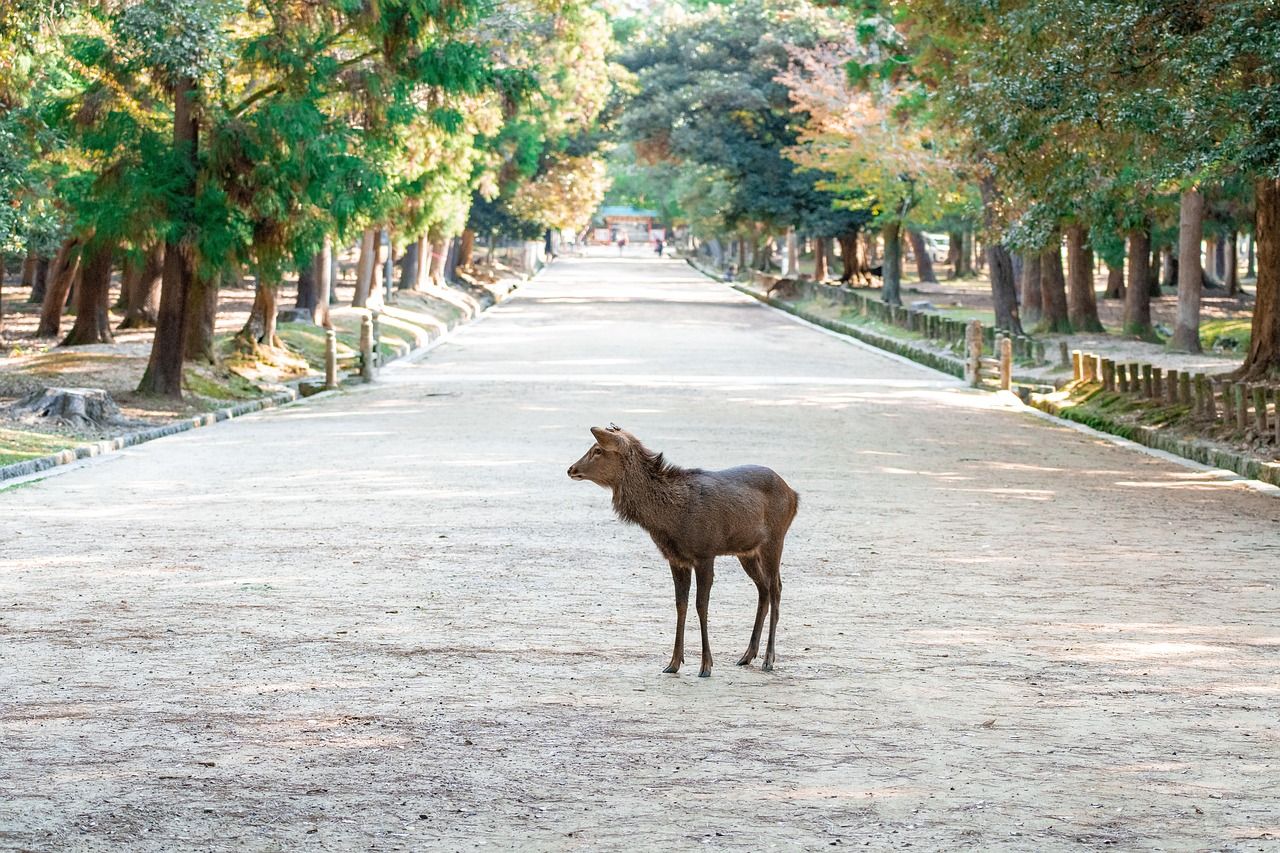
A great park in the old capital where about 1,200 wild sika deer roam, held sacred as messengers of the gods; many bow for crackers.
crackers ¥200deer nip
Five minutes from the station. Buy shika senbei, deer crackers, from the stands; bow to a deer and it bows back. Hold the crackers high and do not tease: they butt and nip.
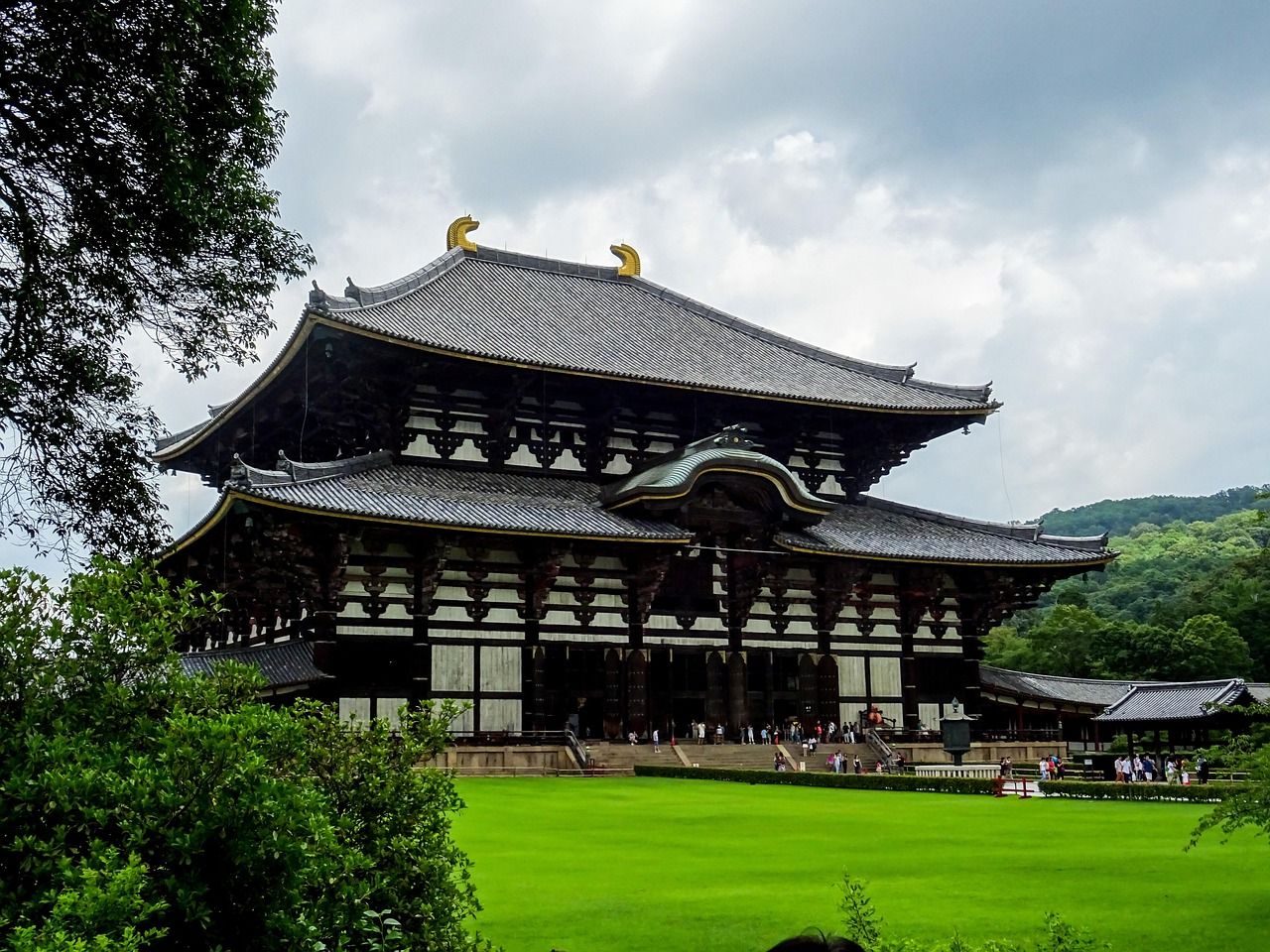
A temple of 752 whose Great Buddha Hall, among the largest wooden buildings in the world, holds a 15-metre bronze Buddha.
about ¥800 eachday's highlight
Through the Nandaimon gate with its two giant guardian figures. Inside, walk round the Buddha; behind it, a pillar has a hole the size of the Buddha's nostril, and children squeeze through it for luck.
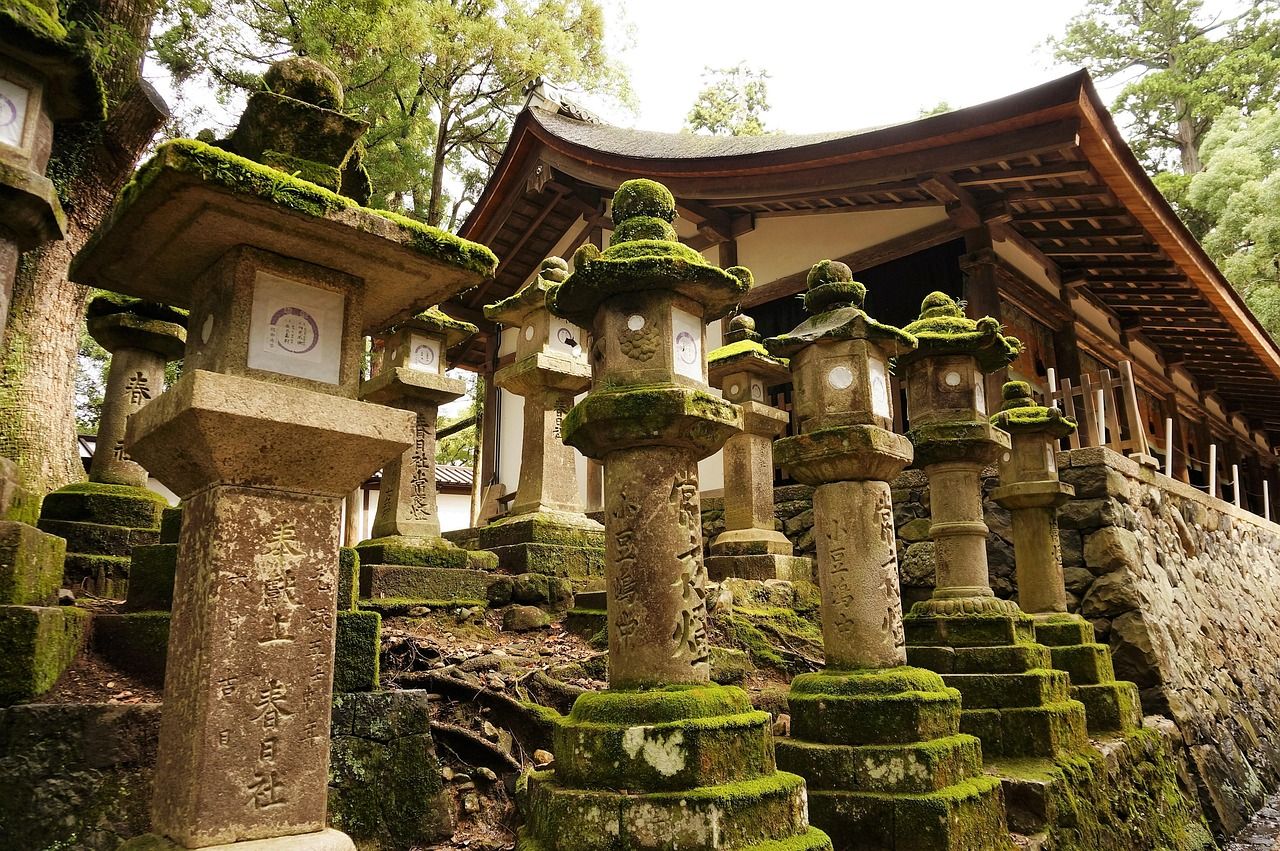
Nara's great Shinto shrine of 768, its paths lined with about 2,000 stone lanterns and its corridors hung with 1,000 bronze ones.
inner area about ¥700
Twenty minutes through the forest past rows of mossy stone lanterns. Inside the inner area, a dark room shows the bronze lanterns lit as they are at the twice-yearly festivals. Lunch on the way back to the station: kakinoha-zushi, sushi wrapped in persimmon leaves.
The canal street of Osaka's nightlife, under giant moving signs of crabs, pufferfish and the Glico running man.
¥2,000–4,000 each
Five minutes from the hotel. Eat as you go: takoyaki, octopus balls, from the stands with queues; kushikatsu, fried skewers, where the rule is no double-dipping in the shared sauce. Photograph the Glico sign from the Ebisu bridge.
If you fall behind
Skip Kasuga Taisha.
Eat at the hotel area if Dotonbori is too crowded.
Day 9 · Fri
Osaka Castle, Kuromon Market, Shinsekai and the Umeda Sky Building
Osakaout 08:30👟 ≈ 14,500 steps
Osaka Castle among the cherry trees, lunch at Kuromon Market, the old Shinsekai quarter. Sunset from the Umeda Sky Building's floating garden, okonomiyaki after.
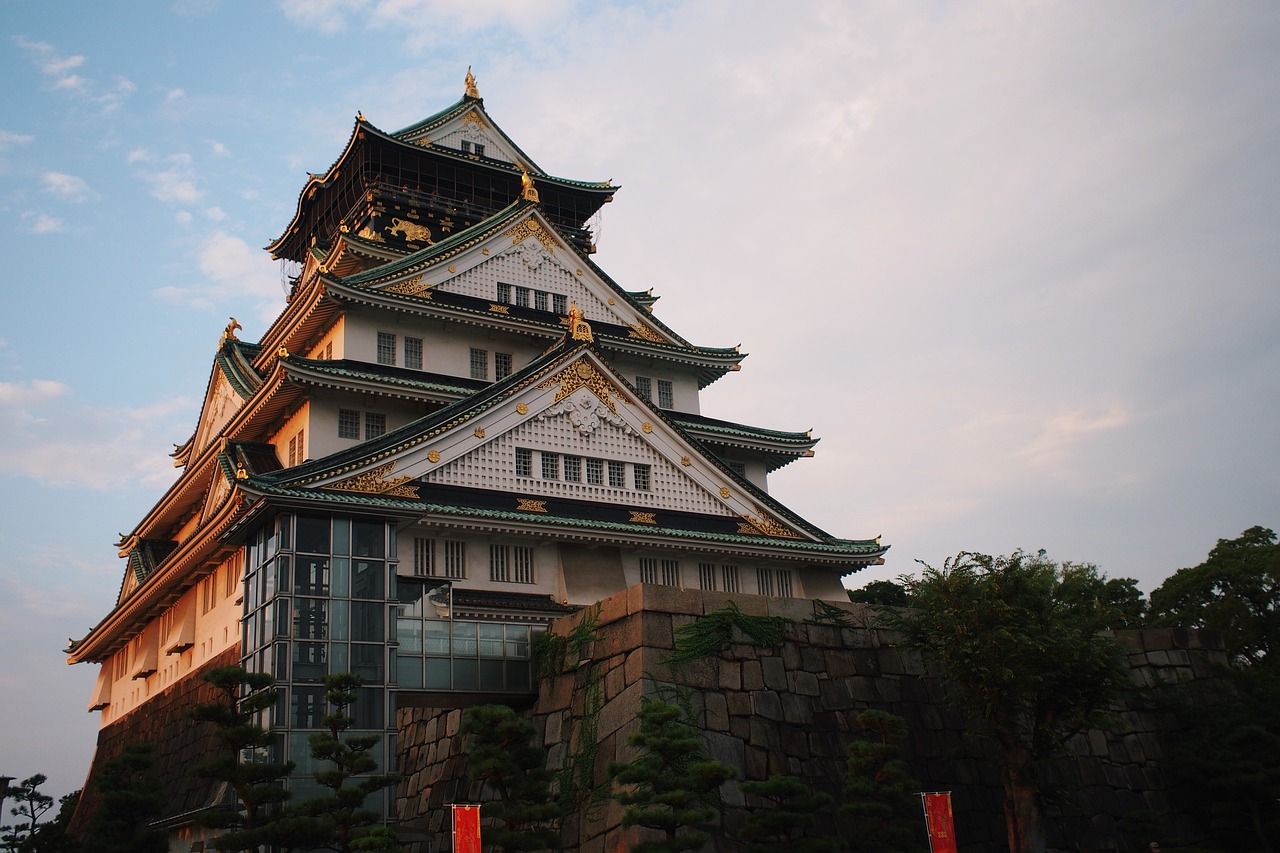
Toyotomi Hideyoshi's castle of 1583, which unified Japan's warlords; the keep was rebuilt in concrete in 1931 and holds a museum.
keep about ¥1,200; garden ¥350day's highlight
Subway to Tanimachi 4-chome. The Nishinomaru Garden's 600 cherry trees frame the keep; it is the best photograph. The keep's museum and the 8th-floor gallery are crowded by ten.
The giant stones of the walls, some over 100 tonnes, are the oldest part. Allow two hours.
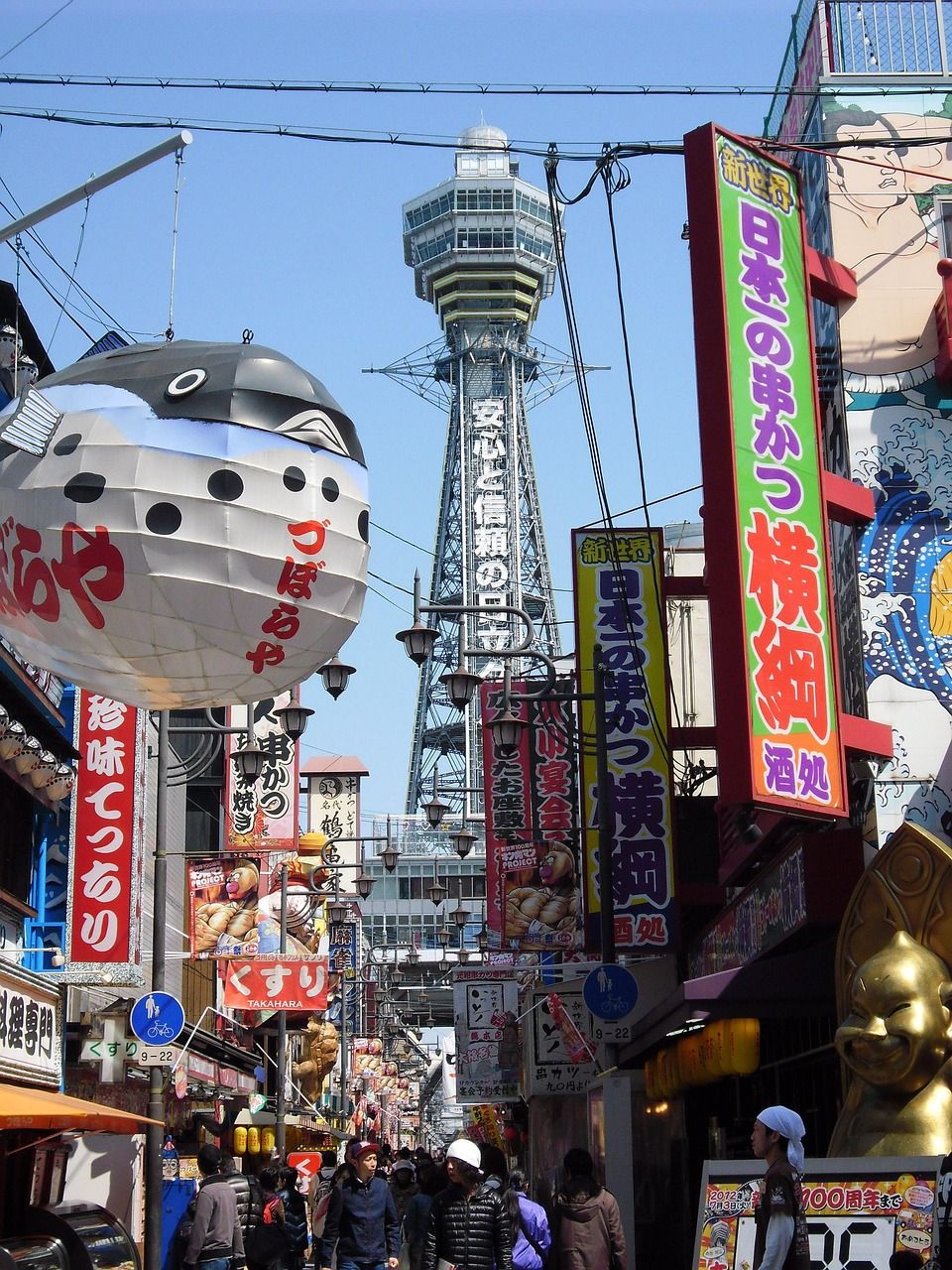
A quarter built in 1912 as Osaka's 'new world', now a cheerful, shabby district of kushikatsu bars and pinball parlours round the Tsutenkaku tower.
free
Two subway stops. The streets of giant shop signs, the Billiken statue whose feet you rub for luck, and kushikatsu at a counter. Then the hotel for a rest.
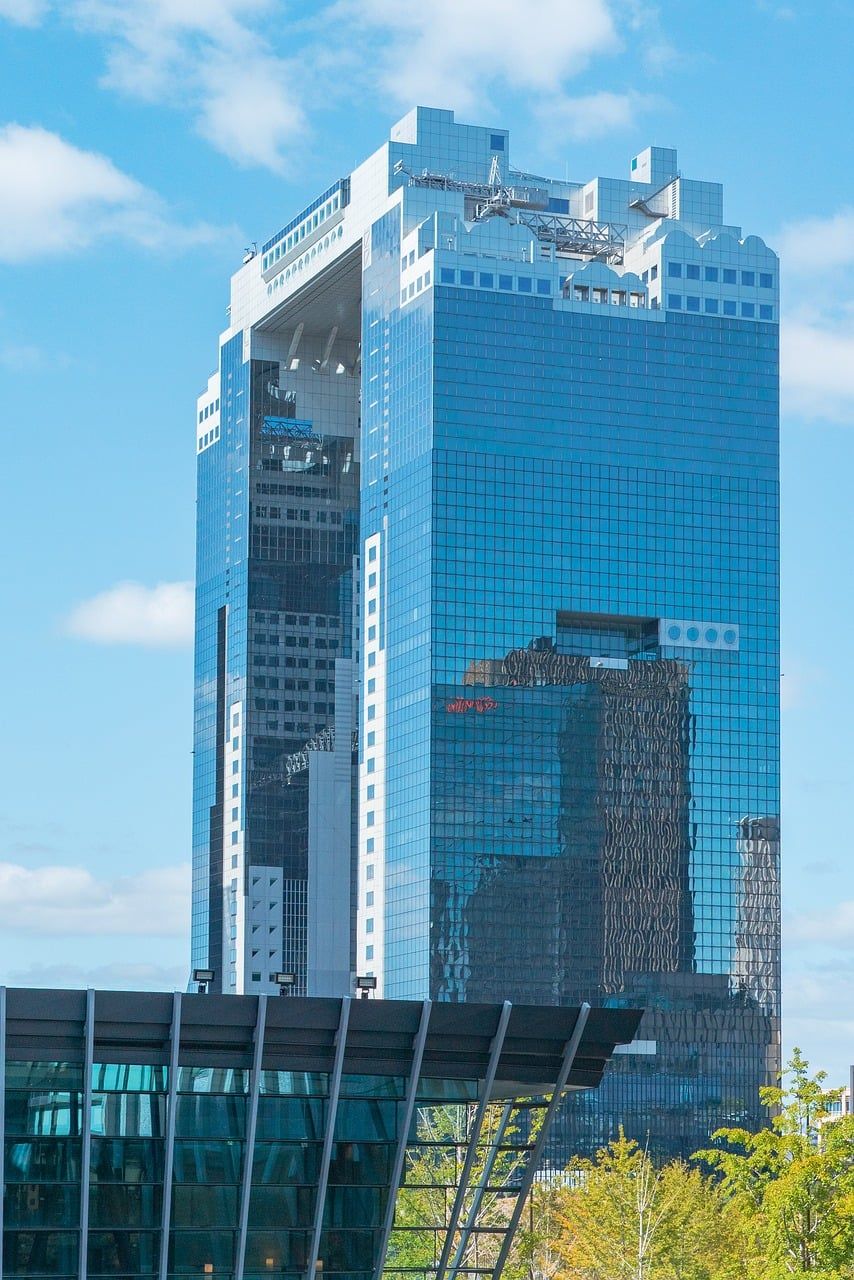
Two 40-storey towers joined at the top by a ring-shaped open deck called the Floating Garden Observatory, built in 1993.
about ¥2,000 each
Midosuji line to Umeda, then ten minutes on foot through the underpass. Glass escalators cross the gap between the towers. Sunset is about 18:30; stay for the lights.
The restaurant floors under Umeda station have okonomiyaki shops: a cabbage-and-batter pancake cooked on a hotplate at your table, topped with sauce and bonito flakes. A last drink back in Namba.
If you fall behind
Skip the castle museum and see the grounds only.
Skip Shinsekai and rest before Umeda.
Day 10 · Sat
Namba Yasaka Shrine, Hozenji Yokocho and the train to Kansai
Osakaout 08:30👟 ≈ 5,000 steps
Check out, bags at the reception. The lion-head stage of Namba Yasaka Shrine and the mossy statue at Hozenji, then the rapi:t express to Kansai at 11:00 for the 14:00 flight.
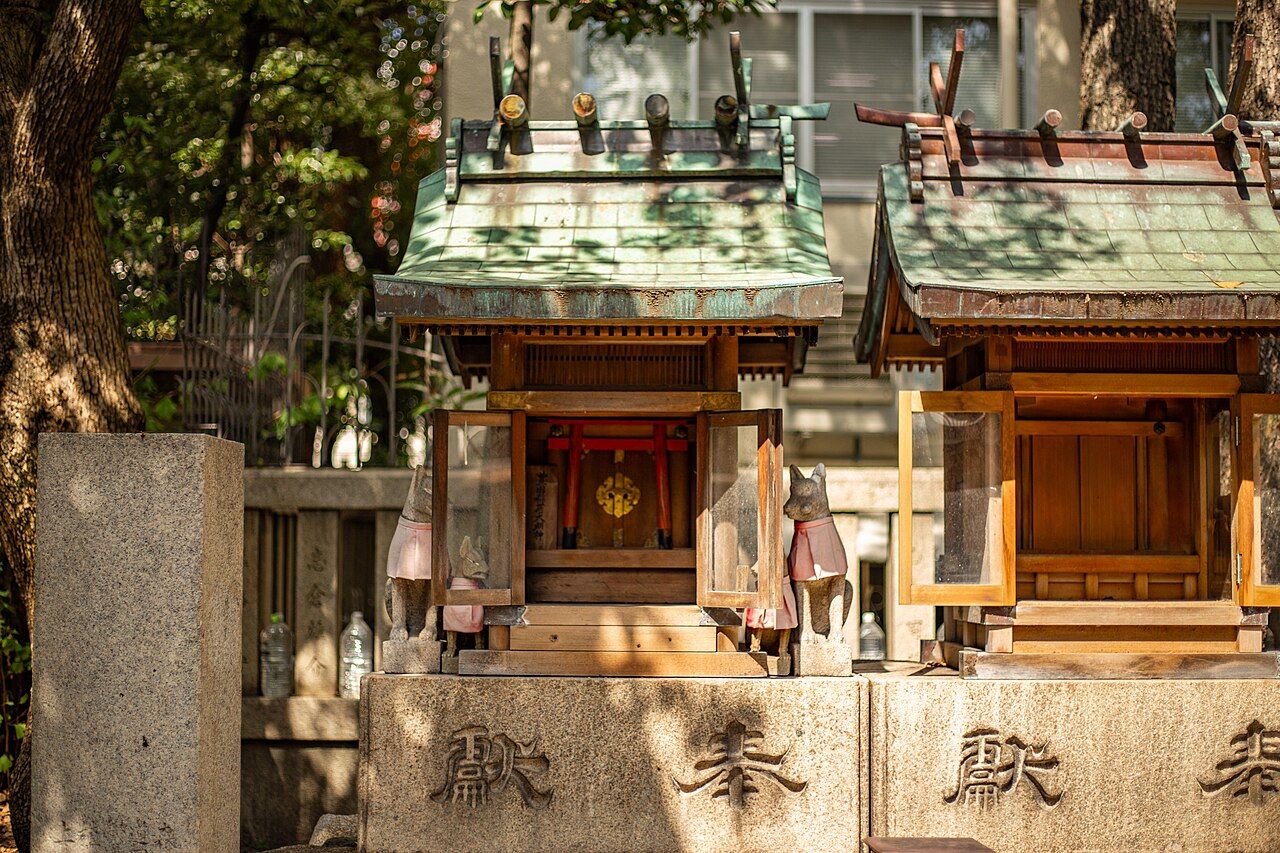
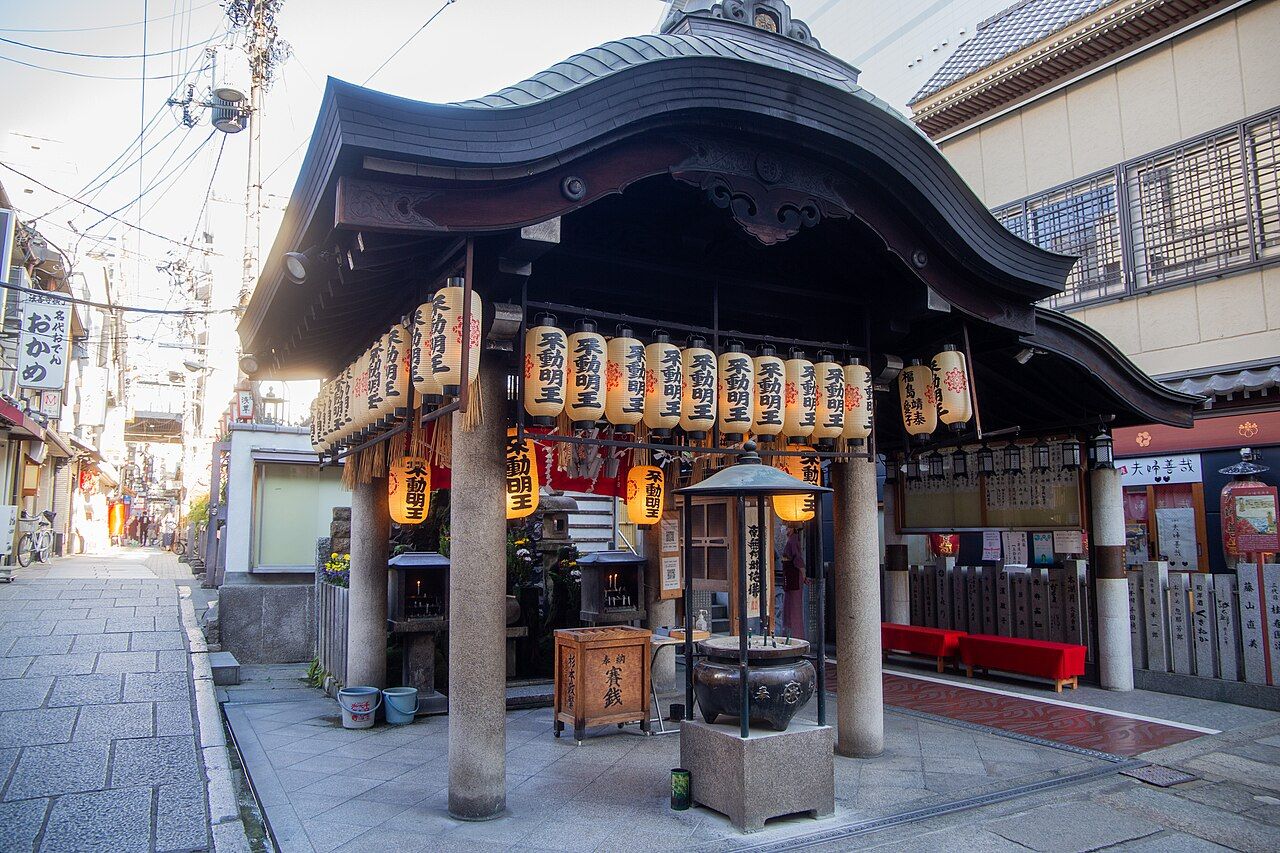
A stone-paved alley of old restaurants behind Dotonbori, and the temple of Hozenji, whose Fudo Myoo statue is covered in thick moss from people splashing it with water.
free
Splash the statue with a ladle of water and make a wish, as Osakans have for decades. Then a last coffee and a melon pan from a konbini.
The Nankai rapi:t limited express from Namba, 40 minutes, seats reserved at the station or online. Japan's tax-free shopping is refunded at the airport: keep the receipts.
If you fall behind
Skip Namba Yasaka Shrine.
Take the ordinary Nankai airport express if the rapi:t is full; 10 minutes longer.
Trains: Suica, the Shinkansen and passes
Suica in the phone's wallet pays for almost every local train, subway and bus; long journeys are separate tickets.
Local trains
Add Suica to an iPhone's Wallet with a foreign card, or buy a Welcome Suica at the airport; each traveller needs their own. Tap in and out at the gates. It also pays in konbini and vending machines.
Since the 2023 price rise, the JR Pass does not pay off on this route; buy the Shinkansen ticket alone.
The Hakone Freepass covers the Odakyu line and the whole Hakone loop.
Reserved Shinkansen seats open a month ahead; in blossom week, reserve.
Sending suitcases
Takkyubin delivery, through the hotel reception or a konbini, moves suitcases hotel to hotel overnight for about ¥2,500 each. It saves hauling them through Hakone and onto crowded trains.
Manners
Small rules
Queue in lines marked on the platform; stand on the left on Tokyo escalators, the right in Osaka. Keep phone calls off trains. Do not eat while walking. Shoes off where there is a step up and slippers. There is no tipping, ever.
The onsen
How to bathe
Undress fully in the changing room. Wash and rinse thoroughly at the seated showers before entering the bath; the small towel stays out of the water. Baths are separate for men and women. Tattoos may be refused in shared baths; ask for a private one, kashikiri.
Money
Cash and cards
Cards work in hotels, department stores and chains; small restaurants, shrines and market stalls often want cash. Seven-Eleven and post-office cash machines take foreign cards. Shops marked tax-free remove the 10% tax on purchases over ¥5,000 with your passport.
Budget
For two, 10 days and 9 nights in Japan: Tokyo, Hakone, Kyoto and Osaka. Covers the hotels and the ryokan, the Shinkansen and local trains, the Hakone pass, luggage forwarding, tickets, every meal and a buffer. Flights are not included.
Item
Economy
Comfort
Note
Hotel in Shinjuku, 3 nights
¥75,000
¥135,000
Blossom-week prices
Ryokan in Hakone, 1 night with dinner and breakfast
¥50,000
¥90,000
For two
Hotel in Kyoto, 3 nights
¥75,000
¥135,000
Hotel in Osaka, 2 nights
¥40,000
¥70,000
Lodging taxes
¥3,000
¥5,000
Shinkansen Odawara–Kyoto
¥24,000
¥32,000
Comfort in the Green Car
Hakone Freepass and Romancecar seats
¥15,500
¥15,500
Airport trains and local transport
¥20,000
¥30,000
Comfort takes taxis
Luggage forwarding, twice
¥10,000
¥10,000
Two cases twice
Shibuya Sky, teamLab, temples, castle, Umeda
¥34,000
¥36,000
About ¥17,000 each
Breakfasts and lunches
¥50,000
¥70,000
10 days for two
Dinners and drinks
¥80,000
¥130,000
8 dinners for two, the ryokan's included above
Buffer
¥30,000
¥60,000
Arcades, souvenirs, an extra taxi
Total
¥506,500
¥818,500
Realistic figure: About ¥600,000–680,000 for two (€3,700–4,200), without flights
Carry ¥20,000 each in cash for small restaurants, shrines, markets and Golden Gai; Seven-Eleven machines take foreign cards.
Checklist
Book before the trip
Hotels in Shinjuku, Kyoto and Namba, and the Hakone ryokan91 days before