Five stopsHotels by the stations, one ryokan under Fuji
Getting around
TrainsShinkansen west from Fuji to Osaka; an IC card in town
Book nowLate March and early April are Japan's busiest weeks: book the hotels and the ryokan as soon as you have dates, and reserve Shinkansen seats when they open.
Hours, prices, timetables and coordinates are from general knowledge; the blossom moves each year, so follow the forecast and re-check the official sites.
While you are here
Cherry blossom season (hanami) every year, from late March in Tokyo to early April in Kyoto and Osaka, a week or two later at Lake Kawaguchi; the forecast is published from January
For about ten days the cherries flower; parks fill with picnics, and moats, canals and castles are lit at night.
Dates from general knowledge — check the official site
Timeline
Fourteen days: Tokyo's parks, rivers and moats, a night under Fuji, four days of Kyoto's temples in blossom, Hiroshima and the shrine in the sea, Himeji Castle, Osaka and Nara.
Day 1 · Fri
Arrival and Shinjuku at night
Tokyoland 14:00👟 ≈ 5,000 steps
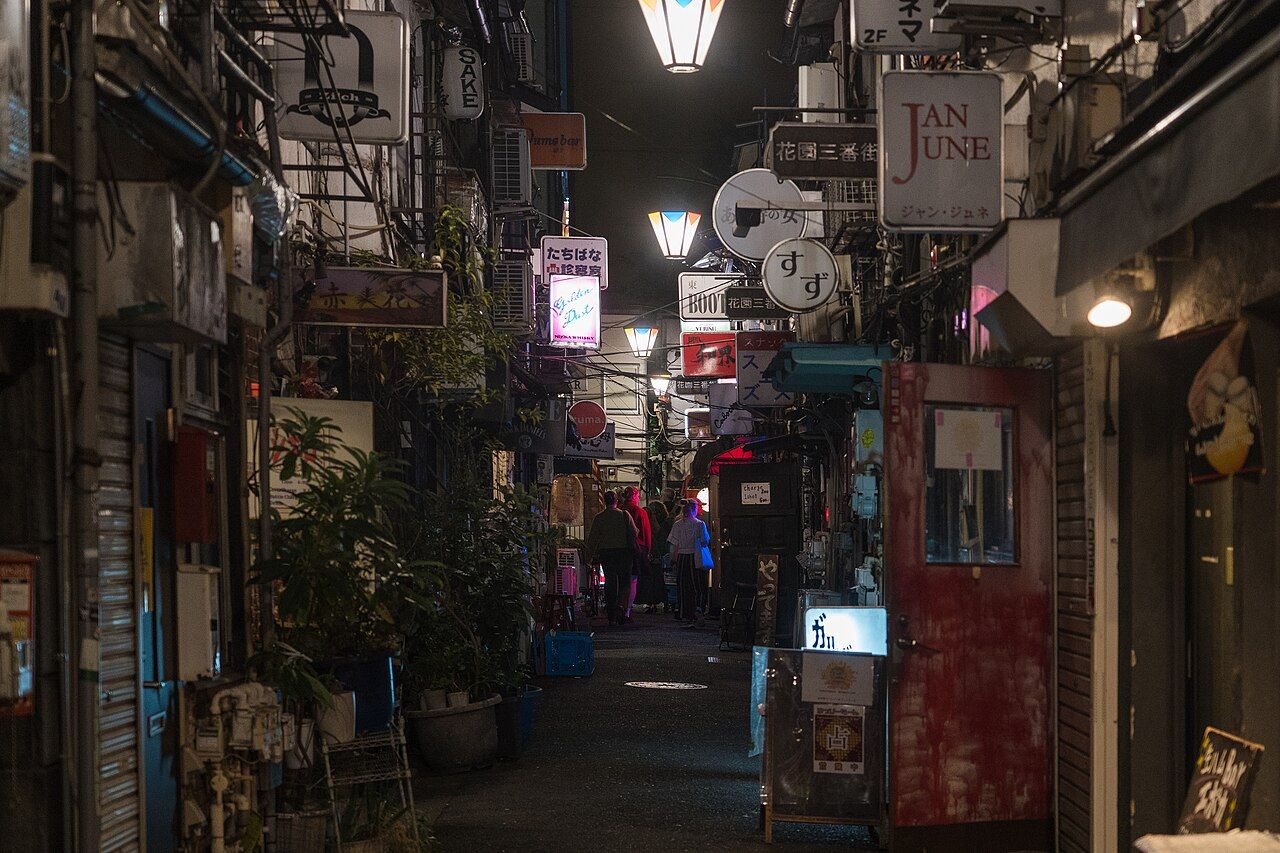
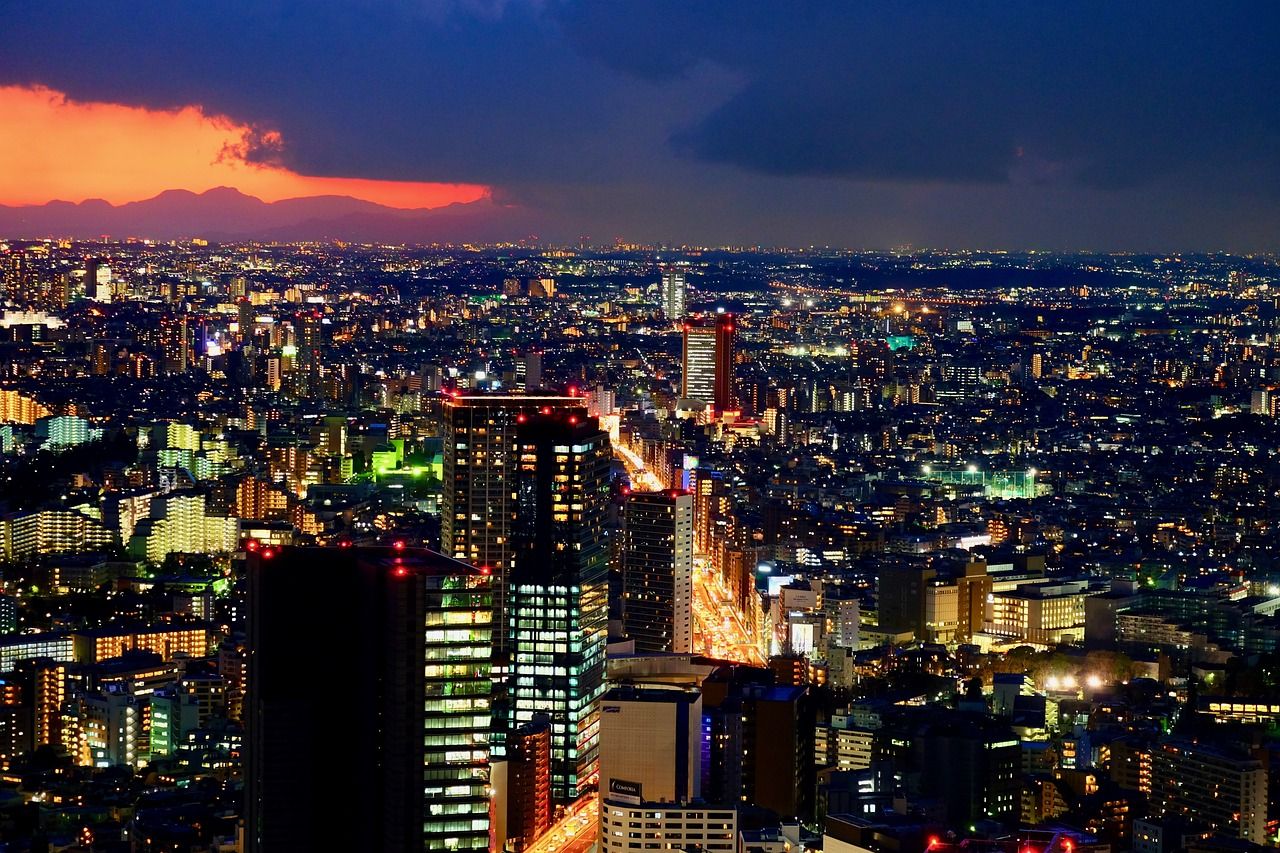
Land at 14:00, an IC card and the train to Shinjuku. Evening in the alleys of Omoide Yokocho and Golden Gai.
Get a Suica or PASMO card at the airport, or add one to your phone's wallet, and load ¥5,000. Keikyu to Shinagawa, then the JR Yamanote line to Shinjuku, about an hour. The limousine bus goes to the big Shinjuku hotels' doors for about ¥1,400.
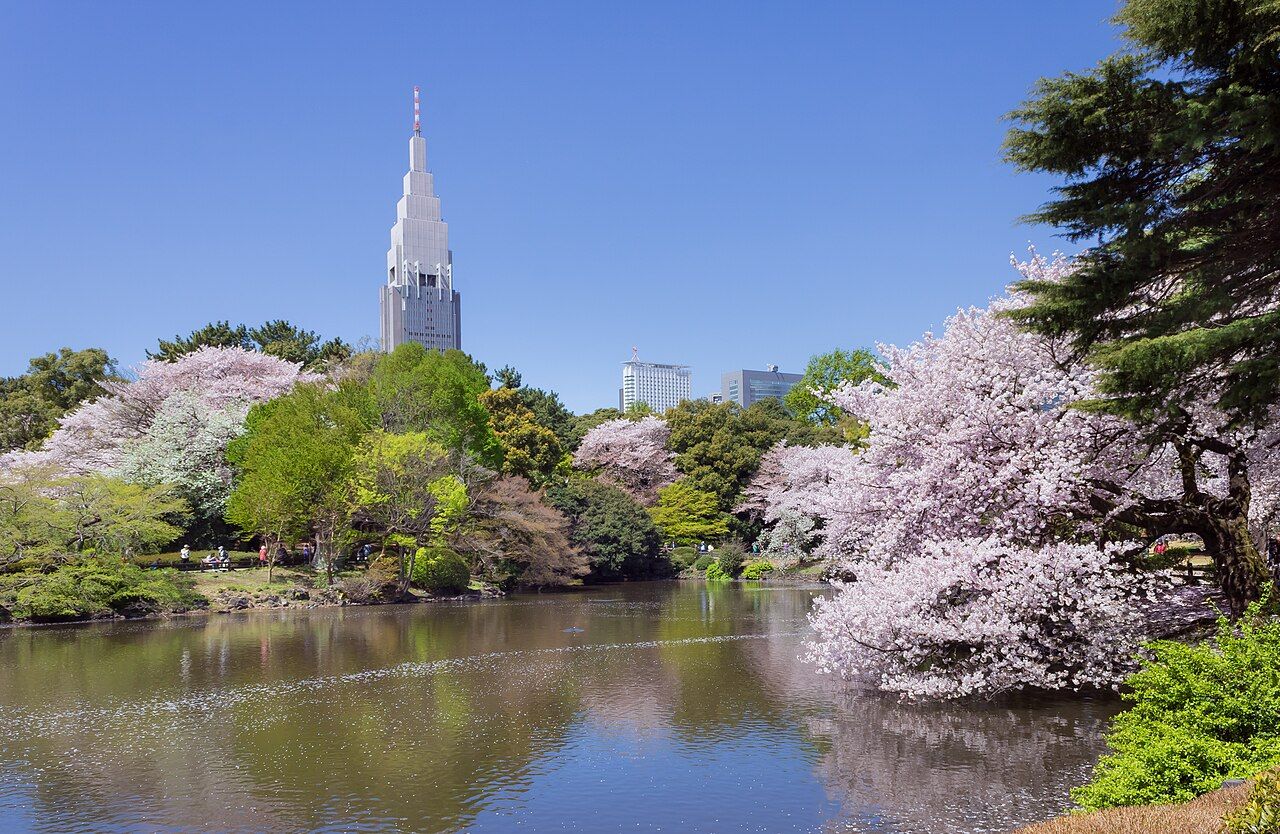
An imperial garden of 58 hectares with Japanese, English and French sections and about a thousand cherry trees of many kinds, flowering one after another.
about ¥500 eachday's highlight
Ten minutes' walk from the hotel; be at the Shinjuku gate for the 9:00 opening. Alcohol is not allowed, so picnics are calm. The Japanese garden's pond and teahouse are the best of it.
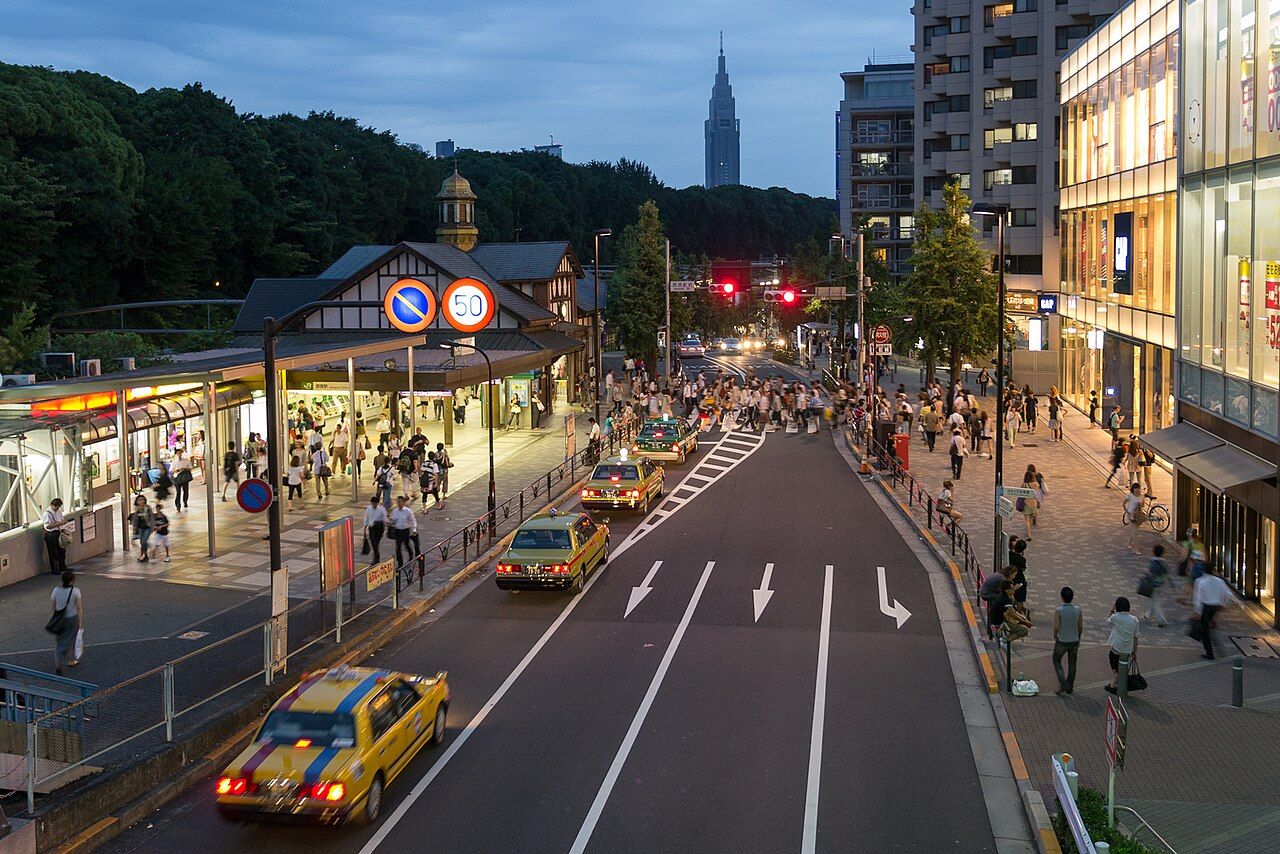
The scramble crossing outside Shibuya station, crossed by up to 3,000 people at a time, and the open-air roof of the Scramble Square tower 230 metres above it.
about ¥2,500–3,000 eachbook
Cross the scramble once, then up to the roof for a slot before sunset, about 17:55. On a clear evening Fuji shows in the west. Dinner in Shibuya after.
If you fall behind
Skip Takeshita Street and walk Omotesando.
Day 3 · Sun
Asakusa, the Sumida and the Chidorigafuchi moat
Tokyoout 07:00👟 ≈ 17,000 steps
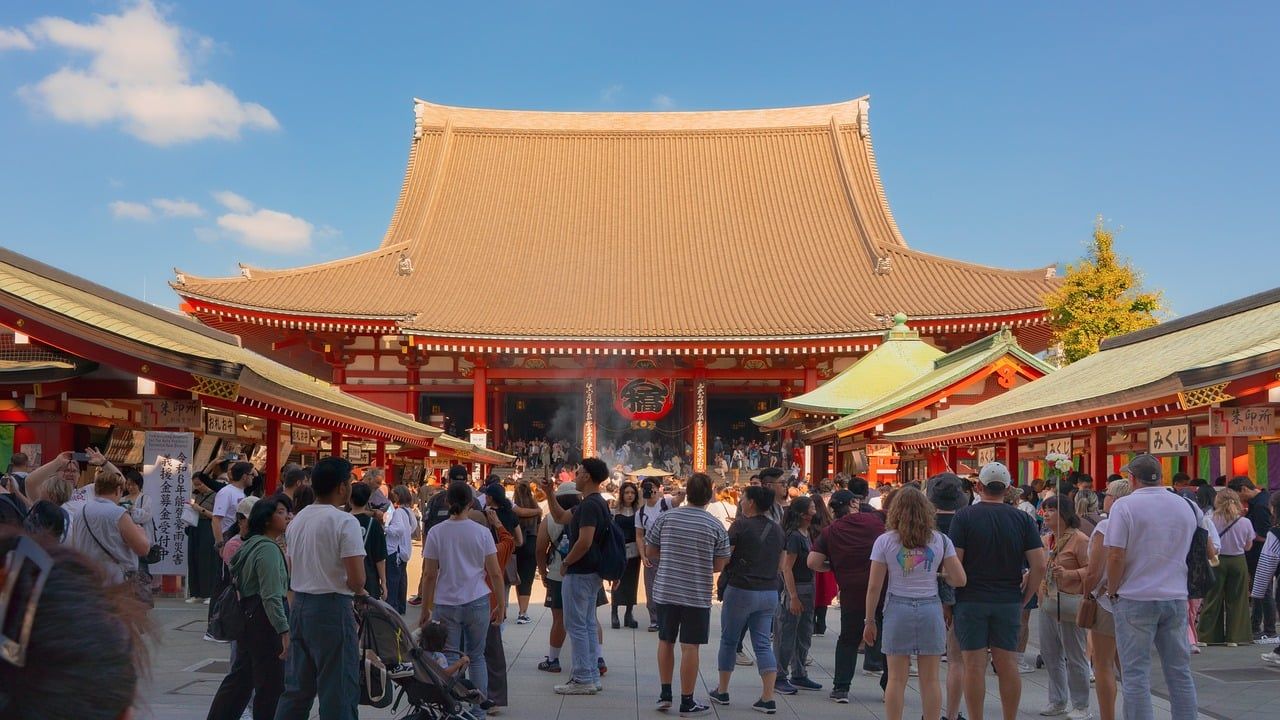
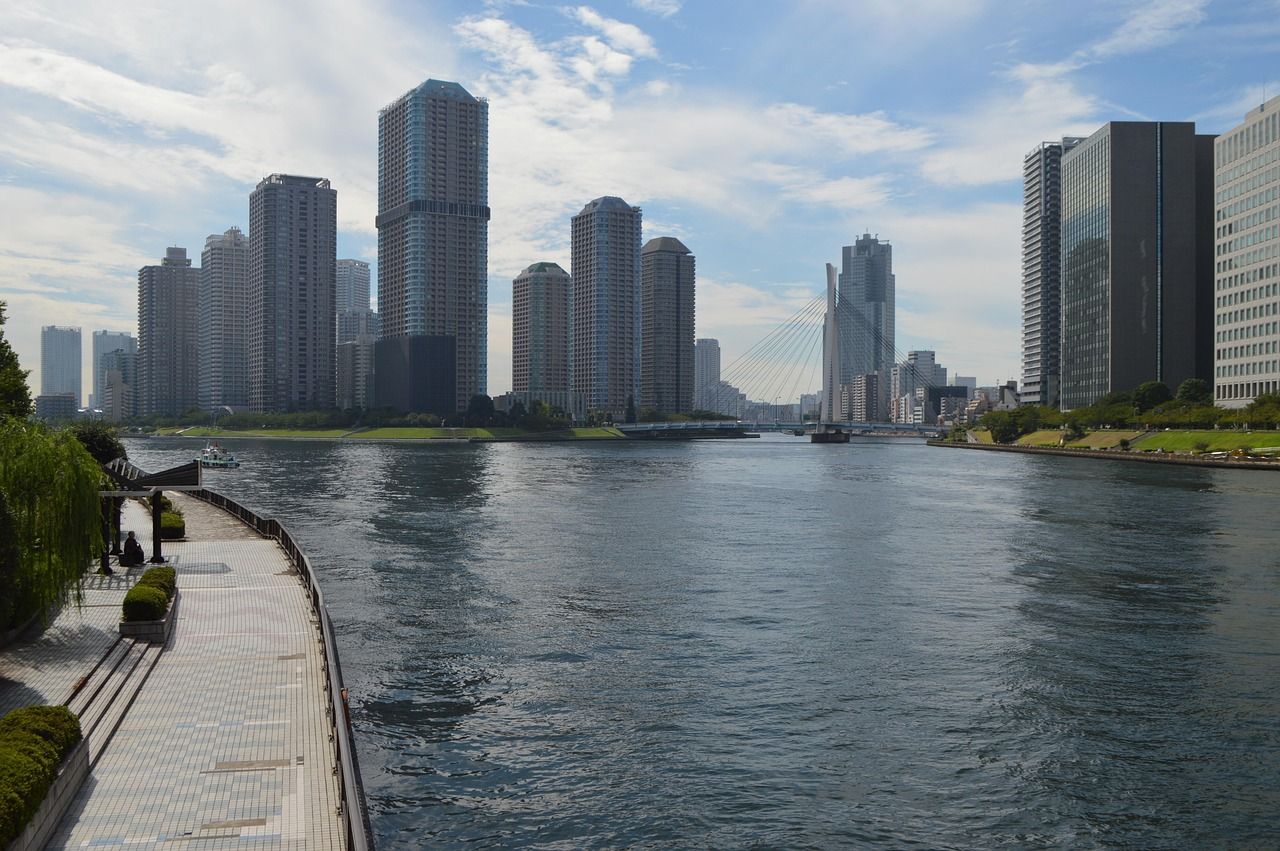
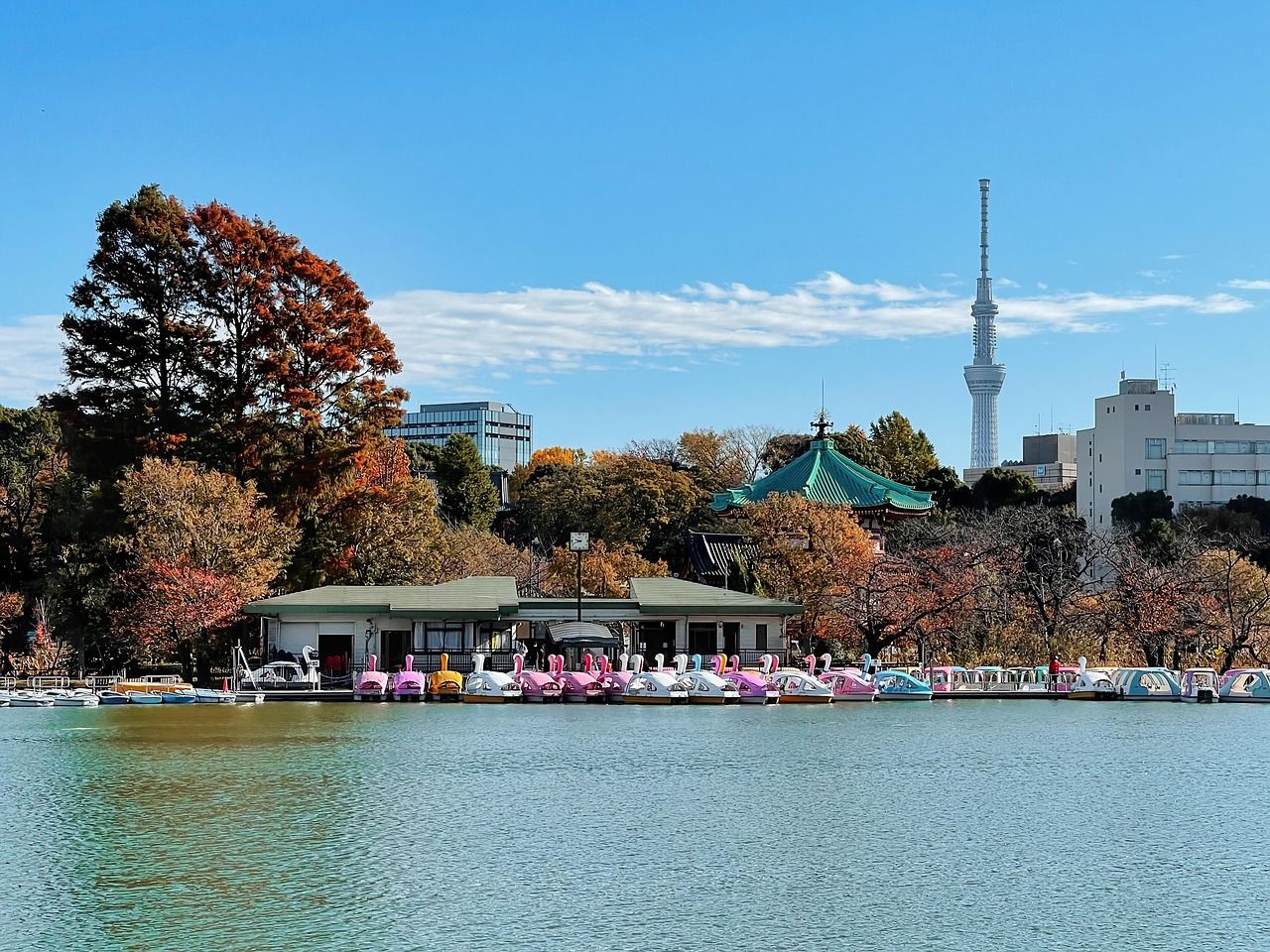
Senso-ji before the crowds, the cherry-lined Sumida river, Ueno Park's hanami, Yanaka's old streets, and the lit moat at Chidorigafuchi.
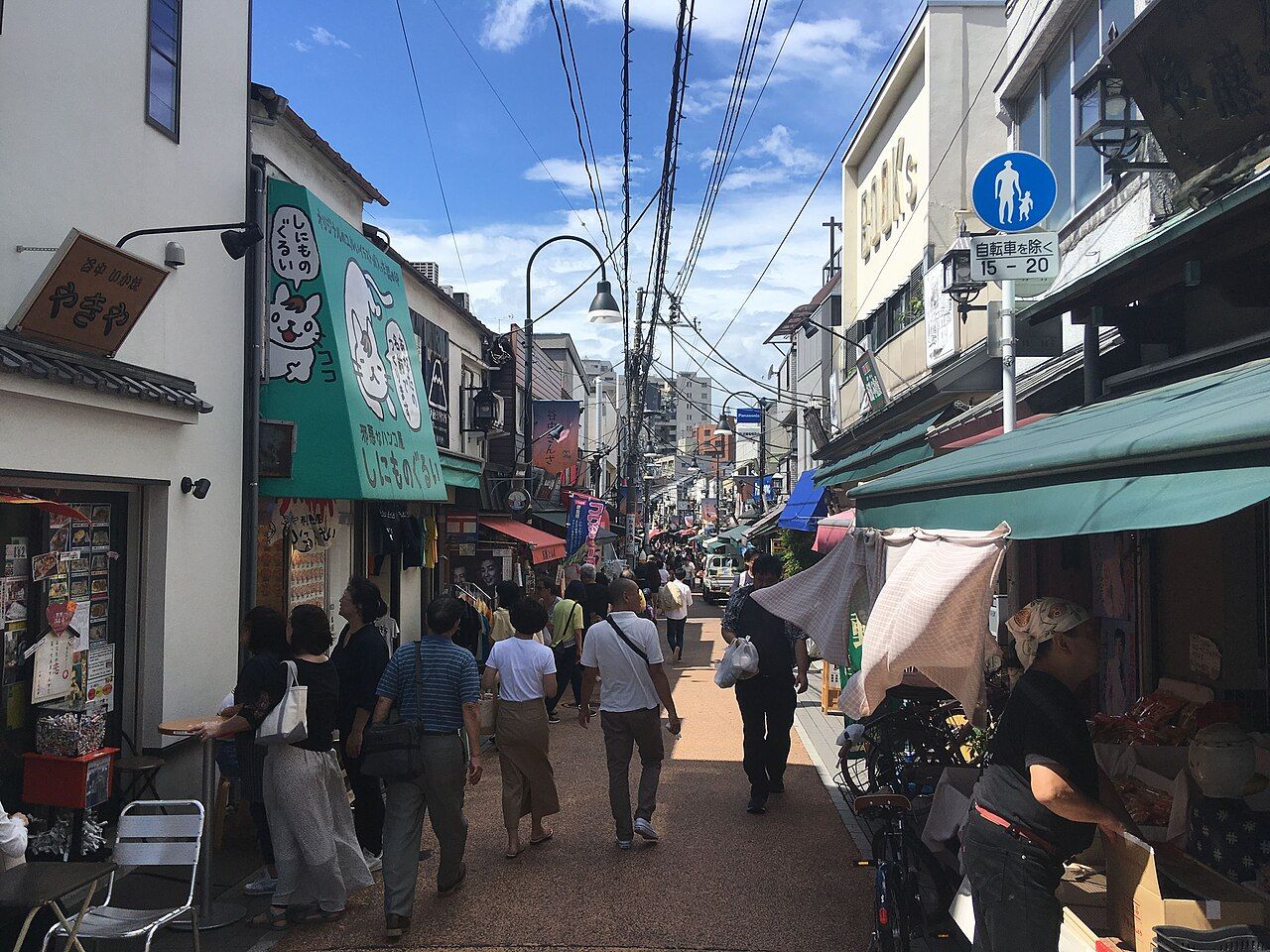
A quarter of wooden houses and small temples that survived the war and the 1923 earthquake, with a cherry-lined cemetery and an old shopping street.
free
Fifteen minutes' walk north of Ueno through Yanaka cemetery's cherry avenue. Croquettes and cat-shaped doughnuts on Yanaka Ginza. Then back to the hotel to rest.
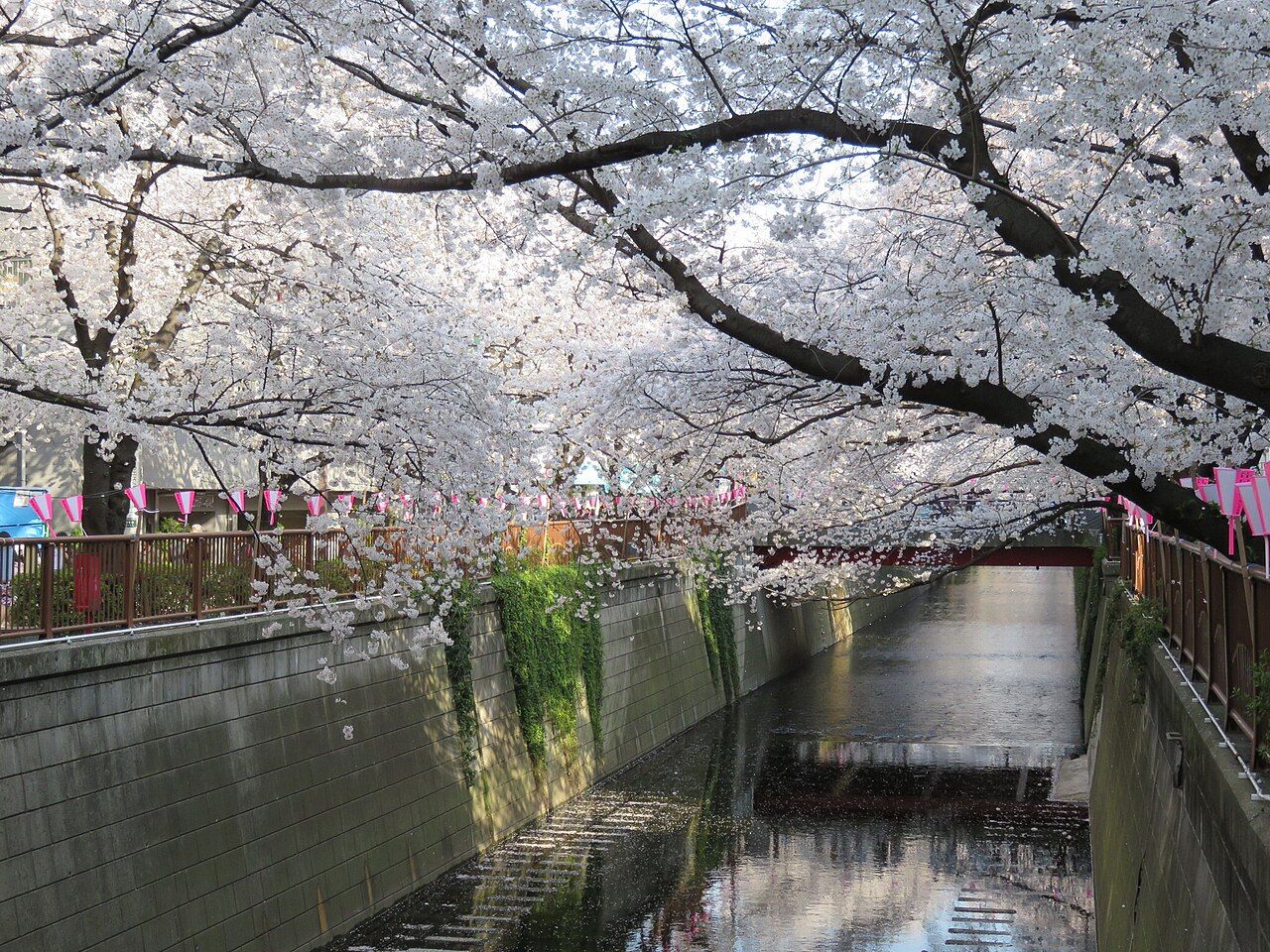
A narrow canal in Nakameguro lined for four kilometres with cherries that meet over the water, hung with lanterns in blossom season.
freeday's highlight
Train to Nakameguro. The stretch from the station towards Ikejiri-Ohashi is the best. Stalls sell strawberry sparkling wine. Dinner in Nakameguro's cafés and izakaya after; book on a blossom evening.
If you fall behind
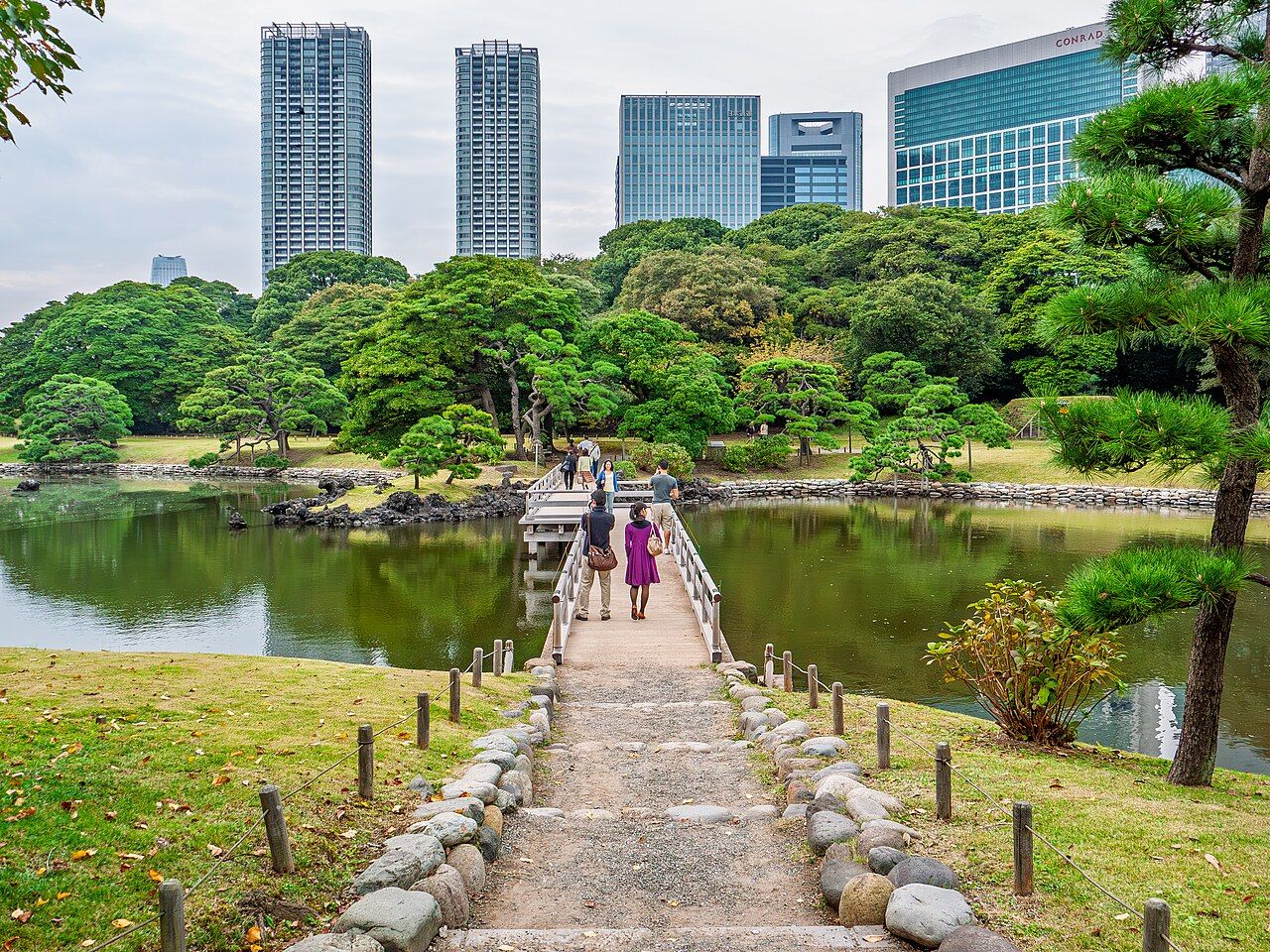
Skip Hamarikyu.
Day 5 · Tue
Mount Fuji: the Chureito Pagoda and a ryokan
Lake Kawaguchiout 07:30👟 ≈ 9,000 steps
The 8:30 Fuji Excursion from Shinjuku, two hours. The Chureito Pagoda's view of Fuji, the lake's north shore, and a ryokan dinner and bath.
A limited express straight to Kawaguchiko, about two hours; sit on the right for Fuji at the end. Send big bags ahead to Kyoto with a takkyubin delivery from the hotel the night before, about ¥2,500 a case.
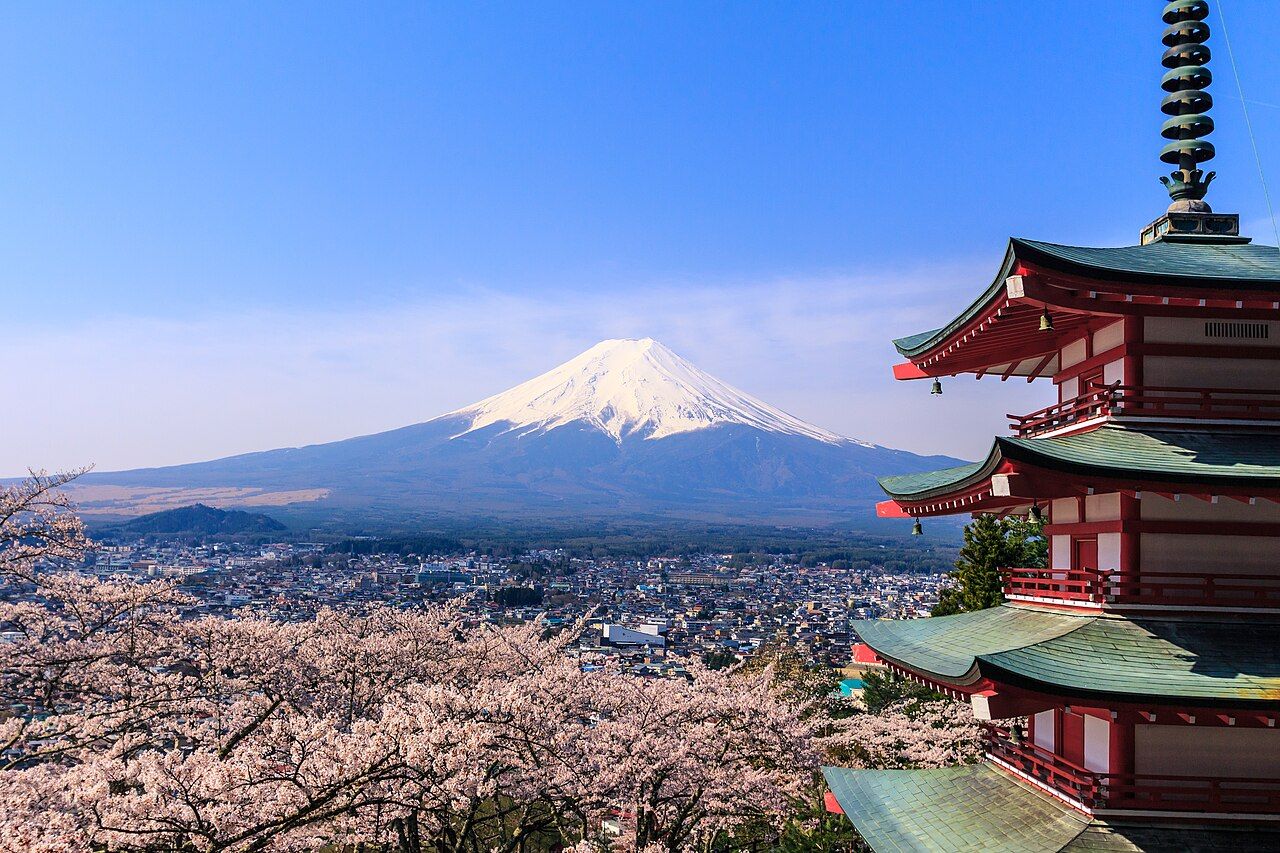
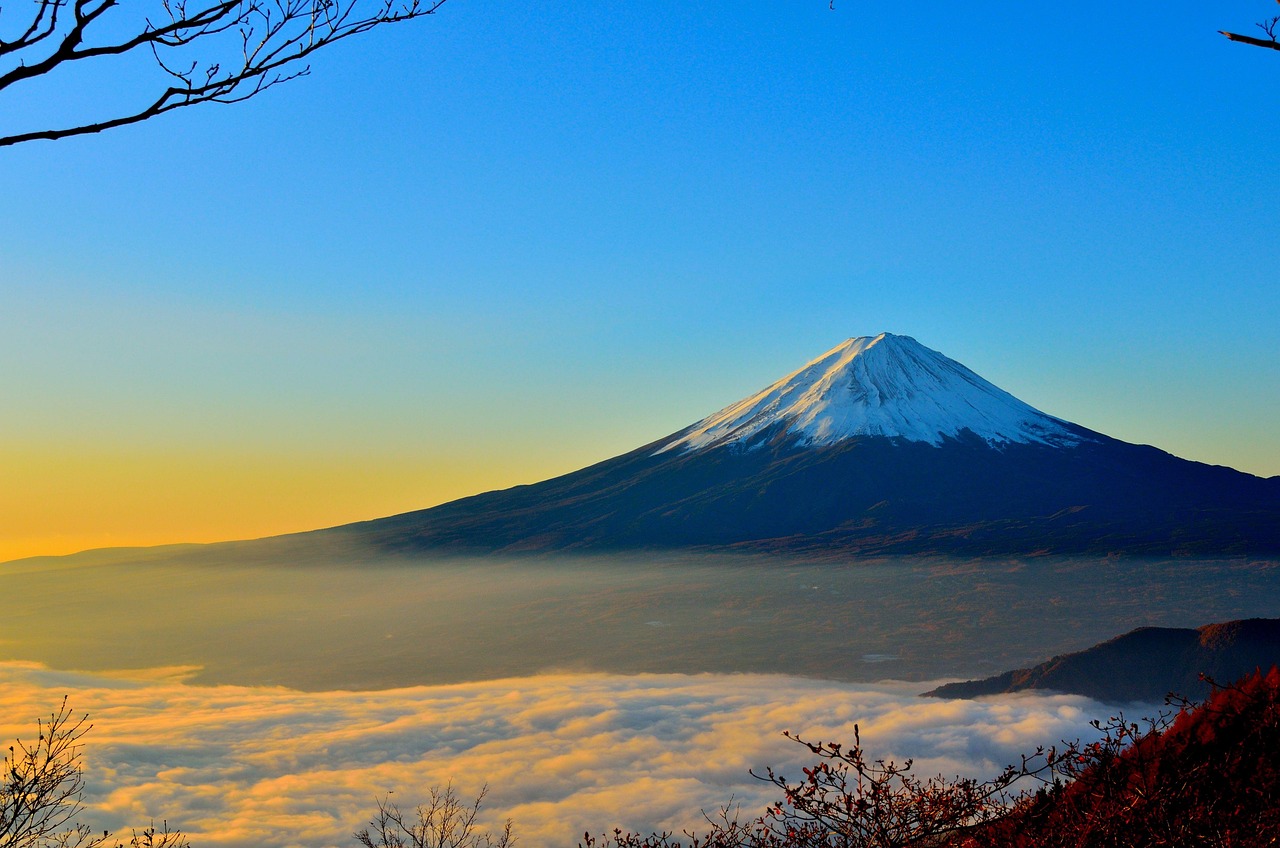
A five-storey red pagoda on a hillside above Fujiyoshida, built as a war memorial in 1963, with Mount Fuji framed behind it.
freeday's highlight398 steps
Get off the Excursion at Shimoyoshida, three stops before the end, and walk 10 minutes to the steps. The famous view is from the deck above the pagoda. Its cherries usually flower in early April, a week or two after Tokyo's, so they may be in bud.
Fuji is clearest in the morning; by afternoon clouds often cover it.
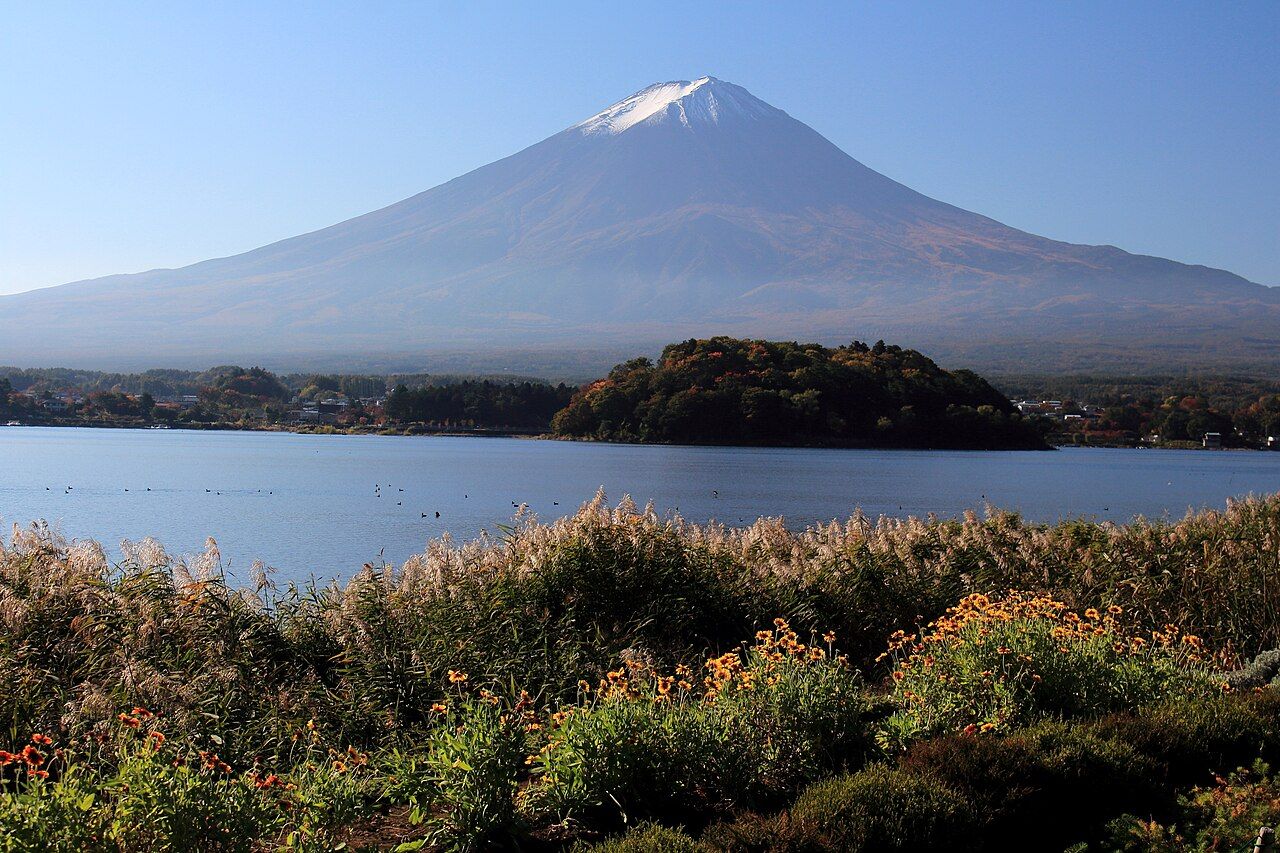
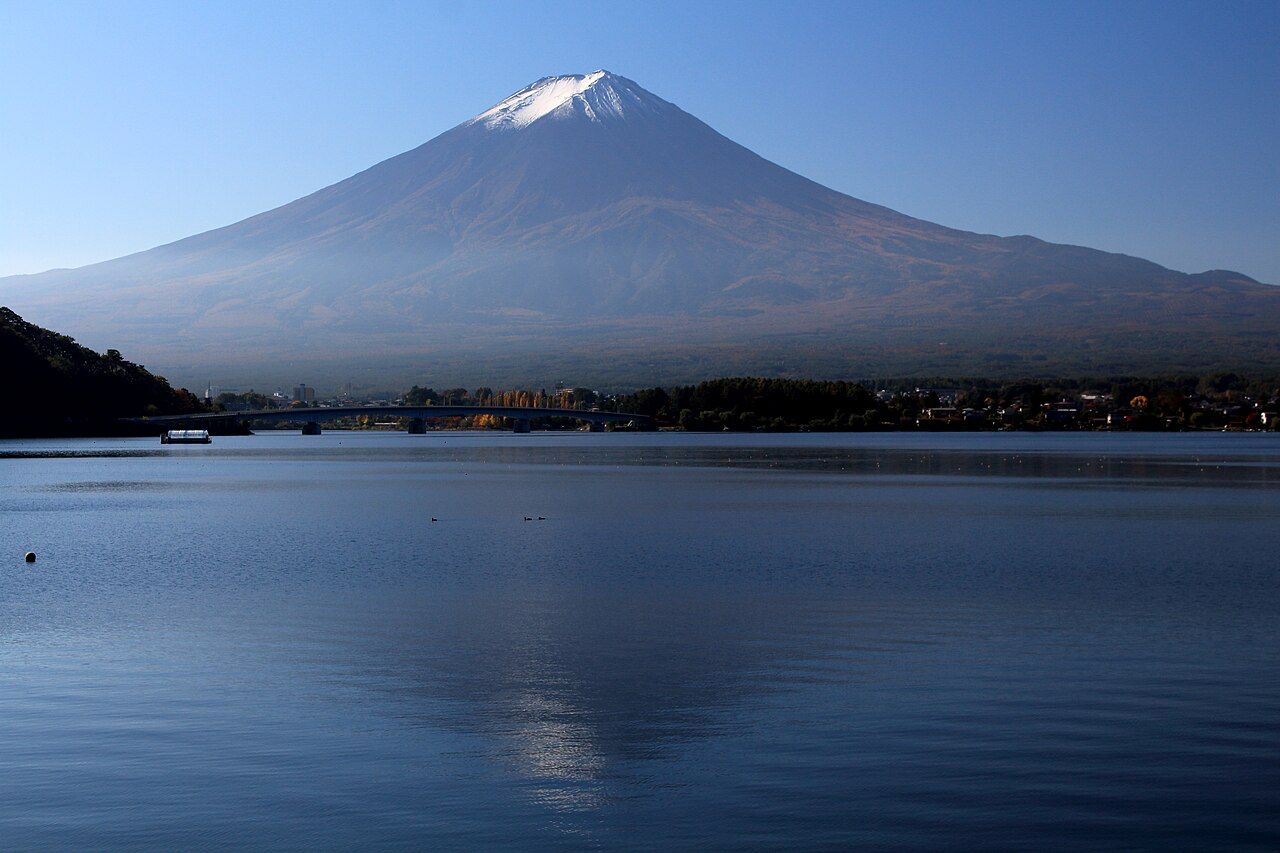
The lake's north shore faces Fuji across the water, with a lakeside park and paths.
lunch ¥1,500 each
Hoto, thick noodles in a miso-pumpkin stew, is the local lunch. The Retro Bus from Kawaguchiko station loops the north shore. Walk the shore at Oishi Park.
A ryokan is a Japanese inn: tatami rooms, a yukata robe, a multi-course kaiseki dinner served at a set hour, and hot-spring baths.
¥45,000–75,000 for two with dinner
Check in and bathe before dinner, usually at 18:00 or 18:30. Wash at the stools first, then soak; tattoos may need a private bath. Futons are laid out while you eat.
If you fall behind
Skip the north shore and go to the ryokan early.
Day 6 · Wed
Fuji at dawn, the Shinkansen to Kyoto and Gion
Lake Kawaguchi to Kyotodawn👟 ≈ 6,500 steps
Fuji at dawn from the lake, breakfast, the bus to Mishima and the Shinkansen to Kyoto. Gion's Shirakawa canal in the evening, its cherries lit.
The highway bus from Kawaguchiko station to Mishima station takes about two hours past Fuji's flank. From Mishima, the Hikari to Kyoto takes about two hours; reserve seats. Ekiben, station bento, for lunch on board.
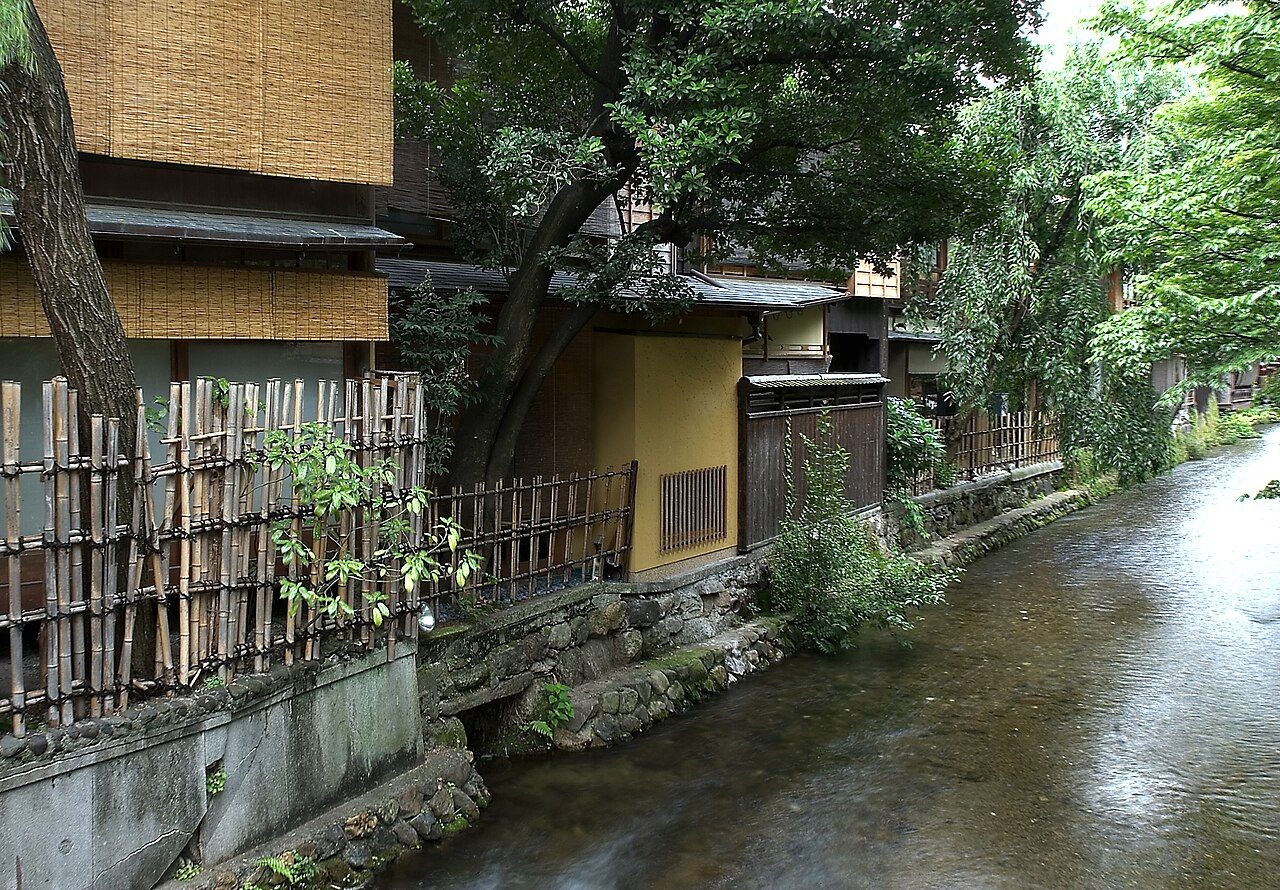
A stone-edged canal in Gion lined with willows, cherries and teahouses, lit at night; Hanamikoji is the street of geisha houses nearby.
freeday's highlight
The cherries along the Shirakawa are lit after dark in blossom week. On Hanamikoji, you may see a maiko on her way to an appointment; do not follow or photograph them up close, and keep out of the private lanes, where it is fined.
Dinner in Pontocho, the lantern-lit alley by the river.
If you fall behind
Skip Nishiki market.
Day 7 · Thu
Kiyomizu-dera, Higashiyama and Maruyama Park
Kyotoout 06:00👟 ≈ 11,500 steps
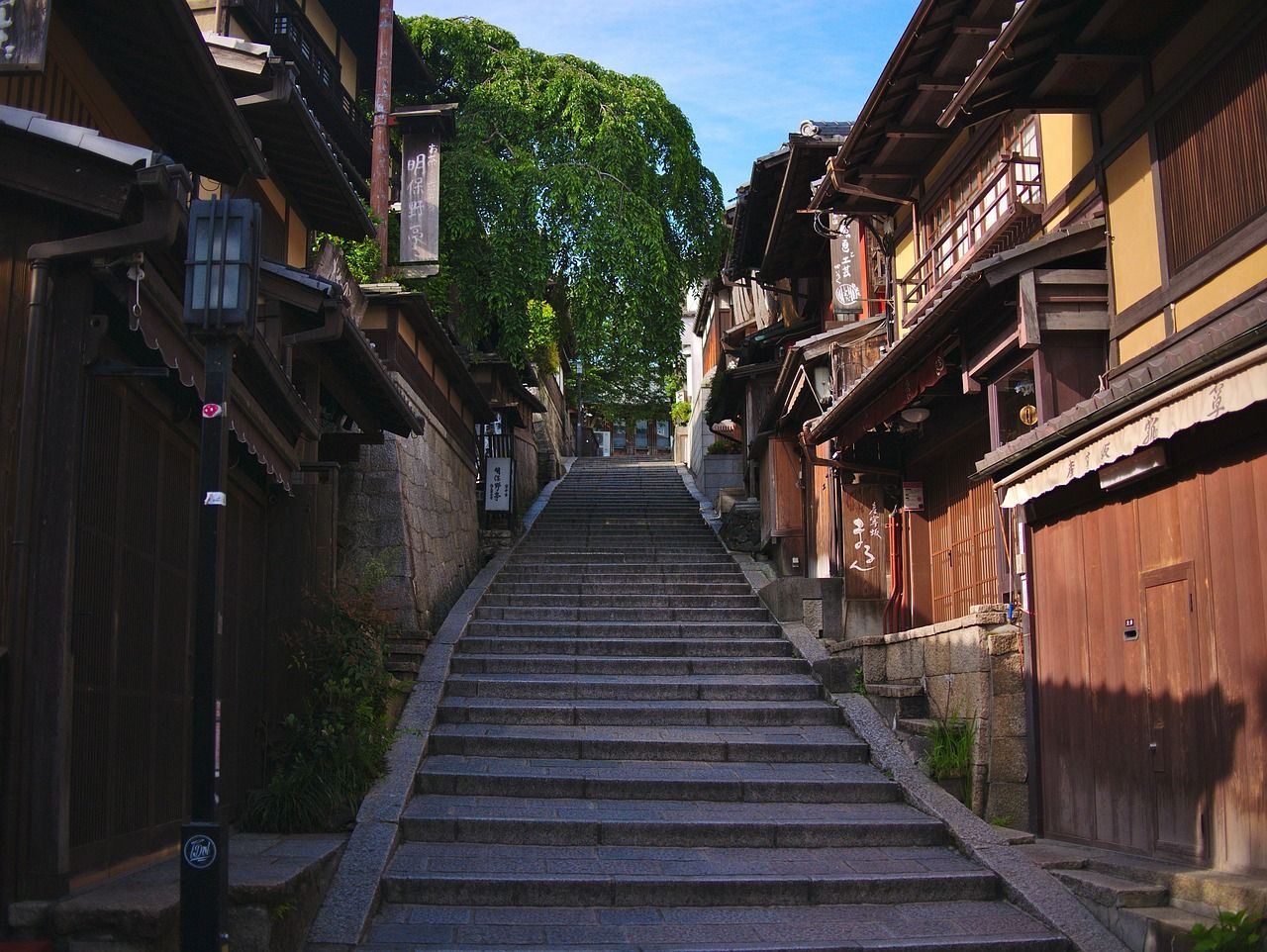
Kiyomizu-dera at 6:00 before the crowds, the slopes of Sannenzaka, Kodai-ji's garden, and Maruyama Park's weeping cherry lit at night.
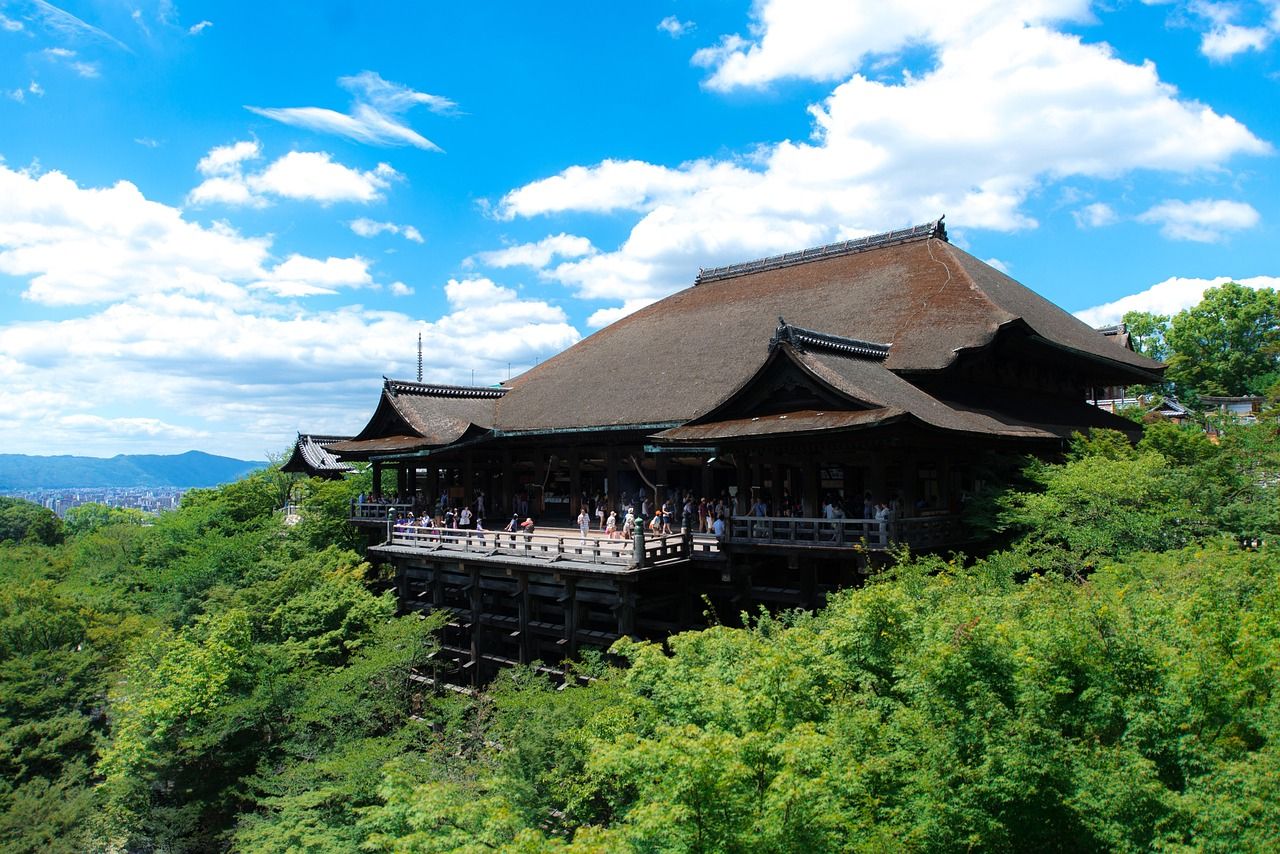
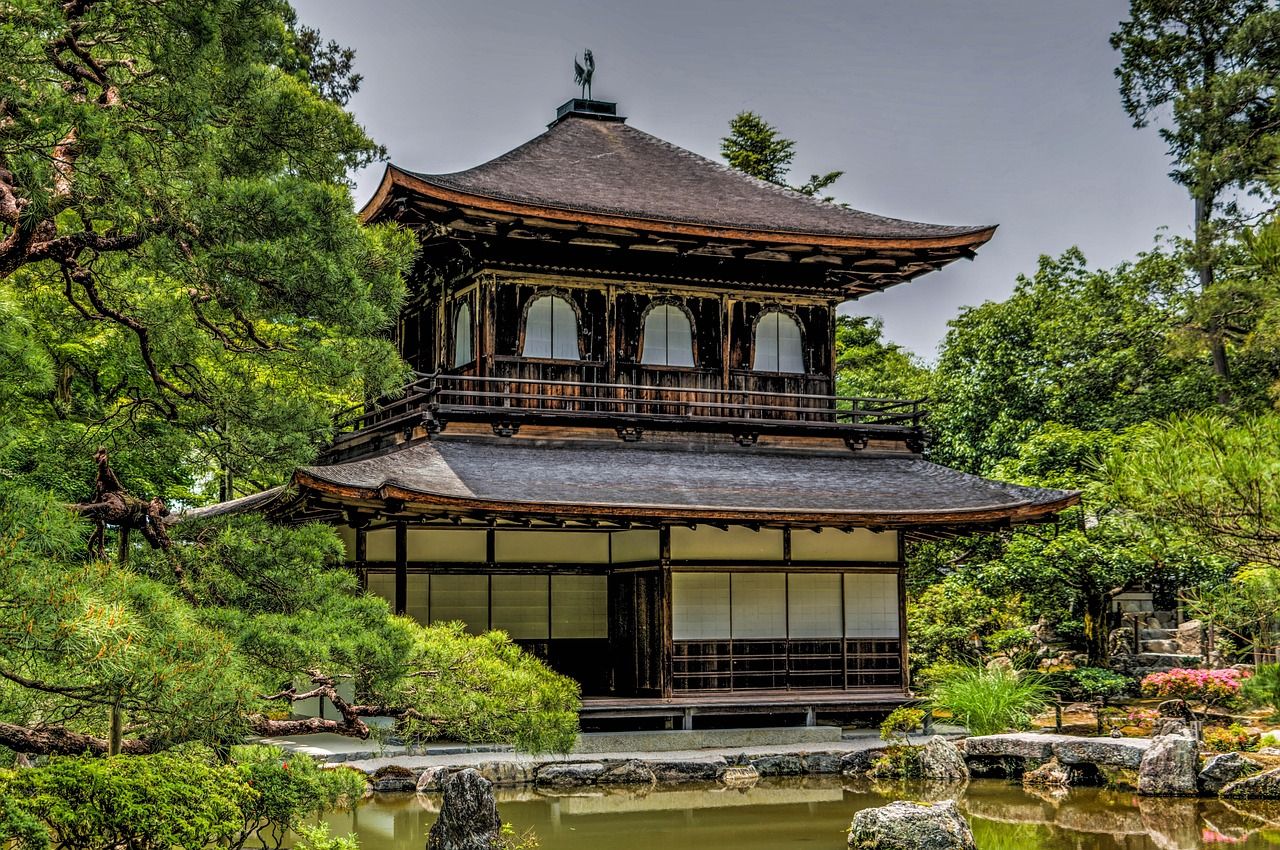
A temple on a wooded hillside whose main hall stands on a wooden stage 13 metres high, built in 1633 without a single nail, over a slope of cherry and maple.
about ¥500 eachday's highlight
It opens at 6:00; at that hour the stage is quiet and the light low. Walk on to the pagoda across the valley for the view of the stage among the blossom. Drink from the Otowa waterfall's three streams below.
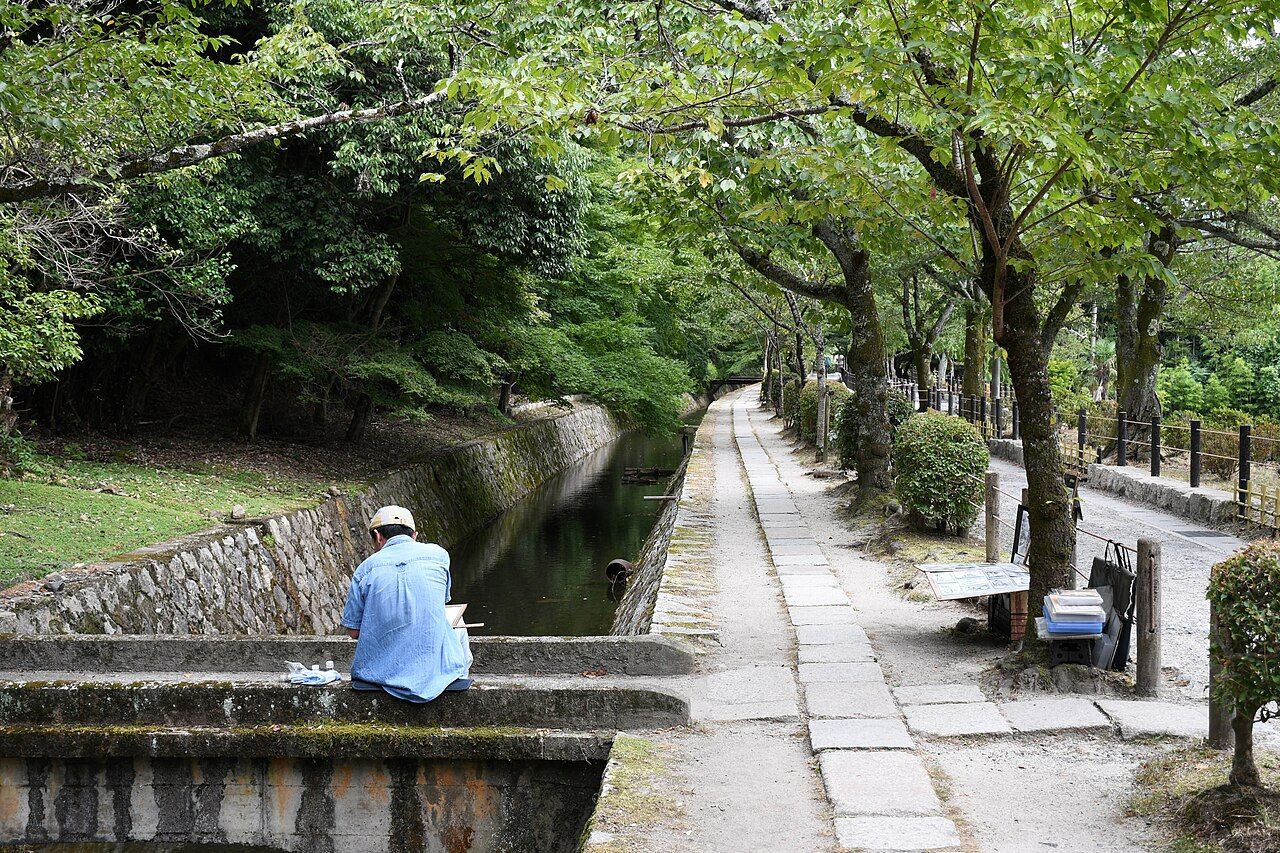
A two-kilometre stone path beside a canal, under hundreds of cherry trees, named for a philosopher who walked it daily.
freeday's highlight
From Ginkaku-ji south towards Nanzen-ji, 40 minutes slowly. In full bloom the branches meet over the water, and fallen petals cover the canal. Small temples and cafés lie off it to the east.
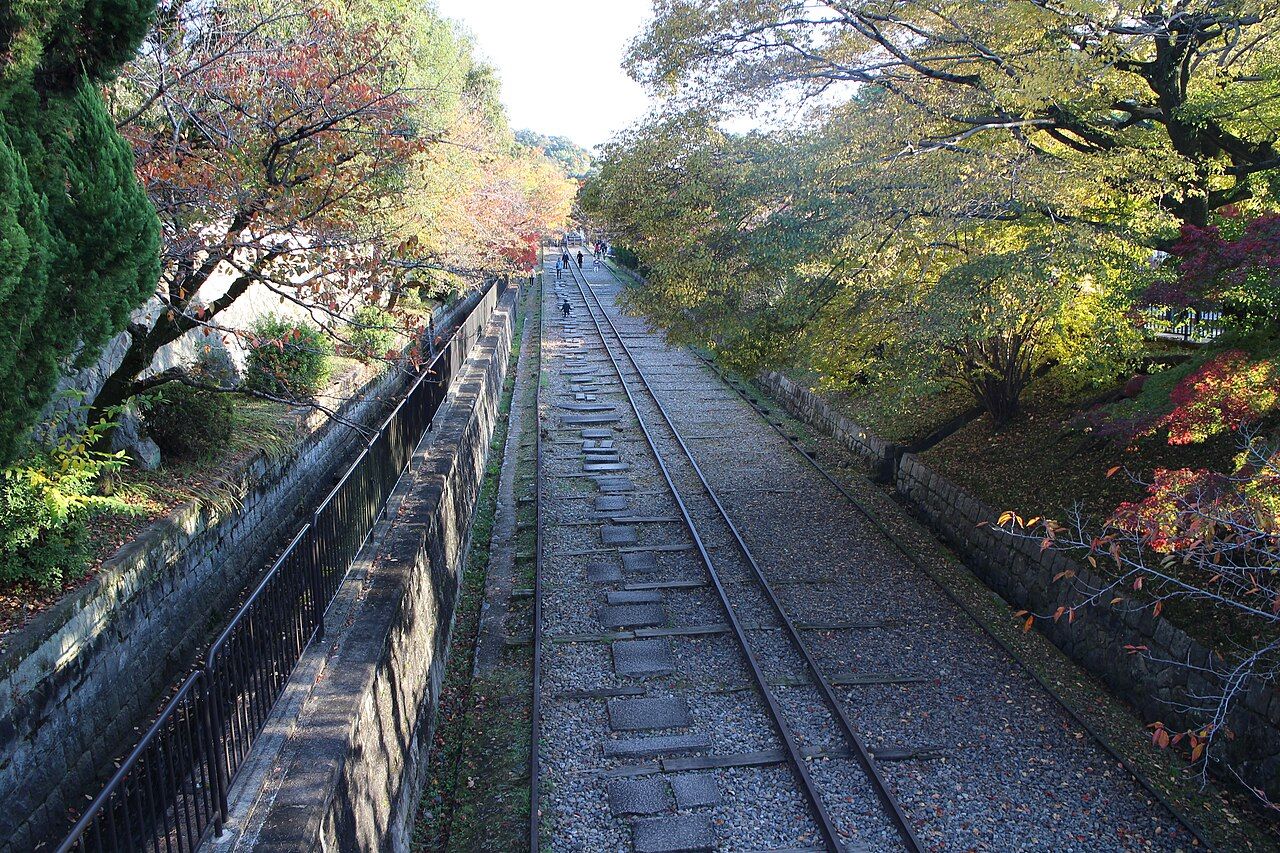
An old railway that hauled boats up the hill, its tracks now a walk under cherries, and the canal below it where boats run through blossom.
canal boat about ¥1,500
Walk down the tracks, then take the Okazaki Sakura Corridor boat, 25 minutes along the canal, in season only. The Heian Shrine's garden, with weeping cherries over a pond, is five minutes away, about ¥600.
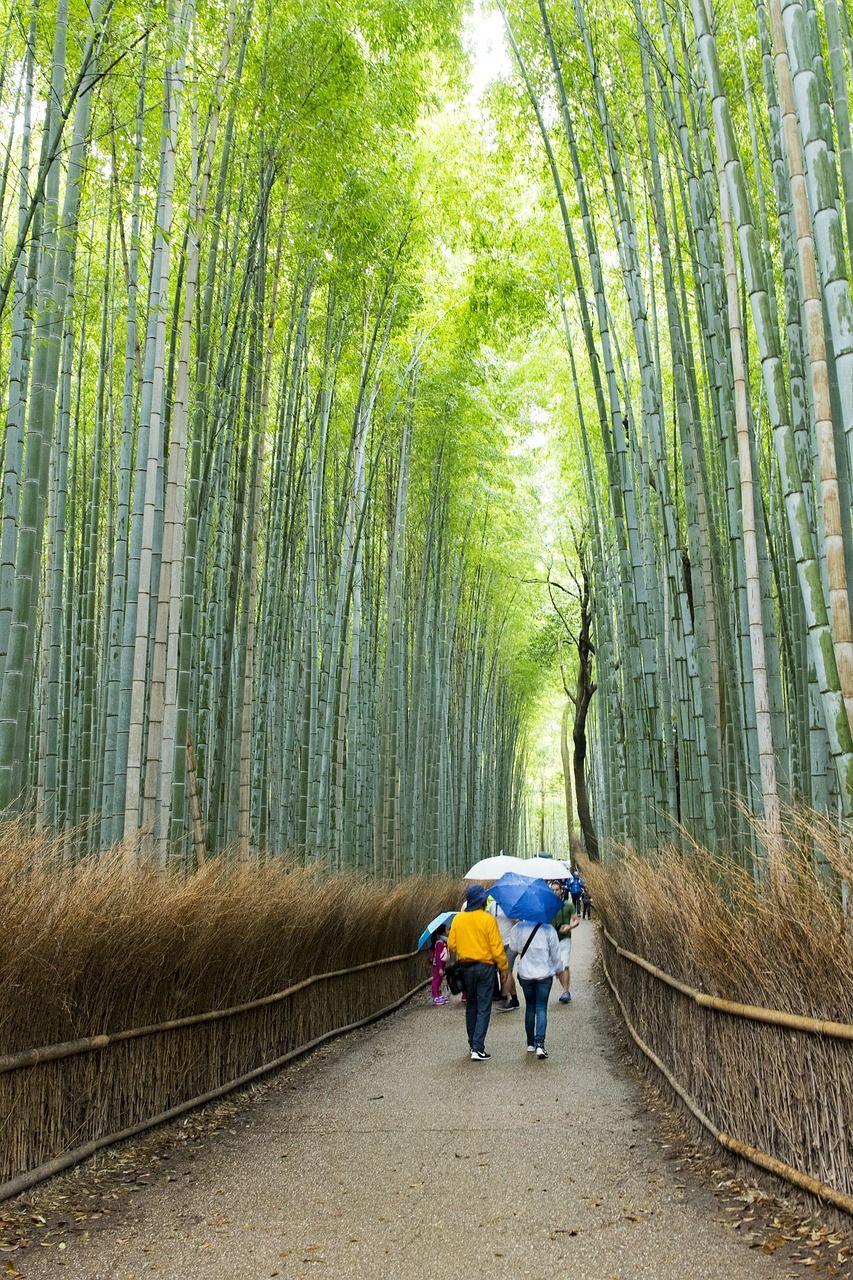
A path through tall bamboo on the western edge of Kyoto, the stems creaking in the wind.
free
JR Sagano line to Saga-Arashiyama, 15 minutes. At this hour it is quiet; by ten it is a queue. Ten minutes long; walk on to the Okochi Sanso villa's garden at the end if open.
The shoguns' palace in Kyoto, built in 1603, with 'nightingale floors' that squeak to warn of intruders and gardens of several hundred cherry trees.
about ¥2,000 for the eveningday's highlight
In blossom season the gardens are lit in the evening with a separate ticket; the palace interior is a daytime visit. Check the dates on the castle's site.
Dinner near the hotel after.
If you fall behind
Skip the boat.
Day 10 · Sun
Fushimi Inari and the Shinkansen to Hiroshima
Kyoto to Hiroshimaout 06:30👟 ≈ 13,000 steps
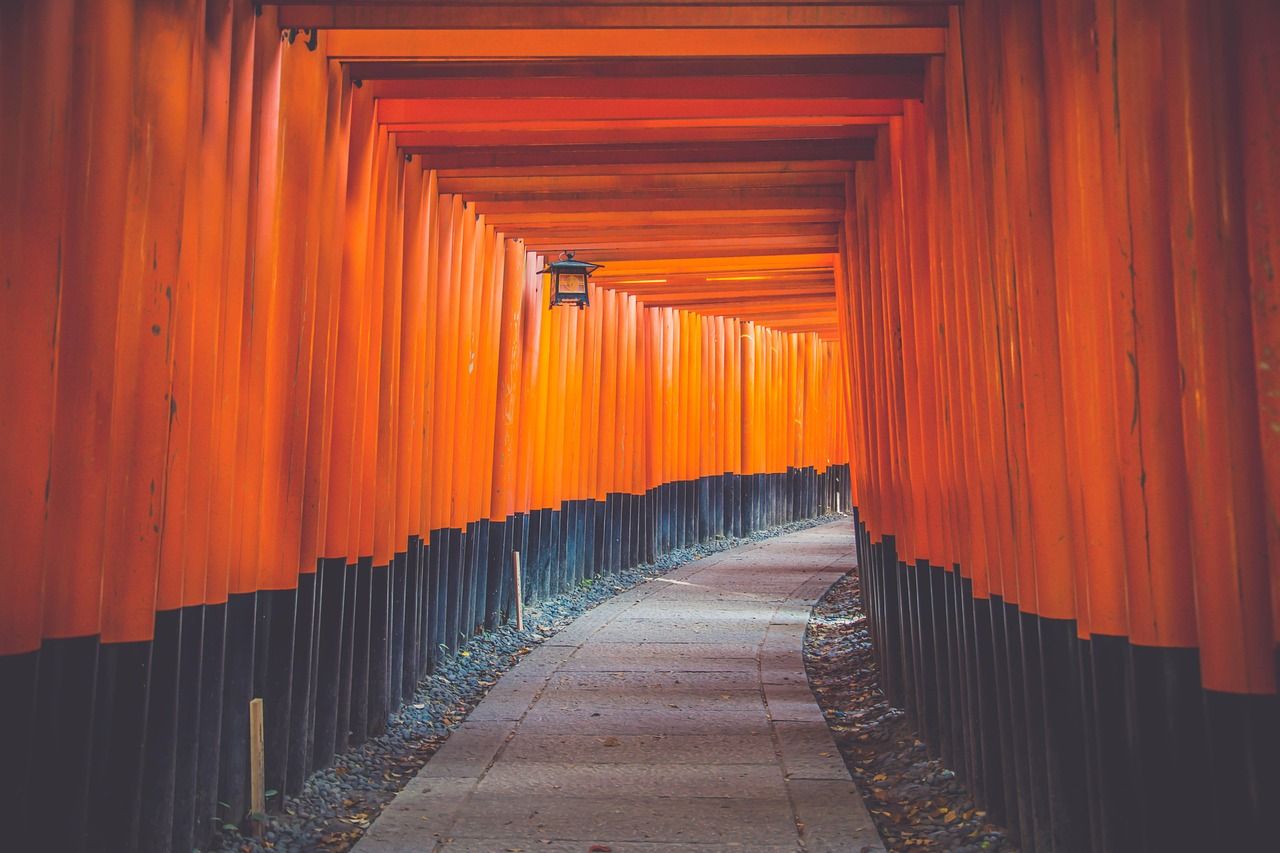
Fushimi Inari's thousands of gates at 7:00, the Shinkansen to Hiroshima, the Peace Park and museum, and okonomiyaki for dinner.
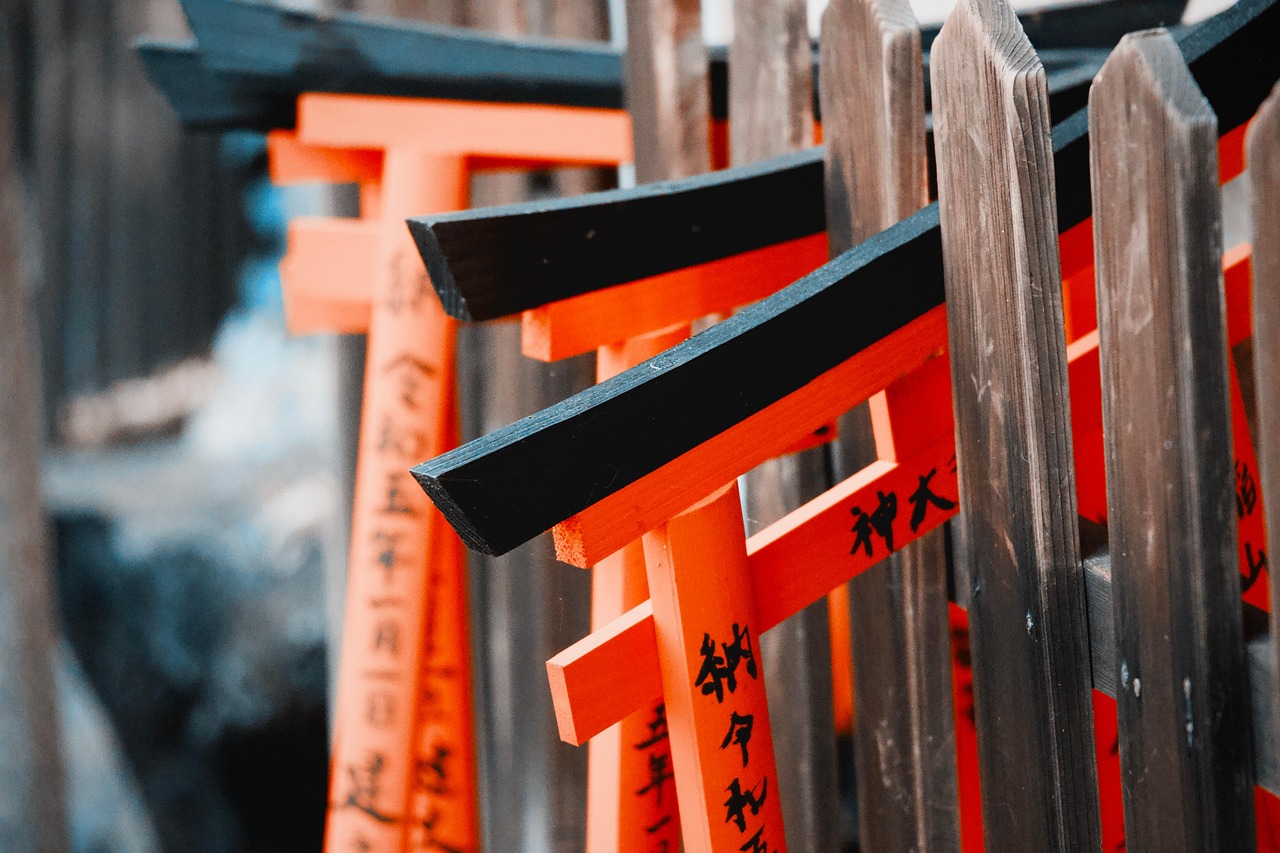
The head shrine of Inari, god of rice and business, whose paths climb the mountain behind it through some 10,000 vermilion torii gates given by companies and families.
freeday's highlight
Two stops on the JR Nara line; open all night. Go through the double tunnel of gates and up as far as the Yotsutsuji crossroads, 45 minutes, for the view over Kyoto. Few people go higher.
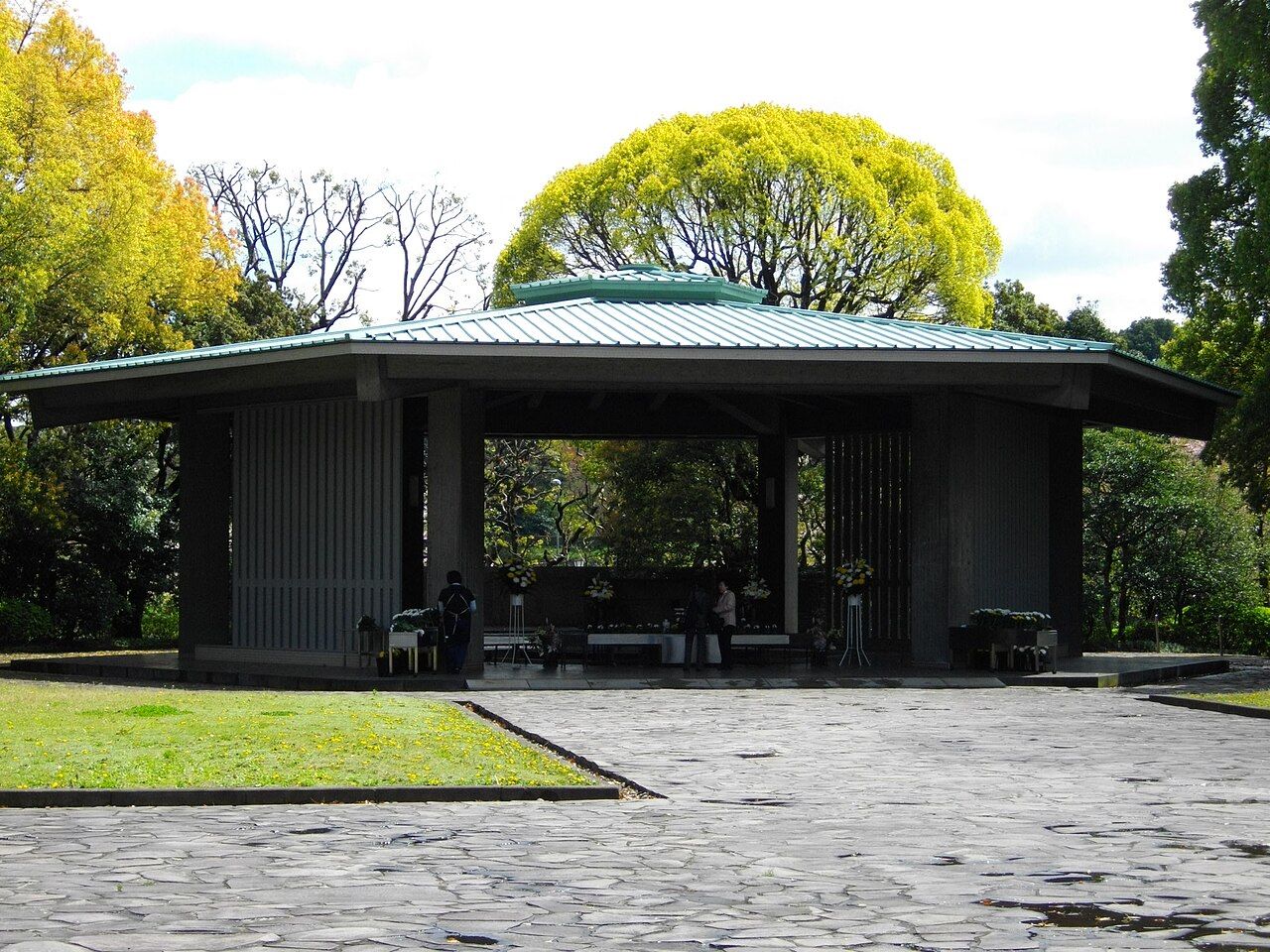
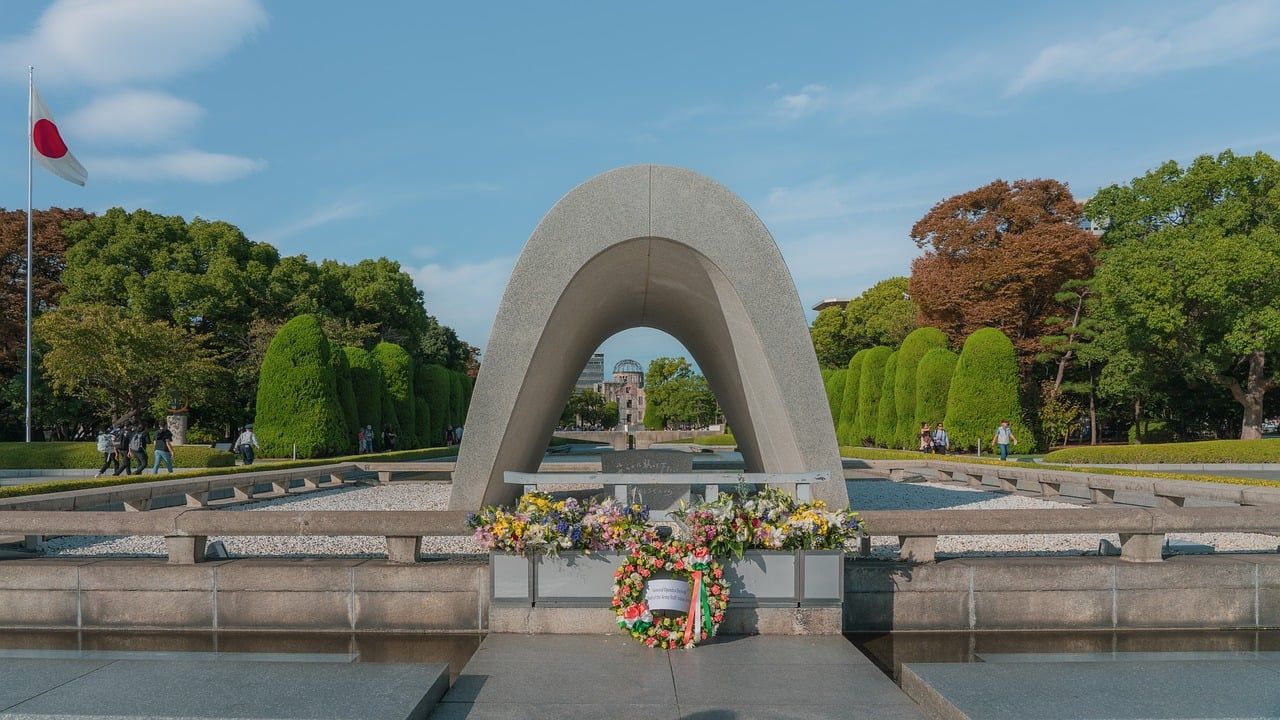
The park built where the atomic bomb fell on August, with the ruined Atomic Bomb Dome on the river, and the museum of what happened to the city and its people.
museum about ¥200
The museum takes two hours and is hard going; the personal belongings room is the heart of it. Then the cenotaph, framing the flame and the Dome, and the Dome itself across the river, its cherries along the banks.
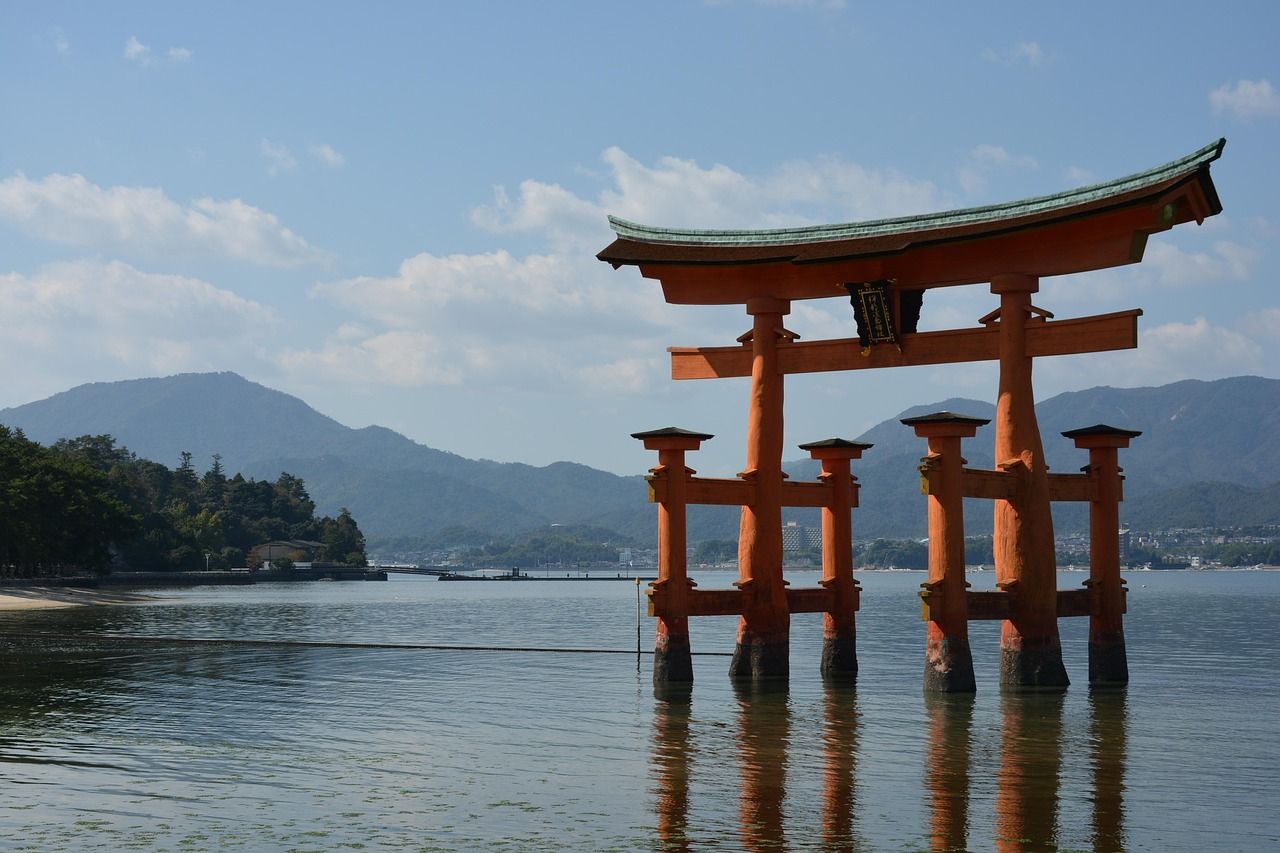
JR Sanyo line to Miyajimaguchi, 30 minutes, then the JR ferry, 10 minutes, which passes close to the torii. The island charges a ¥100 visitor tax, paid at the ticket gate.
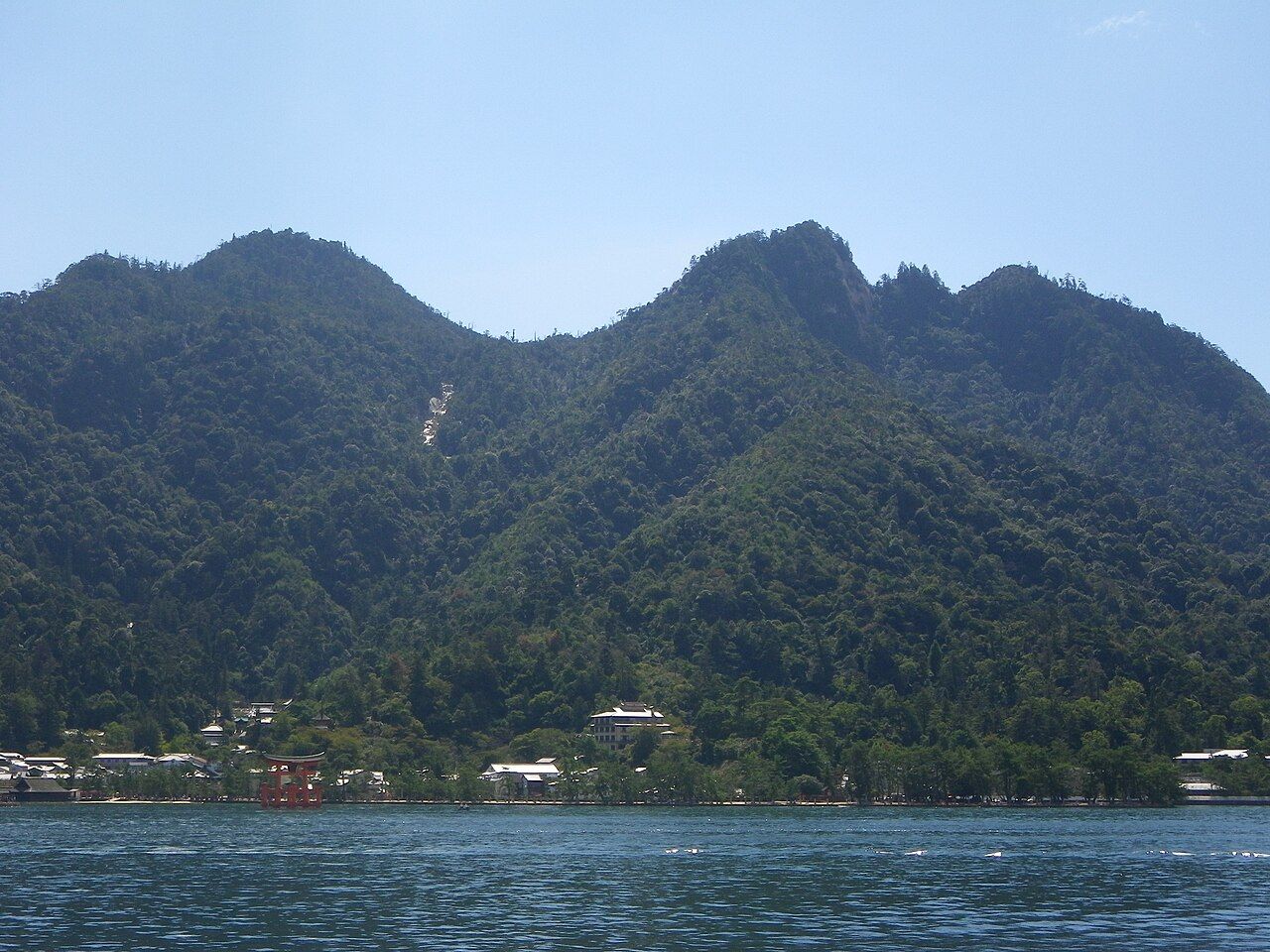
A shrine of the 12th century built on piers over the tide, and its vermilion gate standing 16 metres high in the sea, which seems to float at high tide.
about ¥300 eachday's highlight
Look up the day's tide table: at low tide you can walk out to the gate's feet; at high tide it stands in the water. Deer wander the island; do not feed them.
The island's sacred mountain, 535 metres, with a view over the islands of the Inland Sea and a temple hall where a fire has burned for 1,200 years.
ropeway about ¥2,000 returnsteep
Walk through Momijidani park to the ropeway, 15 minutes. From the top station it is 30 minutes more on foot to the summit. Two and a half hours in all.
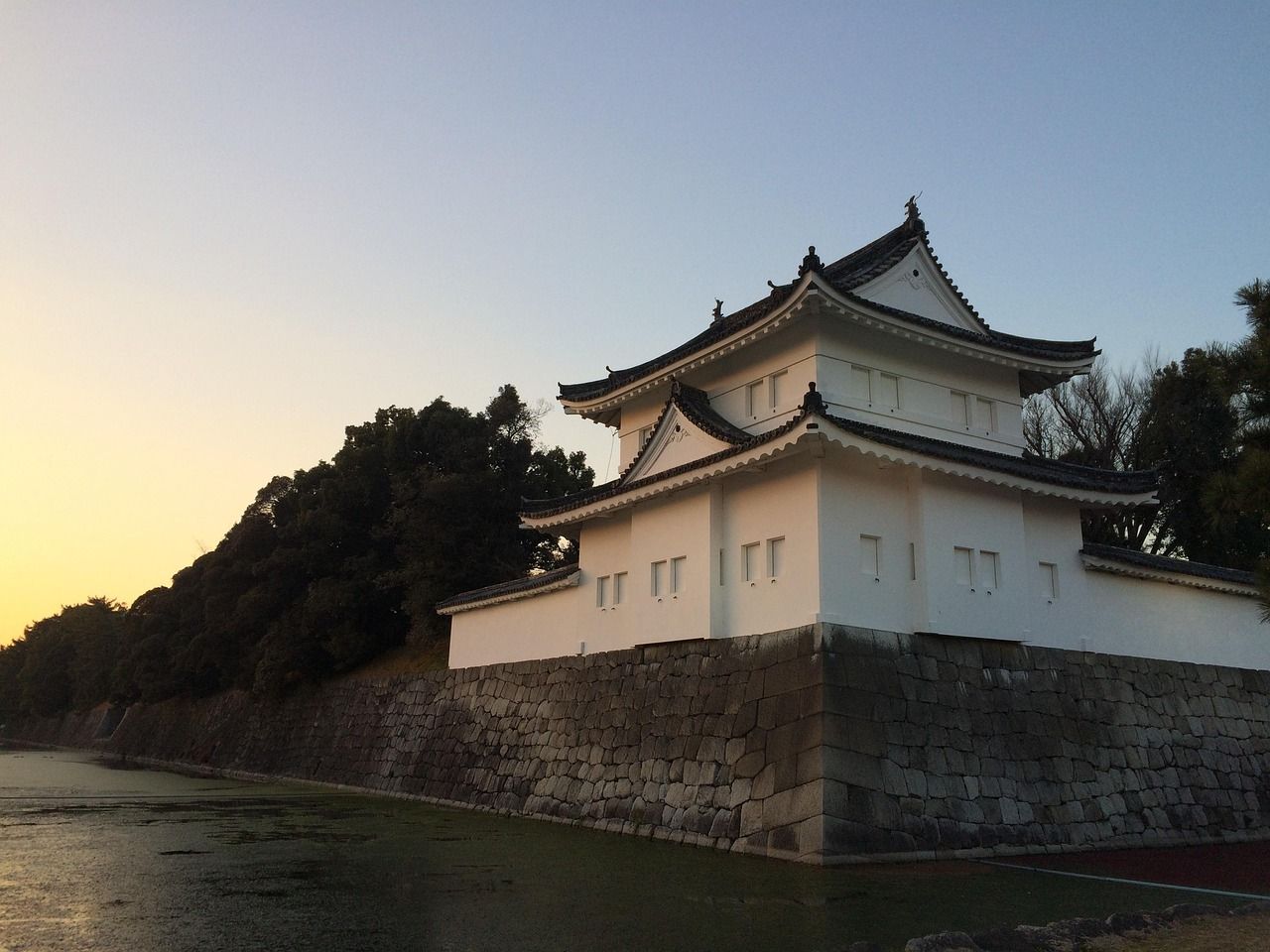
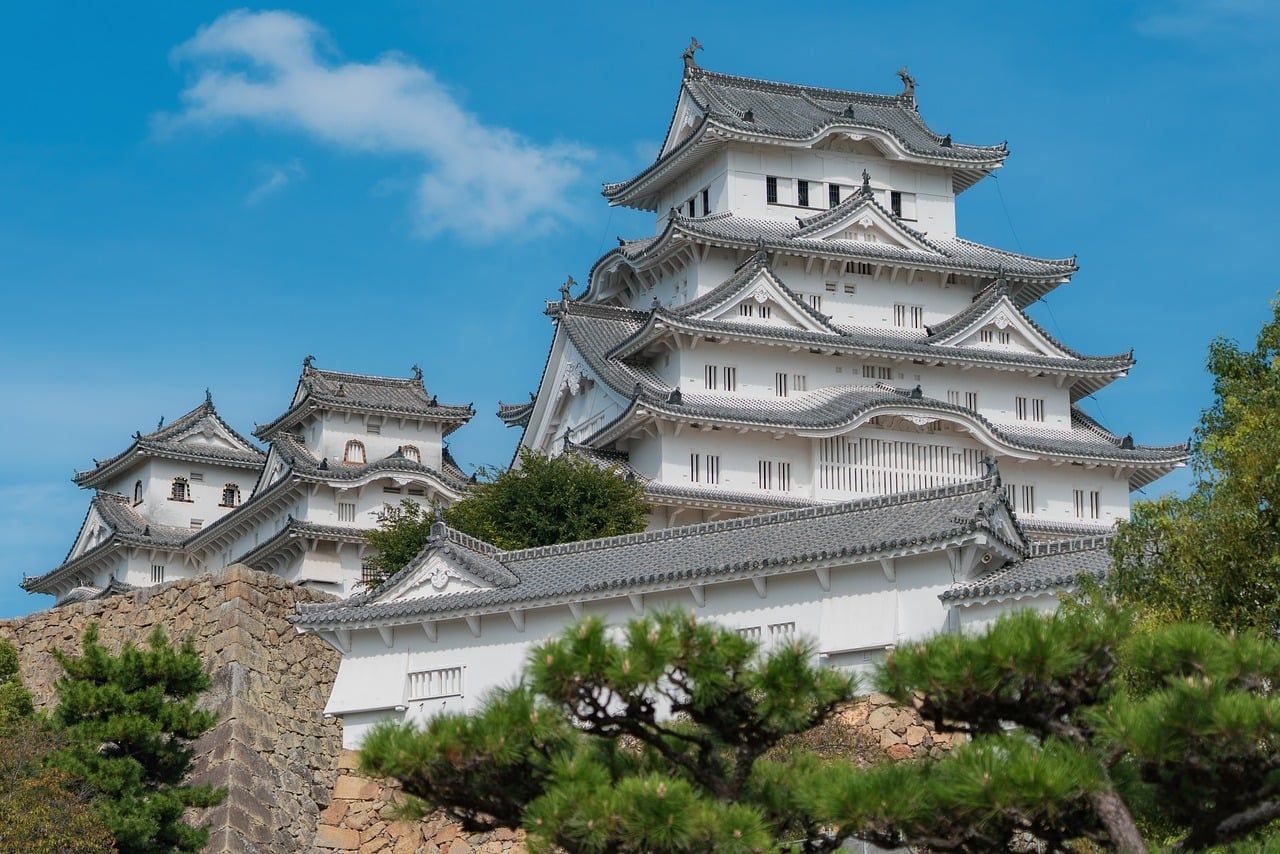
Japan's finest original castle, a white wooden keep of 1609 called the White Heron, never burned or bombed, with about a thousand cherry trees in its grounds.
about ¥2,500 eachday's highlight
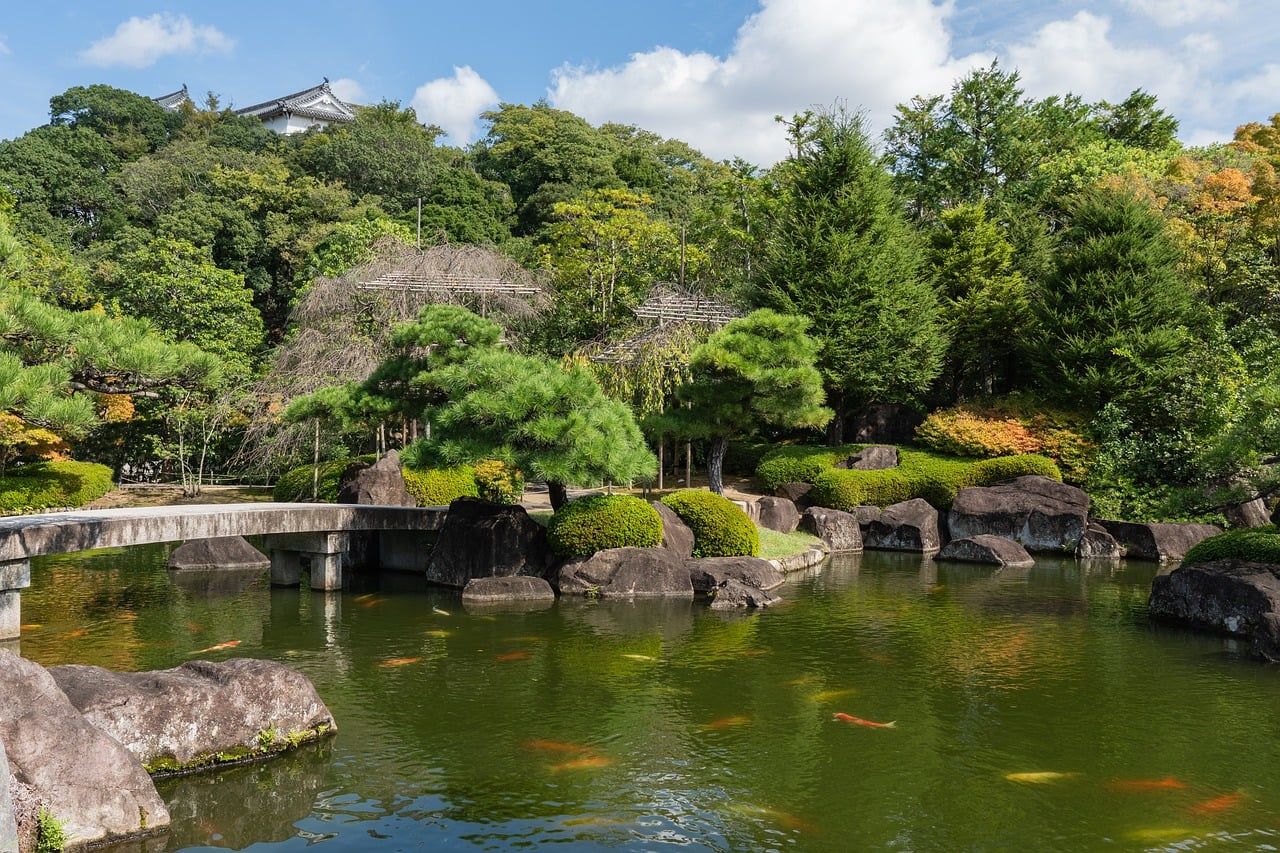
Climb the six floors of the keep, steep wooden stairs in socks, for the view over the grounds. The Nishinomaru garden's long corridor is the quieter part. Two hours.
In blossom week the queue at the gate can be an hour by midday.
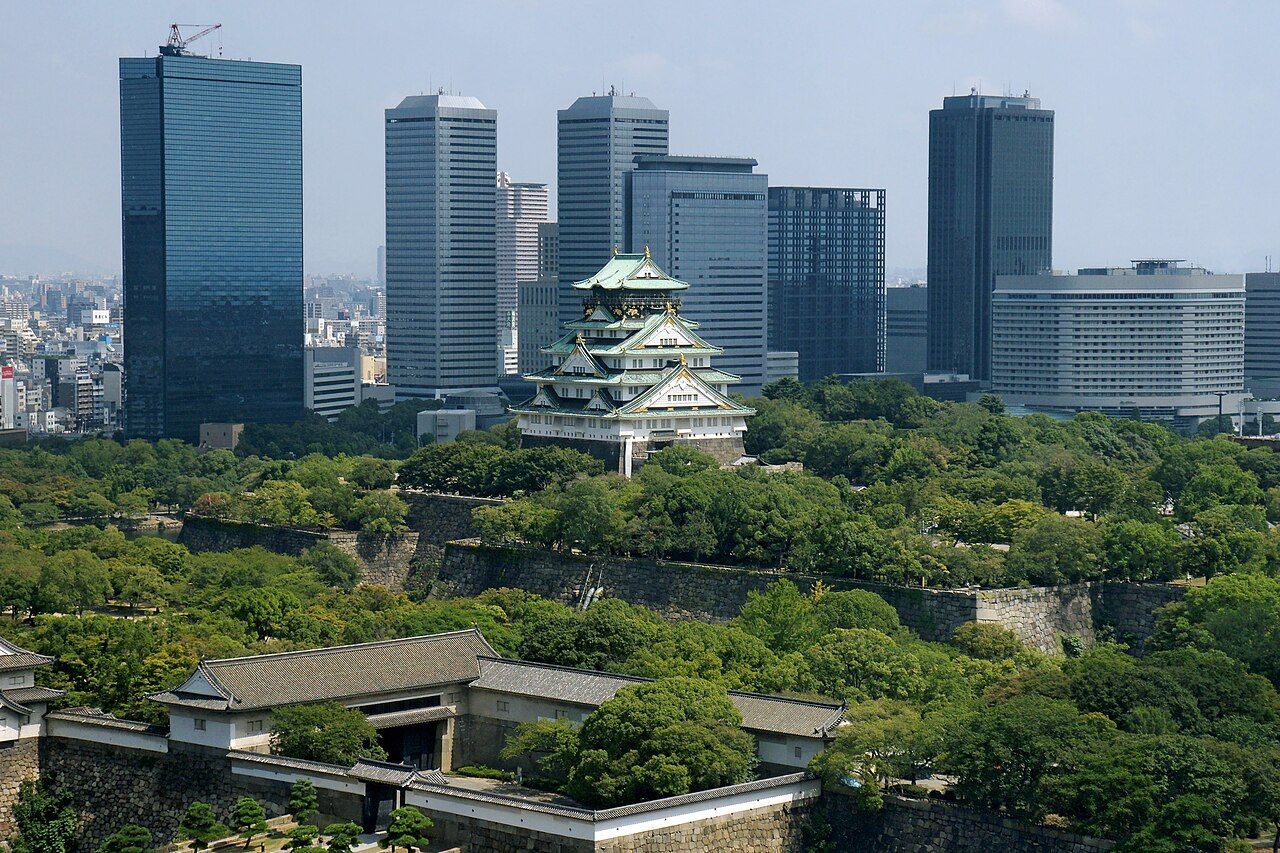
Hideyoshi's castle of 1583, its keep rebuilt in concrete in 1931, inside great stone walls and moats ringed by cherries.
park free, keep about ¥600
The walls and moats are the best of it; the keep is a museum. The Nishinomaru Garden, about ¥200, has 300 cherries with the keep behind them. An hour and a half.
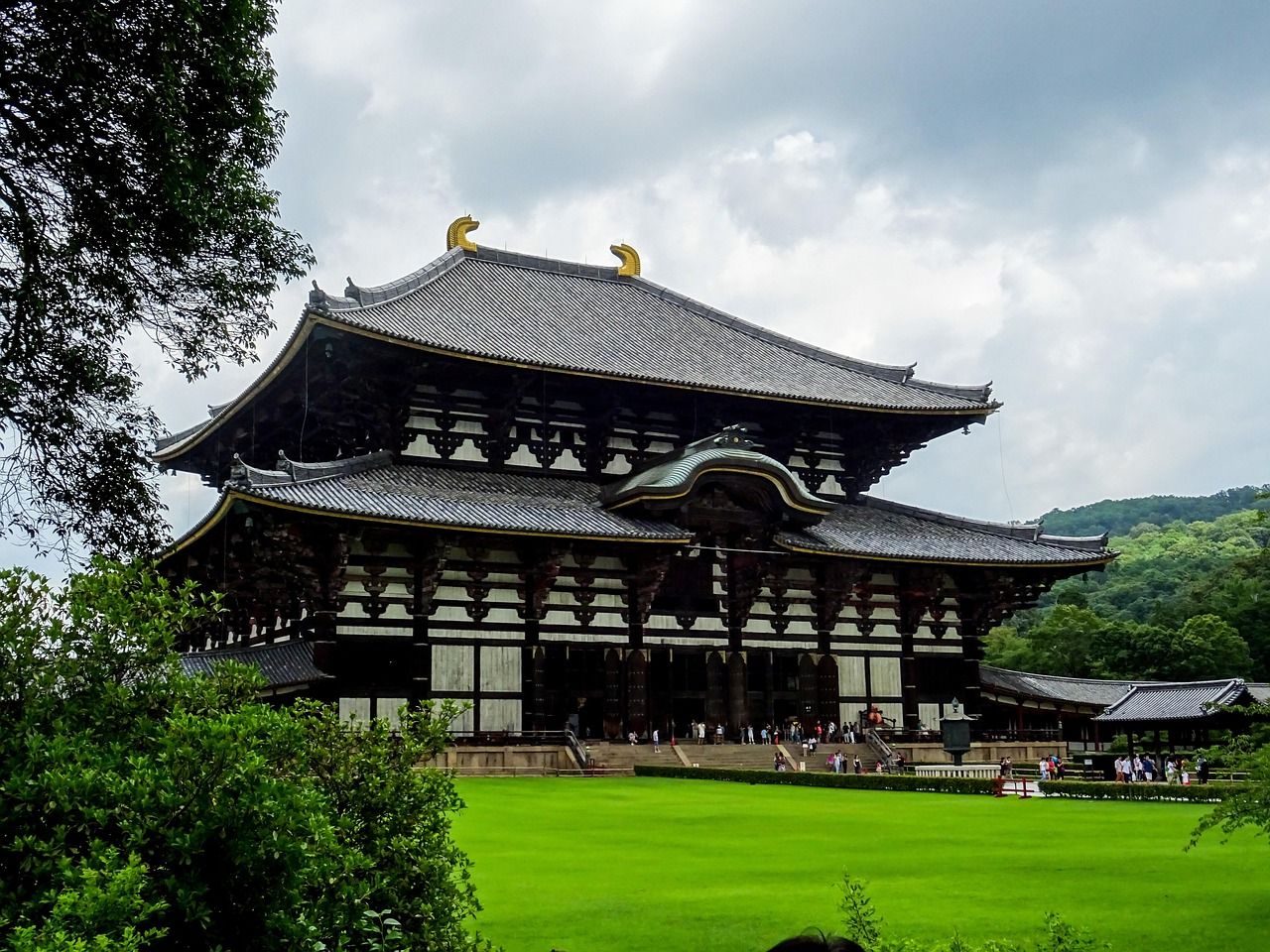
A temple of 752 whose Great Buddha Hall, among the largest wooden buildings in the world, holds a bronze Buddha 15 metres high.
about ¥800 eachday's highlight
Kintetsu from Namba to Nara, 40 minutes, then 20 minutes' walk through the park. Behind the Buddha, a pillar has a hole the size of its nostril; squeezing through is said to bring enlightenment.
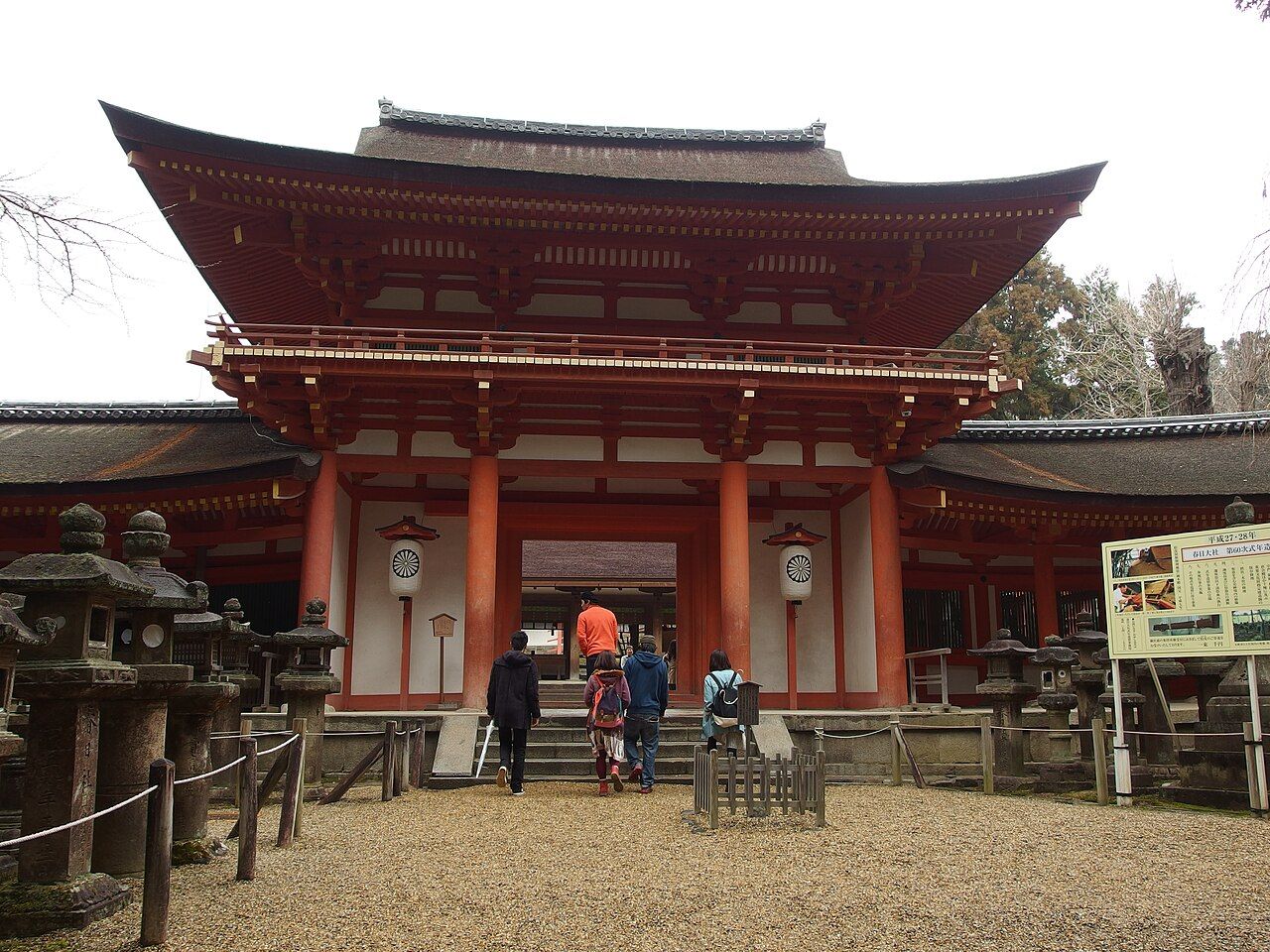
A park of 1,200 tame deer, sacred messengers of the gods, and a forest shrine hung with 3,000 bronze and stone lanterns.
free; shrine inner area about ¥500
Deer crackers cost ¥200; the deer bow, then push. Walk the lantern-lined path to Kasuga Taisha, 20 minutes. Lunch in Naramachi's old streets, then back to Osaka.
The blue rapi:t from Nankai Namba, 40 minutes, reserved seats. At the airport by 11:45 for the 14:00 flight. Top up nothing on the IC card; spend the rest in the airport shops.
Trains, IC cards and whether a rail pass pays
Long legs by Shinkansen, everything else with an IC card.
IC cards
A Suica or PASMO card, or the same in your phone's wallet, pays for metro, local trains, buses and convenience stores everywhere on this trip. Tap in and out.
The Shinkansen and the rail pass
Book seats on the SmartEX app or at station machines; in blossom season reserved seats on popular trains sell out, so book when you know the day. Since the 2023 price rise, a 14-day Japan Rail Pass costs more than this route's tickets bought one by one; buy single tickets.
Bags
Big suitcases need a reserved oversize space on the Shinkansen. Easier: send them ahead with takkyubin from the hotel, a day's notice, about ¥2,500 a case.
The cherry blossom forecast
When it flowers
Tokyo's cherries usually open in the last week of March and are full a week later; Kyoto, Hiroshima and Osaka follow by a few days; Lake Kawaguchi, higher up, a week or two after Tokyo. The Japan Meteorological Corporation and others publish forecasts from January. If the season runs early or late, swap the order of the Tokyo and Kyoto days.
Manners
What to know
Do not eat while walking in the street; stand by the stall. Queue in lines marked on the platform. Shoes off where you see a step up and slippers. No tipping. Keep voices low on trains, and phones on silent.
Money
Cards and cash
Cards are now widely taken, but small restaurants, shrines and markets may want cash. Keep ¥20,000; 7-Eleven ATMs take foreign cards.
Budget
For two, 14 days and 13 nights in blossom season (March–April): rooms, the ryokan, trains, tickets, food and a buffer. Flights are not included.